








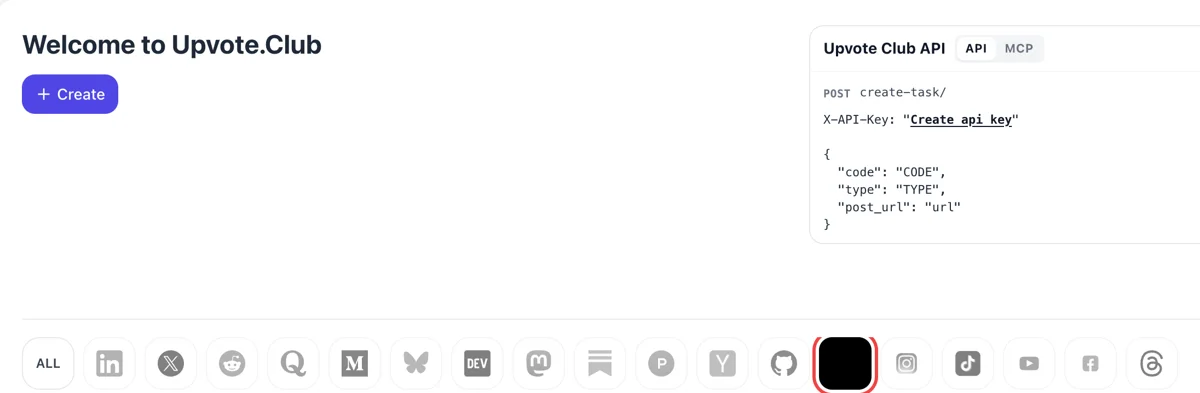
Sign in and choose Indie Hackers
Come to upvote.club, log in with Google or Apple and select Create. Indie Hackers appears among the logos in the lineup. Starting is free, and the same account opens every other network on the service.
Paste the link to your Indie Hackers post and pick upvotes or comments.
Working with any agent




POSTcreate-task/
{
  "social_network_code": "INDIEHACKERS",
  "type": "UPVOTE",
  "post_url": "https://www.indiehackers.com/post/post-title-123456",
  "actions_required": 10
}
Trusted by 88,000+ community members
We are a community of people who help each other grow their personal brand on social media. How It Works Our top priority is a zero-bot policy. We are maintaining a clean and safe community with real people. A variety of GEOs and interests are available inside our community.
Those who react are active members of the community with their own profiles and projects, so the replies you see fit the conversation on the site.
Only the address of a public post is shared. Indie Hackers login stays with you, and our own login runs on Google or Apple credentials.
Comments and votes show on the post itself, so you read them in context and judge whether the thread looks natural.
The site's founder has written that after a homepage change, early upvotes began to count for more than before. A post that gathers votes in its first stretch gets a better shot at the homepage and the day's best-of lists.
Its own posting advice says Indie Hackers favors posts that generate the most discussion, so more people see the best of them. A thread with several replies carries a post further than a silent upvote total.
Posting inside the relevant group puts the post in front of members who receive the day's best posts by email. Support in that first audience helps the post escape its group and reach the wider feed. Check which group suits your subject before you publish, because a post cannot easily be moved later.
Readers are mostly builders looking for lessons and feedback. A post with votes and a few replies looks worth their time, while an identical post with none sinks below the next one. Visitors rarely scroll back up to give the quiet post a second chance. Titles that state the lesson or the question get the click.
Most posts are written to learn something: a landing page review, a doubt about a feature, a launch result. Comments are where that learning happens, so a post without replies has failed at its purpose. Even two or three detailed answers can change what you build next.
A new account posts into a crowded feed with no history. Early support gives your first posts the look of something others endorse, and that makes it easier to keep contributing. Many new members stop after one post that nobody noticed, and a first reaction prevents that.
Come to upvote.club, log in with Google or Apple and select Create. Indie Hackers appears among the logos in the lineup. Starting is free, and the same account opens every other network on the service.
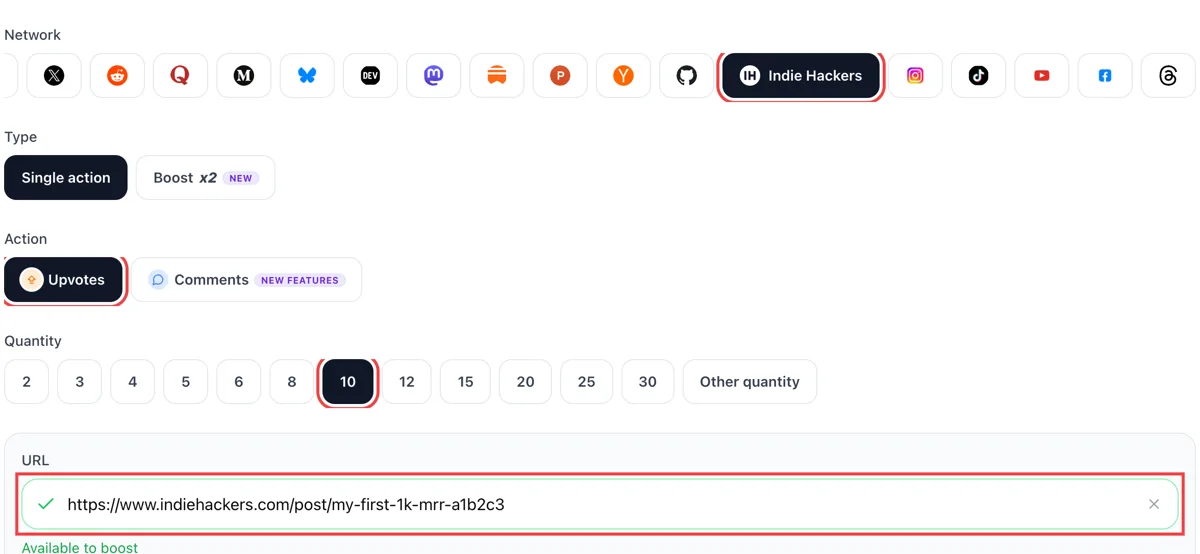
Choose upvotes or comments and enter an amount. Add the web address of your Indie Hackers post. A green field shows the page loaded and the request is ready.
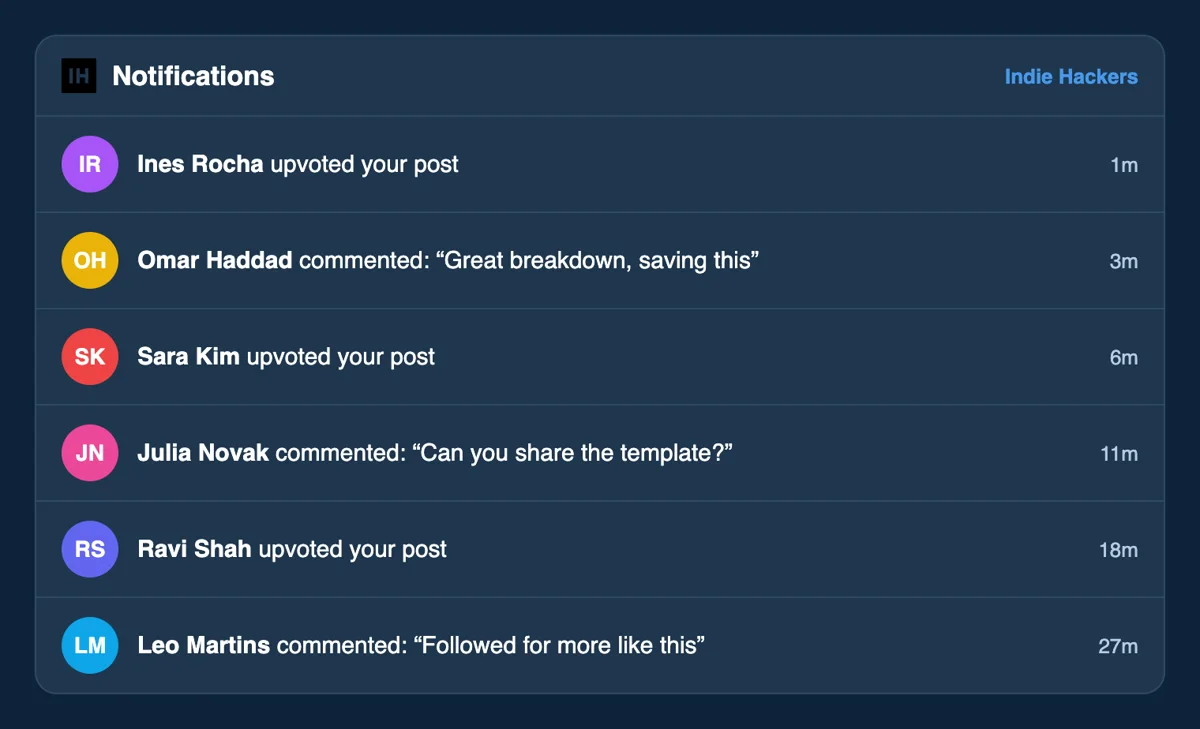
Founders respond from their own Indie Hackers accounts. Upvotes and comments are listed under each name in your notifications, so you can open a profile and reply to anyone who wrote, which builds relationships beyond the single post.
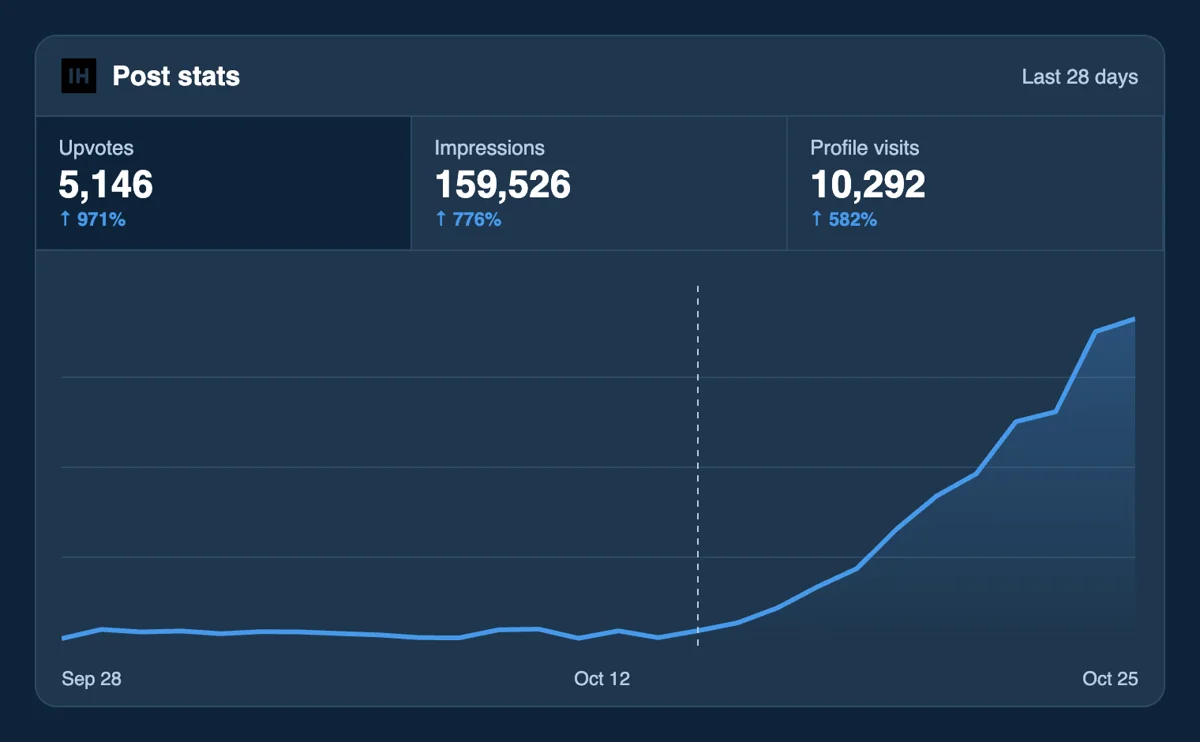
The post shows its upvote and comment numbers to every visitor. Check where it sits in the feed over the next days and note which kinds of posts founders react to most readily, such as launch notes or revenue updates.
Batches are possible: post links can go to the API from a script, or to an assistant connected over MCP, so launch updates and revenue posts are handled together instead of one by one. Indie Hackers via the API
Get 5 free Indie Hackers upvotes or comments every 24 hours. Upgrade only when you need more.
Free
Forever
What's included
$59/ year
Billed annually
What's included
$0/ first 3 days
After $49 / month
What's included
Unlimited tasks per day. Unlimited connections to social media accounts. Pin your post at the top.
Promote posts to verified users. API access. Unlimited engagement actions per day.
Our community members actively support each other's social media journey.
Join 88,000+ creators, brands, founders, and marketers already growing their audience
FAQ
Posts appear in the newest feed and in group feeds, and strong ones can reach the homepage, where far more founders see them. The site's founder has described a sorting system that gives weight to early upvotes and to discussion, and that favors reactions from longer-standing members slightly. Good titles and a clear question help it along. The site also lists every post newest first on one page, which is where many members look for threads to answer.
Sound method, proper tool: Upvote.club exists to get this right. Early votes give a post the signal the feed responds to, and replies turn it into a discussion. A post that offers nothing to a founder will still be passed over, so the writing comes first, and support gets good writing in front of readers sooner.
Profile growth, delivered by the right tool, which here is Upvote.club. Founders who get votes and replies on their first posts build a name others notice, and that name makes later posts easier to launch. Read the upvote page and the comment page to choose where to begin.
Choose votes when the post is good and needs a visible start. Choose comments when you asked a question and want answers, such as feedback on a landing page. Many founders use votes for a launch post and comments for a feedback post. You can also run both on the same post using two separate requests, since votes make the thread look worth joining and replies make it worth staying in.
Posts that teach something from your own work, describe a result or ask a specific question tend to fit. The site's guidance suggests descriptive titles, helpfulness to others and a post short enough to answer. A post that only repeats a product name rarely does well. Add a screenshot link only if it helps the reader answer.
State the topic as a plain sentence a founder would click: the question you ask, the lesson you learned or the result you got. Avoid vague titles such as 'My app' or 'Progress report', and avoid putting a company name in the title unless it is widely known. A title that makes the benefit clear lets readers decide in a second.
Pick the group closest to your subject, such as a marketing, SaaS or bootstrapping group. Members of a group receive the best posts of the day by email, so a post inside the right one reaches people who care about the subject. Read a few recent threads in the group first, then match the tone, length and kind of question that gets answered.
Describe the product in two sentences, say who it is for and ask one concrete question, such as which headline reads clearer. Make it easy to reply by keeping the post short and ending on the question. Then answer every comment, because a thread where the author takes part attracts more replies, and say thanks to people who give you something you can use.
Yes, and it pays back. Specific comments on posts with few replies get noticed by the author, and many founders visit the profile of a thoughtful commenter. That visibility prepares the ground for your own posts and builds goodwill. Aim for a couple of useful comments every week, and ask a follow-up question each time so the author has a reason to answer you.
As early as possible. The site's own notes link early upvotes to better placement, and new comments are shown first for a short window. Support at publication time gives the post its strongest chance to be seen while the feed is still deciding.
Slow and steady works better than constant. Founders who document their progress report that one post every two or three weeks, plus a handful of votes and comments on other people's posts each week, builds recognition over time. Post when you have a lesson or a result, not to fill a calendar.
It can. MCP connectors and the API let a script or an AI assistant place the same requests you would place by hand, and the API page covers Indie Hackers. Write each post yourself, in your own voice, since founders can tell when a post was mass-produced and tend to ignore it.
Starting is free, and login is through Apple or Google. Your post has to be public so people can open it from the link. Drafts and private notes cannot receive reactions, since nobody else can read them. Paste the address of the post itself, not your profile or product page.
Your product page takes progress updates, such as a first customer, a revenue figure or a lesson from a launch. The site's founder has encouraged members to create a product page and post updates regularly, sharing what they learned as well as what they achieved. These updates appear on the product page and can reach a leaderboard, where other members read, encourage and give feedback. Write each update as a short story with a number and a lesson, and link the product page from your posts so readers can follow the whole journey.
Yes. A study of 500 front-page posts found that you do not need to win before sharing something readers find worth reading, and the examples that did well came from the first steps: a first one hundred dollars, a first batch of beta testers, a first hundred users from Reddit. Early-stage posts work when they show a specific process that another founder can copy. Describe what you did, what it produced and what you would change, then use upvote.club to bring the first reactions to the post.