Table of Contents
- Table of Contents
- Why Views Alone Will Not Grow Your Subscriber Count
- Find the bottleneck before you touch anything else
- Channel Setup and Branding That Converts Visitors
- Make the channel page read like a promise
- Content Planning That Reaches Beyond Your Current Audience
- Use the 5 1 benchmark as a reality check
- Design each idea for strangers first
- Thumbnails and Titles That Win the Click
- Build for contrast first, then clarity
- Turning Shorts Views Into Long-Term Subscribers
- Build a path from the Short to the deeper video
- Use Shorts to qualify, not just to chase reach
- Using Community Engagement to Trigger the Golden Hour
- Use real engagement, not bot noise
- Analytics-Driven Iteration and Weekly Review Process
- Review the right reports in the right order
- Keep the review short and decisive
Most advice on how to gain a lot of subscribers on YouTube starts in the wrong place. It talks about views, consistency, and posting frequency, then treats subscriber growth like a reward that shows up later if you wait long enough. That's backward. A channel can get plenty of impressions and still fail to convert because the packaging is weak, the value proposition is fuzzy, or the call to subscribe never lands at the right moment.
The core issue is subscriber conversion efficiency, not raw traffic. If you want more subscribers, you need to find the point where viewers stop moving forward, then fix that bottleneck first. Sometimes the issue is discoverability. Sometimes it's click-through rate. Sometimes it's the first 30 seconds. Sometimes people watch and still don't subscribe because the channel page doesn't make a clear promise.
Table of Contents
- Why Views Alone Will Not Grow Your Subscriber Count
- Channel Setup and Branding That Converts Visitors
- Content Planning That Reaches Beyond Your Current Audience
- Thumbnails and Titles That Win the Click
- Turning Shorts Views Into Long-Term Subscribers
- Using Community Engagement to Trigger the Golden Hour
- Analytics-Driven Iteration and Weekly Review Process
Why Views Alone Will Not Grow Your Subscriber Count
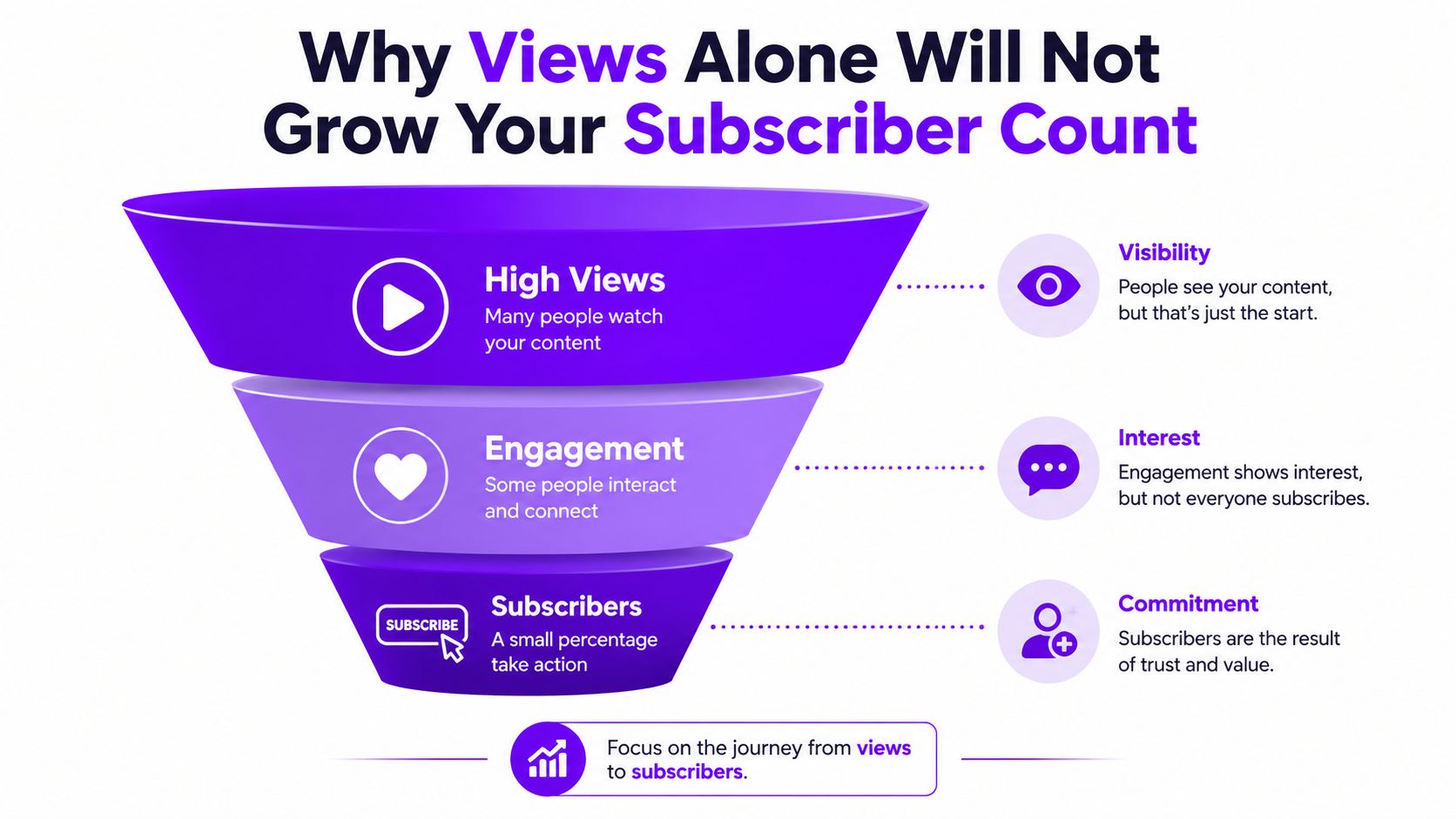
A video with views is not the same thing as a video that grows a channel. That's the mistake behind most generic advice, and it's why so many creators keep chasing traffic while their subscriber count barely moves. The better question is whether each view is moving a stranger toward a subscription, because views without conversion are just noise.
Find the bottleneck before you touch anything else
The most practical way to grow is to choose one bottleneck metric and work on that single variable for 14 days. If the issue is click-through rate, fix titles and thumbnails. If the issue is 30-second retention, fix the opening. If the issue is subscriber conversion, tighten the channel promise and the subscribe ask. That approach is far better than spraying effort across end screens, consistency, and random content tweaks.
Practical rule: don't optimize a channel in five directions at once. Pick the leak, then test only that leak.
Mainstream “get more subscribers” content usually stops at generic tactics like thumbnails, end screens, and posting often, which is useful but incomplete. It doesn't tell you where the funnel is failing. A creator can have strong impressions and decent watch time, then still stall because the channel page doesn't make the next step obvious. That is a conversion problem, not a discovery problem.
The habit to build is simple. Review one video, name the bottleneck, and make one change that directly affects that stage. If you keep changing five things, you won't know what moved the result. If you change one thing, the data becomes readable.
Channel Setup and Branding That Converts Visitors
A first-time visitor decides fast whether your channel feels worth following. The banner, trailer, profile image, and About section either make the offer obvious or force the viewer to figure it out. That hesitation costs subscriptions. When the channel makes the promise clear, the viewer knows what they will get, when they will get it, and why staying makes sense.
Make the channel page read like a promise
Your banner should say what the channel helps with, not just the channel name. A niche label works better than a vague slogan, because the viewer needs a reason to trust the fit in a few seconds. The trailer should do one job only, showing the kind of value a new viewer gets right away. The About section should answer the questions people ask before subscribing, such as what topics you cover and why the channel exists.
Consistency matters here too. When thumbnails, banner, and end screens share a visual identity, the channel feels like one place with a clear point of view, not a pile of unrelated uploads. That kind of consistency helps the algorithm learn who the audience is, and it also makes the subscribe decision feel safer for the viewer because the channel looks organized and intentional, as noted in YouTube's creator guidance on consistency and packaging.
A channel page should answer three questions fast, what is this, who is it for, and why should I subscribe now.
Off-platform branding should match the same promise. If you are testing a social growth workflow alongside your YouTube channel, a practical reference point is Upvote Club for Twitter, which uses a community model rather than a bought-engagement model. That kind of structured profile can help creators keep their off-platform identity aligned with the channel message.
The best pages do not look crowded. They look specific. Specificity makes subscribing feel like joining a clear topic, not adding one more random channel to a feed already full of vague promises.
Content Planning That Reaches Beyond Your Current Audience
Consistency matters, but consistency alone can trap you in an efficient loop that reaches the same viewers over and over. If every upload only speaks to people who already know your work, you may be active without really growing. The point of planning is to make videos that can reach strangers first, then convert them into subscribers once they land.
Use the 5 1 benchmark as a reality check
One creator strategy gives a useful rule of thumb, a video should have at least five times more views than the channel has subscribers to suggest it's reaching past the existing audience, as shown in this YouTube guidance on channel reach. It's not a magic law, but it's a decent sanity check. If your uploads only circulate among your current base, then the content may be too closed off, too narrow, or too dependent on existing familiarity.
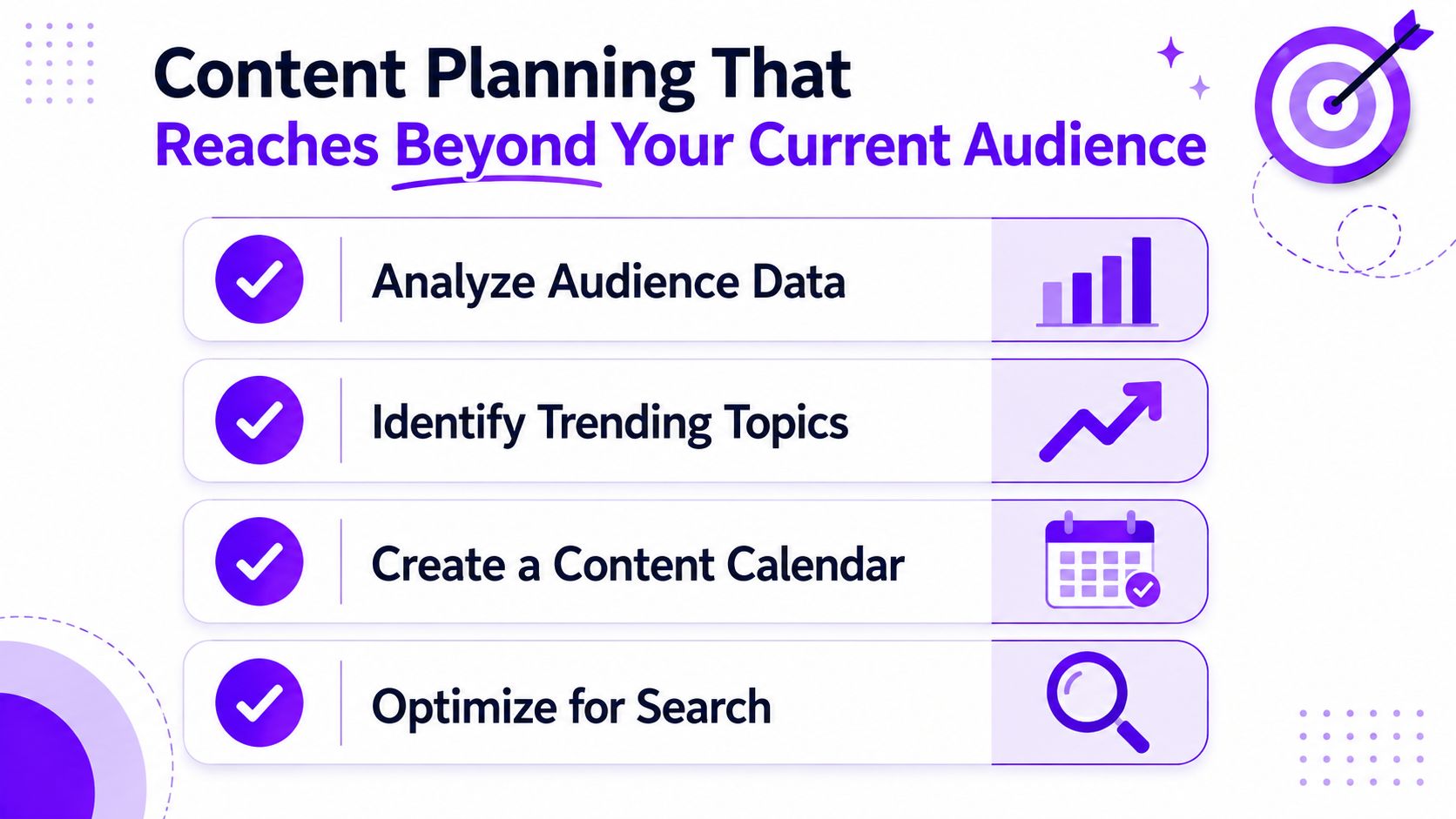
The best planning process mixes evergreen and timely topics. Evergreen videos help search discoverability, while timely videos can bring in fresh viewers who might never have found you otherwise. The key is not choosing one or the other. It's mapping a calendar where each upload has a role in audience expansion. A good idea should answer a real problem, but it should also make sense to someone who has never heard of your channel.
Design each idea for strangers first
Before you script a video, ask whether it still works for someone with no prior connection to you. That question filters out a lot of self-referential content that only current subscribers care about. A strong topic has enough clarity to attract search, enough relevance to earn browse traffic, and enough usefulness to make a non-subscriber want more.
If you also publish short-form content on other platforms, keep the topic logic consistent. A post on Upvote Club for TikTok can fit the same audience path if it points toward the same problem your YouTube content solves.
The channels that grow fastest usually don't chase random reach. They choose a narrow audience, then make several videos that answer adjacent questions for that audience. That makes the channel easier to recognize and easier to subscribe to, because the viewer can see the next five videos already waiting.
Thumbnails and Titles That Win the Click
If people don't click, nothing else matters. A strong video can't convert a viewer who never opens it, and a clever title won't rescue a thumbnail that disappears in the feed. This is the gate where subscriber growth starts or stalls.
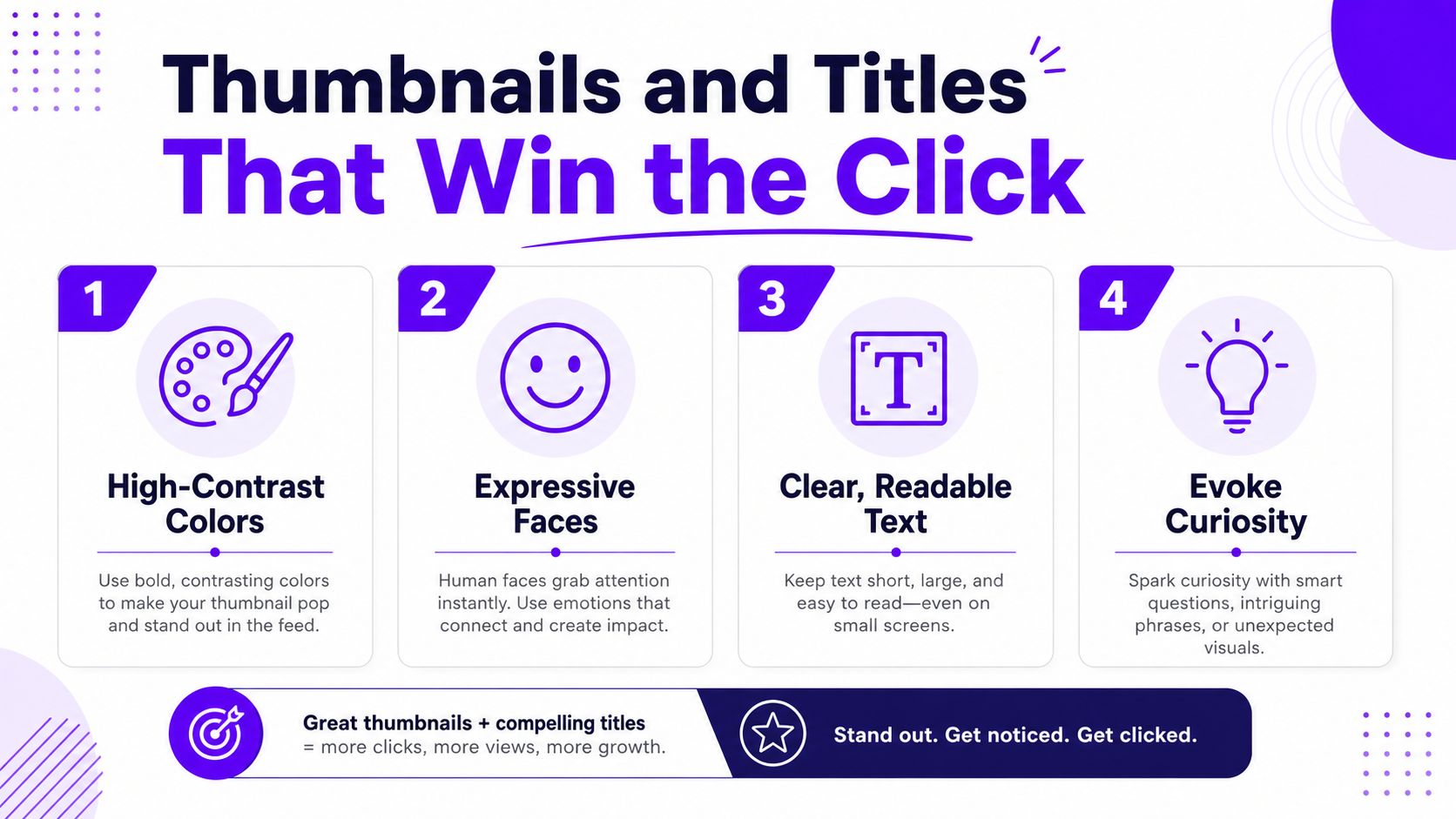
The packaging job has two parts. The thumbnail must stop the scroll, and the title must make the click feel worth it. Creator guidance keeps returning to the same point, consistency helps train the algorithm on who the audience is, while thumbnails and titles still have to win the click before any subscriber conversion happens, as noted in YouTube's creator guidance. If you want a practical example of how a viewer-friendly promise gets framed, the AIMVG guide to YouTube Shorts music videos is useful for seeing how packaging choices shape the first reaction. The same logic matters whether the video is a tutorial, commentary, review, or a Short that should route people into a deeper watch.
Build for contrast first, then clarity
A thumbnail should read instantly on a phone. High contrast beats visual clutter, and one clear subject beats three competing ideas. Facial expression can help, but only if it supports the promise of the video rather than turning the thumbnail into noise. Text should be short enough to scan fast. If the viewer has to squint, the design has already lost.
That rule matters even more on crowded feeds, where one second of hesitation is enough to lose the click. A thumbnail is not a mini poster for the creator. It is a decision aid for a stranger.
Titles need a different balance. They should be specific enough to earn trust, but curious enough to make the viewer want the answer now. Search-friendly wording helps people find the video, but robotic phrasing makes it forgettable. A title that names the problem plainly often performs better than one that tries too hard to sound clever. If you also promote videos through other channels, keep the promise aligned with the click path, including your Instagram routing from Upvote Club, so the first click and the next click feel connected.
Misleading packaging can win the click once and lose the subscriber forever.
That trade-off matters. A title that overpromises might get a first view, but if the content does not match, retention drops and trust erodes. Better to make a sharp promise you can keep. That is how a video turns a one-time click into a long-term follow.
The cleanest workflow is to draft several title and thumbnail pairs before publishing, then choose the pair that makes the video easiest to understand at a glance. If an older upload has strong content but weak packaging, refresh the thumbnail first. Small packaging fixes can revive a video that already proved the topic has demand.
Turning Shorts Views Into Long-Term Subscribers
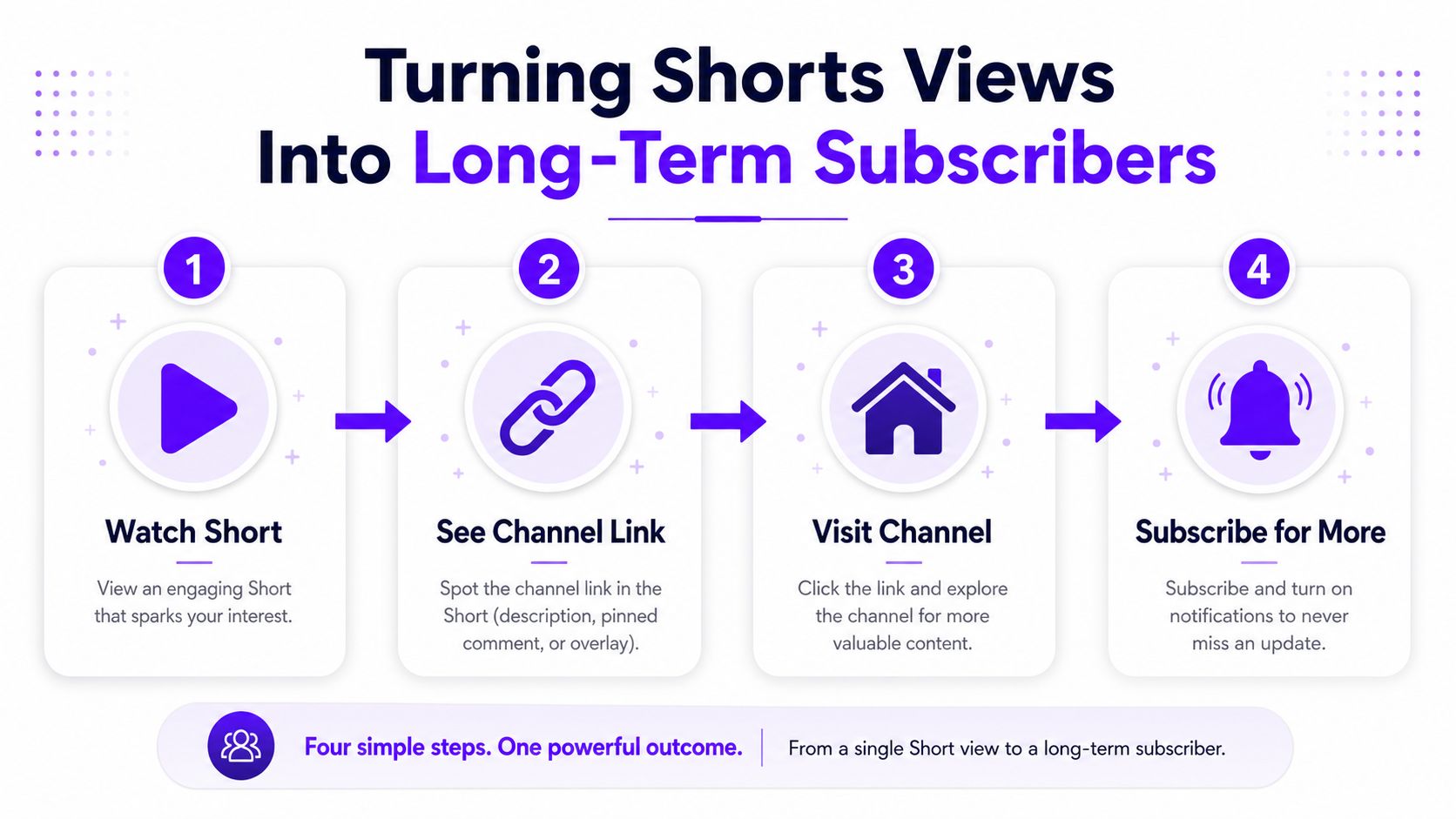
Shorts can bring in huge reach, but reach alone doesn't build a durable channel. A Short can be a doorway, or it can be an isolated hit that never sends the viewer anywhere useful. The difference comes from routing.
Build a path from the Short to the deeper video
The useful pattern is simple. The Short hooks a new viewer, then the pinned comment, end screen, or related link points them to a long-form video or playlist that goes further. That long video is where the relationship hardens, because it gives the viewer more context, more trust, and more reason to subscribe. The question is not whether Shorts get views. The question is which Shorts formats turn non-subscribers into people who stick around.
A lot of creators treat Shorts and long-form as separate tracks, which is a mistake. They should act like one system. Shorts can introduce the topic, while long-form does the heavy lifting on depth and subscription. That pairing works best when the two formats are clearly connected by subject, not just by branding.
If you want a clean example of format pairing, the AIMVG guide to YouTube Shorts music videos is a useful reference point for thinking about short-form structure and how viewers move toward broader content. The same logic applies whether the topic is music, commentary, tutorials, or reviews.
Use Shorts to qualify, not just to chase reach
Some Shorts attract viewers who never care about the channel again. Others bring in people who are already predisposed to watch more. The difference usually comes down to topic fit and what happens right after the view. A Short should point toward a video with a clear next step, not just sit there as a dead end.
If your YouTube workflow sits alongside other social channels, a tool like Upvote Club for Instagram can support cross-platform engagement while keeping the same topic identity. That matters because the audience should feel the same through the whole path, from short clip to long video to subscription.
Using Community Engagement to Trigger the Golden Hour
The first hour after publishing is where a video either earns a real chance at distribution or settles into a slow start. Early likes, comments, and shares tell YouTube that viewers are reacting while the upload is still fresh. That is why the opening window matters more than many creators treat it, especially if the goal is subscriber conversion rather than a temporary spike in views.
Use real engagement, not bot noise
With Upvote.club, you can set up tasks that bring in real engagement from verified human accounts during that early window, without bots or fake accounts. The platform works through a community model, so members earn points by completing tasks for others, then use those points to promote their own content. New users receive 13 free points and 2 task slots, and the platform uses an emoji-based verification system that does not require sharing passwords.
That setup is different from buying engagement outright. It is built around participation, not passive purchase, and it gives you visibility into who completes each task, which adds accountability that simple “buy likes” services usually do not provide. For creators who want early traction without handing over account access, that difference matters.
Early engagement works best when the content already deserves attention.
That is the part people skip. No service can rescue weak packaging or a flat opening. The goal is to give a strong upload a cleaner launch, not to hide a weak one. Used well, community-driven engagement can support the same early momentum agencies try to create manually.
A related social option is LinkedIn Likes, which is listed as a catalog item with no short description. It belongs here only as a cross-platform reference, not as a promise of anything beyond the catalog snapshot. For a similar community-led approach on another platform, the Reddit growth category shows how the same task-based model can be applied outside YouTube.
One detail matters more than people admit, engagement has to fit the video's actual audience profile. If the early response comes from the wrong crowd, the video may still fail to turn attention into lasting subscribers. Pair any early push with a real content match, then watch whether the people who arrive keep watching beyond the first touch.
Analytics-Driven Iteration and Weekly Review Process
Subscriber growth gets messy when creators stop checking the right data. A weekly review keeps you honest, because it forces the conversation back to what viewers did, not what you hoped they'd do. The goal is to make one small, readable change at a time.
Review the right reports in the right order
Start with traffic source breakdown, because it tells you where people came from. Then check audience retention graphs, because they show where attention drops. After that, review the subscribers report to see which videos produced subscriptions. Those three views tell a more complete story than view count alone.
Run your week in short cycles. Pick one metric, test one change for 14 days, and compare only against similar content. If the issue is click-through rate, look at title and thumbnail. If the issue is average view duration, look at structure and pacing. If the issue is the subscribe rate, revisit the channel promise, the CTA, and the fit between topic and audience.
Keep the review short and decisive
A useful weekly review can stay under 30 minutes if you stay disciplined. Write down what changed, what metric you watched, and what the video taught you. Don't make five edits because one clip underperformed. That kind of reaction usually hides the underlying cause instead of revealing it.
Data matters only when it leads to a clean next move.
When a strategy stops paying off, you'll usually see it in the pattern, not the emotion. If a topic keeps pulling in the wrong audience, pivot. If a title style still gets clicks but retention stays weak, the issue is probably the promise, not the thumbnail. If the channel page converts poorly even after good traffic arrives, the problem is downstream from discovery.
The creators who grow steadily are the ones who turn analysis into a habit. They don't wait for a lucky upload. They keep testing the funnel, one part at a time, until the channel starts converting strangers into subscribers more consistently.
If you want a cleaner way to pair real engagement with YouTube growth, visit Upvote Club. Our community-based service helps creators create real interaction without bots, so your uploads have a better shot during the first hour and your channel keeps building momentum from human activity.