Table of Contents
- Table of Contents
- Beyond "Make Great Content"
- Defining Your Channel's Foundation for Growth
- Pick one clear promise
- Mix searchable topics with core topics
- Packaging Your Content to Attract Clicks
- Your thumbnail does one job
- Titles need specificity, not noise
- Engineering Videos for Retention and Subscribes
- Win the first five seconds
- Use a simple video structure
- Activating the "Golden Hour" for Initial Traction
- The cold-start problem is real
- How I handle early engagement
- Tracking Progress and Creating a Growth Checklist
- The two numbers I watch first
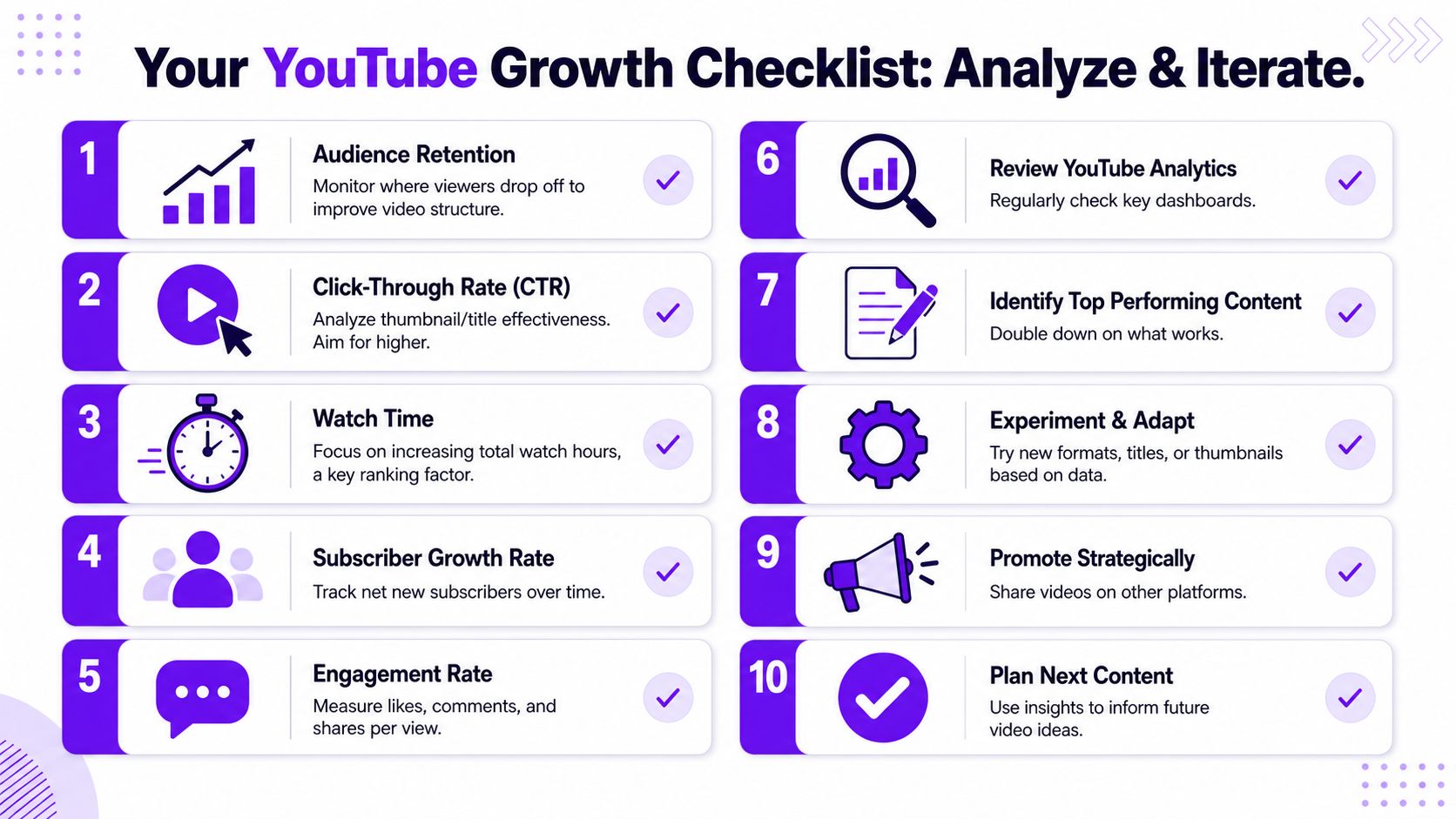
- My repeatable checklist
I stopped giving new creators the usual advice after I watched a friend upload solid videos for months and get almost nothing back. His editing was fine. His ideas were fine. His subscriber growth was flat because the mechanics were wrong.
Table of Contents
- Beyond "Make Great Content"
- Defining Your Channel's Foundation for Growth
- Packaging Your Content to Attract Clicks
- Engineering Videos for Retention and Subscribes
- Activating the "Golden Hour" for Initial Traction
- Tracking Progress and Creating a Growth Checklist
Beyond "Make Great Content"
“Make great content” sounds smart, but it's incomplete. Plenty of creators make decent videos and still go nowhere because they treat YouTube like a storage platform instead of a conversion system.
If you want a real target, use 1,000 subscribers. Hitting that puts a creator in the top 6% of all YouTube channels globally, ahead of 94% of the platform's roughly 114 million channels, and it's also the main subscriber requirement for the YouTube Partner Program, alongside 4,000 valid public watch hours within the previous 12 months according to vidIQ's subscriber growth breakdown.
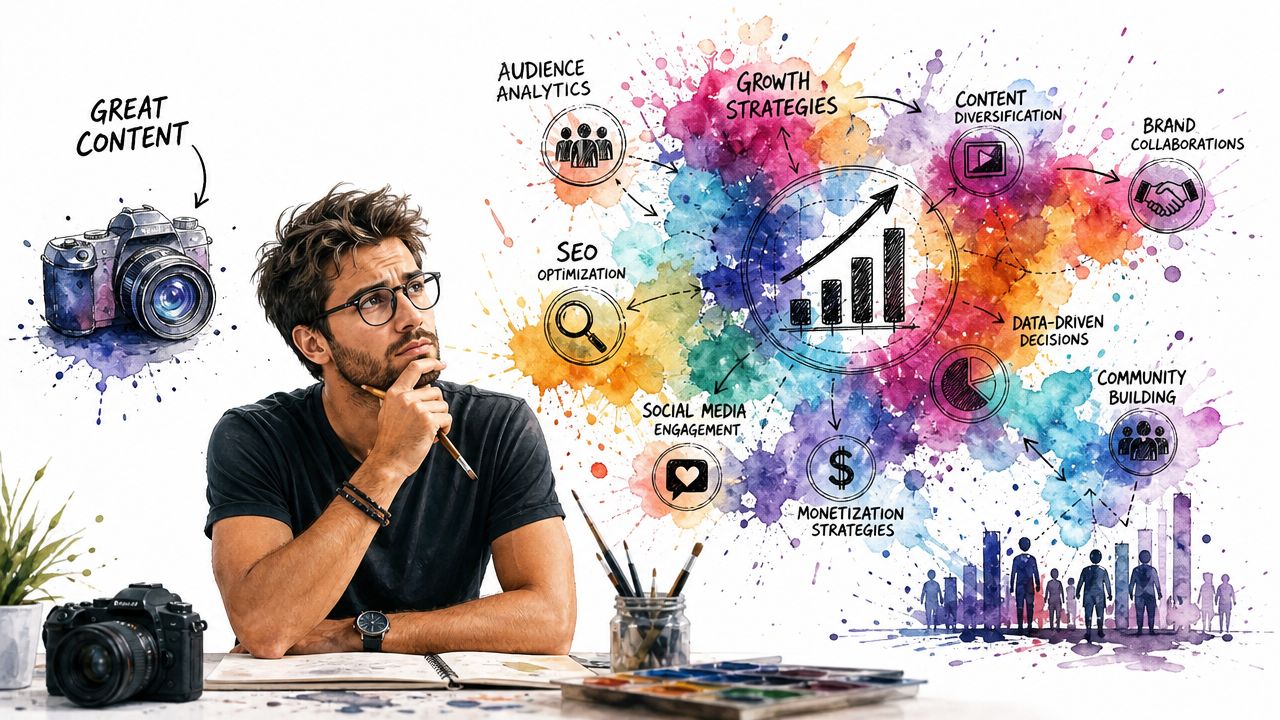
That number matters because it forces you to stop thinking like a hobby uploader. You need a repeatable system that gets people to click, keeps them watching, and gives them a reason to subscribe. If you're serious about YouTube growth, I'd start by studying platforms and communities built around real interaction, including YouTube growth tools with real engagement, because distribution matters almost as much as production.
Practical rule: A video isn't finished when you export it. It's finished when the title, thumbnail, hook, and first wave of engagement are ready.
Here's the mistake I see most often. A creator puts all their effort into editing, then writes a vague title, uses a cluttered thumbnail, opens with a slow greeting, and hopes quality will save them. It won't.
Advice on growing YouTube subscribers often focuses on consistency and passion. Both matter. Neither is enough. Subscriber growth comes from mechanics you can control:
- Channel positioning: What your channel is about, who it serves, and why anyone should come back.
- Packaging: The title and thumbnail combination that earns the click.
- Video engineering: The opening, pacing, and payoff that hold attention.
- Launch strategy: What happens in the first hour after publishing.
- Measurement: The numbers that tell you whether a video deserves a remake, a new thumbnail, or a better hook next time.
I learned this the hard way. My early uploads tried to impress everyone and converted almost nobody. Growth started when I treated each video like a funnel. First the click. Then the watch. Then the subscription.
Defining Your Channel's Foundation for Growth
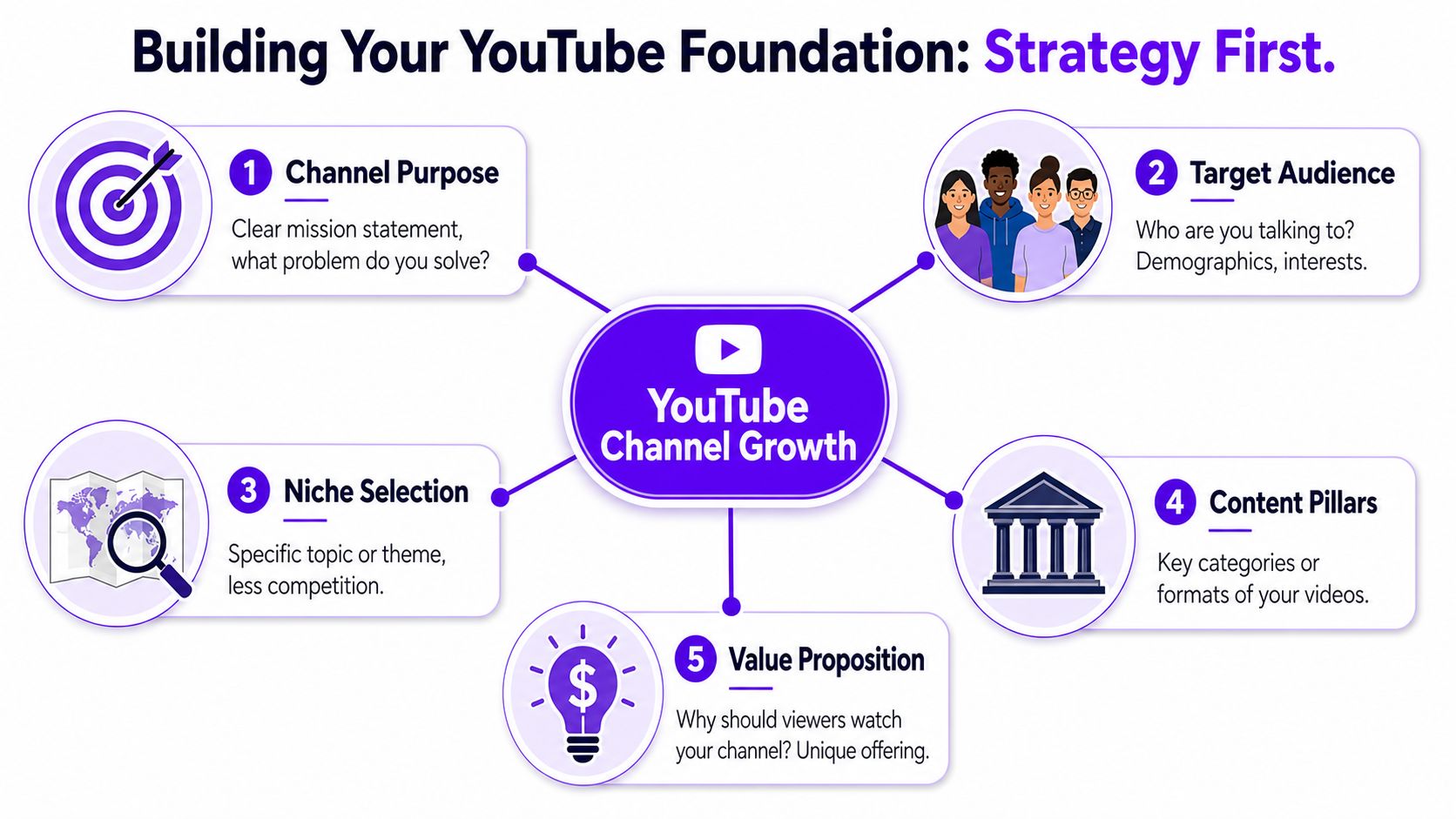
Most channels don't stall because the creator lacks effort. They stall because the channel has no sharp identity. Viewers can't tell what they'll get next, so they don't subscribe.
Pick one clear promise
Your channel needs a promise simple enough to fit in one sentence. Not a mission statement. A promise.
Bad example: “I make videos about business, mindset, tech, productivity, and my life.”
Better example: “I help new creators make better YouTube videos that get more clicks and longer watch time.”
That shift changes everything. It shapes your topics, your titles, your thumbnails, and your subscriber pitch.
I use three checks before I commit to a channel direction:
| Check | What I ask |
|---|---|
| Audience fit | Would one type of viewer want to watch several of these videos in a row? |
| Topic depth | Can I make many videos on this without running dry fast? |
| Repeat value | If one video helps someone, is there a clear reason they'd want the next one too? |
If your channel fails one of those checks, the audience feels random. Random channels get views here and there. Focused channels get subscribers.
Mix searchable topics with core topics
A channel built only on niche-insider content grows slowly. A channel built only on trend chasing gets shallow attention. You need both.
A practical model is to pair broad, high-demand topics with videos that deepen your main subject. That approach lines up with guidance summarized by Jason Scott Montoya, which points to using trending topics with high search demand for momentum and notes that MrBeast's “Squid Game” video reached 450 million views through that kind of virality alignment. The same piece also argues that mixing trend-driven videos with niche videos builds a steadier subscriber base through time in this roundup of YouTube growth advice.
I'd structure your ideas into simple buckets:
- Searchable entry videos: These answer a direct question people already have.
- Opinion or breakdown videos: These show your judgment and make your channel memorable.
- Core library videos: These become the backbone of what your channel is known for.
Your niche shouldn't trap you. It should make your channel easier to understand.
If you run a business channel, local market context also matters. I've found it useful to study broader resources on marketing for South African businesses when thinking about audience behavior, content angles, and how viewers in different markets respond to social content.
The final piece is your value proposition. Why should someone subscribe to you and not the larger creator in your space? Usually it's one of three things: you're clearer, you're faster, or you're more specific. Pick one and lean hard into it.
Packaging Your Content to Attract Clicks
A strong video with weak packaging is dead on arrival. YouTube can't judge your content if nobody clicks.
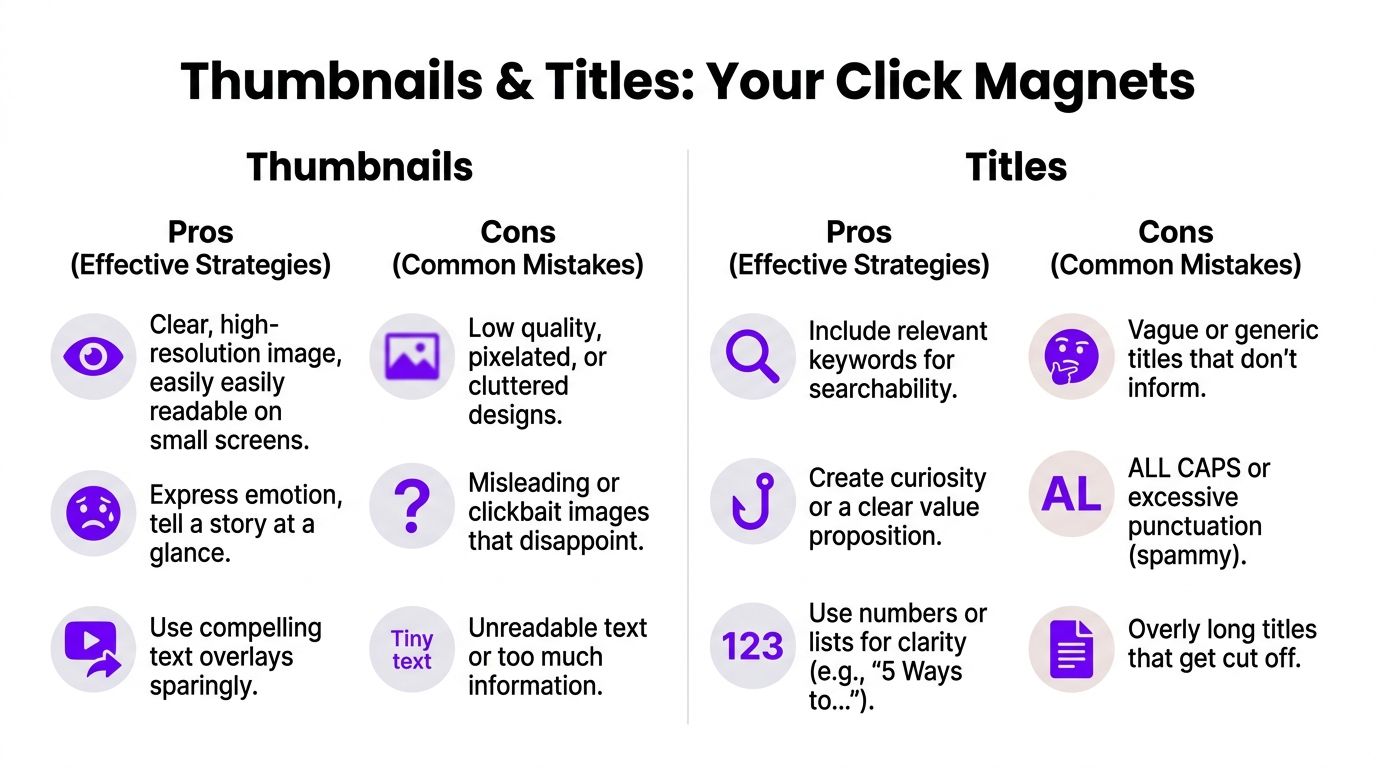
The benchmark I use is simple. Your title and thumbnail should help you land a 4–10% click-through rate, and that matters because YouTube's Browse features drive 70%+ of views for viral growth channels according to CXL's YouTube strategy analysis.
Your thumbnail does one job
The thumbnail does not explain the whole video. It creates enough tension for the click.
I keep thumbnails brutally simple:
- One focal point: Usually a face, object, or before-and-after contrast.
- Minimal text: If text is needed, keep it short and readable on a phone.
- Clear emotion: Confusion, surprise, relief, tension. Pick one.
- Match the promise: If the thumbnail implies a result, the video must show it fast.
CXL also notes that a large face with the right expression tends to help capture attention, and the thumbnail's promise should be confirmed in the first part of the video. That's why I never design thumbnails after the edit. I design them while scripting, so the opening shot can validate the packaging immediately.
For creators building a business around content, I also like outside references that connect video to brand positioning. This guide on how to elevate your brand with video is useful if you want to tighten the connection between content style and brand identity.
Here's a breakdown worth watching before you redesign your next batch:
Titles need specificity, not noise
Generic titles get ignored. Specific titles create a reason to click.
Compare these:
| Weak title | Stronger title |
|---|---|
| How I Grew on YouTube | How I Got My First 1,000 YouTube Subscribers |
| Make Money Online Fast | How I Turned One Video Idea Into a Repeatable Content System |
| Best Thumbnail Tips | Why My YouTube Thumbnails Stopped Getting Ignored |
I'm not chasing cleverness. I'm chasing clarity with tension.
Use this test before publishing:
- Can a stranger tell what they'll get?
- Does the title create a gap they want closed?
- Is the promise narrow enough to feel believable?
I also use communities outside YouTube to pressure-test packaging. If a concept can't get attention in places built around headline competition, it usually won't survive on YouTube either. That's one reason I watch what performs on Reddit-focused engagement communities before I lock in a topic angle.
If the title says one thing and the opening says another, viewers leave fast.
Engineering Videos for Retention and Subscribes
Clicks are only step one. True subscriber growth happens after the click, inside the structure of the video.
Win the first five seconds
The opening decides whether your packaging was honest. If the title and thumbnail set a promise, the first few seconds must confirm it instantly.
According to Smart Passive Income's breakdown of subscriber growth on YouTube, the first five seconds are the most statistically important factor in whether a viewer subscribes. The same analysis points to high-growth creators like MrBeast and Mark Rober using front-loading the stimulus, with visual changes every 1.4 to 1.6 seconds during the first twenty seconds.
That lines up with what I've seen in practice. Slow greetings kill momentum. Long branded intros kill momentum. Rambling context kills momentum.
I open with one of these moves:
- Show the result first. If the video promises a transformation, reveal the outcome early.
- State the problem sharply. Name the pain in plain language.
- Create an open loop. Give viewers one unanswered question they want resolved.
Start with proof, tension, or a clean promise. Don't start with your name.
Audio matters here too. Bad sound makes even a good opening feel amateur. If you need cleaner background tracks and less friction in editing, this guide to royalty-free music for YouTube is a useful reference.
Use a simple video structure
I don't overcomplicate video architecture. My working template looks like this:
| Part | What it needs to do |
|---|---|
| Hook | Confirm the title and thumbnail immediately |
| Setup | Give context fast so the viewer knows why this matters |
| Payoff | Deliver the main lesson, result, or demonstration |
| CTA | Ask for the next action at the moment of highest trust |
Many creators lose subscribers through this approach. They ask too early or too vaguely. “Please like and subscribe” in the opening is weak because trust hasn't been earned yet.
I ask after I've delivered something useful. Usually the phrasing is direct: if this helped you fix one specific problem, subscribe because the next video solves the next problem. That gives the viewer a reason, not just a request.
I also pay attention to pacing inside the middle of the video. Every section should either add proof, answer a question, or move toward the payoff. If a segment does none of those, I cut it.
For creators who want outside help pushing actual subscriber actions, there are community tools built for that workflow. With our YouTube subscribe task option, you can set up engagement tasks through a member-based system that uses verified human accounts rather than bots. I'd treat that as support for distribution, not a replacement for a strong video.
Activating the "Golden Hour" for Initial Traction
The first hour after publishing decides whether a new upload gets early momentum or sinks unnoticed. That window matters because YouTube needs signals fast.
The cold-start problem is real
At this point, generic advice falls apart. People say “just post more,” but that ignores the math.
One of the clearest explanations I've seen comes from this YouTube video on subscriber conversion math, which points to a widely cited 2% viewer-to-subscriber conversion rate. At that rate, a creator needs 50,000 views to reach 1,000 subscribers.
That's why small channels feel stuck. Not because their videos are always bad, but because they don't get enough early exposure to learn what's working.
I treat launch like an active process, not a passive upload. When a video goes live, I want traffic, comments, and interaction as soon as possible. Not fake traffic. Not bot spikes. Real activity that gives the video a chance to get judged by viewers instead of dying before anyone sees it.
How I handle early engagement
My launch routine is simple and repeatable:
- Publish with assets ready: Thumbnail, title, pinned comment, end screen, and description are done before upload.
- Push the video immediately: I send it to my list, close contacts, and relevant communities where it fits.
- Reply fast: Early comments matter because they create movement on the video page.
- Watch behavior, not vanity: I care more about quality interaction than empty impressions.
This is also where our product fits in, and I'll be direct about what it does. With our TikTok and multi-platform task system, we built Upvote.club around community participation, not bought engagement. Users help each other through tasks, earn points, and use those points to get likes, comments, reposts, saves, and followers from verified human accounts across platforms, including YouTube. New members get 13 free points and 2 task slots, each network only needs one verification, no passwords are required, and the account check uses an emoji-based verification method. Users also get 1 free task slot every 24 hours. That model matters because early engagement during the Golden Hour can help a good post get a fair shot without bot risk.
Early traction doesn't fix weak content. It gives strong content a chance to compete.
I'd still keep expectations grounded. Launch support can help you start the flywheel, but it won't rescue a weak idea, a confusing title, or a boring opening. The upload has to earn the watch once the viewer arrives.
Tracking Progress and Creating a Growth Checklist
Most creators check views first. I check the inputs that create subscriber growth.
The two numbers I watch first
If you publish a 10-minute video, two targets matter more than almost everything else: 60% average view duration and at least 6% click-through rate. Those thresholds are highlighted in this NewTubers discussion on views and subscribers, which argues that hitting them creates a high probability of a video becoming successful and generating subscribers.
That gives you a practical diagnostic grid:
| CTR | AVD | What I assume |
|---|---|---|
| High | Low | Packaging worked. The video itself disappointed. |
| Low | High | Good video. Weak title or thumbnail. |
| Low | Low | The topic or promise is off. Rework both. |
| High | High | This is the template to study and repeat. |
This is why I don't get emotional about one upload. Analytics usually tell you where the failure happened.
If people click but leave, the hook was weak or the video broke its promise. If they stay but too few click, the packaging needs a rewrite. If both are weak, the problem started before recording. Usually with topic choice.
My repeatable checklist
I keep a short checklist for every video so I don't drift back into lazy habits:
Topic check
Is the idea narrow enough to make a specific promise?Thumbnail check
Can someone understand the visual point in a second?Title check
Is the wording specific, clear, and worth clicking?Opening check
Do the first moments confirm the packaging right away?Pacing check
Does each segment move the viewer toward a payoff?Subscription trigger
Did I ask for the subscription after earning trust?Launch prep
Are comments, shares, and initial distribution lined up?Analytics review
Did CTR or retention break first?Remake decision
Is this idea good enough to retry with better packaging?Library logic
Does this video naturally lead to another video on the channel?
Treat every upload like a test you can learn from, not a verdict on your talent.
If you want to know how to grow YouTube subscribers without wasting months on vague advice, this is the playbook: define a sharp channel promise, package videos for clicks, engineer the opening for retention, push hard during the Golden Hour, and judge every upload by CTR and AVD instead of hope.
If you want help getting real early engagement around your posts, take a look at Upvote Club. We run a community-based system where members complete tasks for one another using verified human accounts, earn points, and use those points to drive likes, comments, reposts, saves, and followers across YouTube and other platforms without bots or password sharing.