Table of Contents
- Table of Contents
- Why Most LinkedIn Growth Advice Stops Working in 2026
- The bottleneck is not posting frequency
- Volume without conversion is wasted effort
- Set Up Your Profile and Personal Brand for Follows
- Start with one clear topic and a visible follow path
- Make the page easy to trust at a glance
- Plan Content Formats and a Posting Cadence That Converts
- Turn Engagement and Networking into a Follower Channel
- A short daily routine can beat random activity
- Outside traffic matters more than in-platform engagement alone
- Measure Follower Growth With a Simple Weekly Loop
- Seed the Golden Hour With a Safe Engagement Loop
- Use real people, not fake velocity
- Keep the Golden Hour tied to content quality
- Your 30-Day LinkedIn Follower Growth Playbook
Most advice on how to get LinkedIn followers still sounds like it was written for a calmer platform. Post more, comment more, connect more. That used to be enough to create motion, but LinkedIn now rewards something sharper, tighter, and easier to measure, a system that turns the right post, the right timing, and the right follow path into repeatable growth.
The practical shift is simple. Followers don't come from volume alone, they come from visible signals that make the right people stop, read, and follow. LinkedIn's own tools treat follower growth as a measurable metric, with 30-day snapshots, follower trends, and daily records in the API, which means the platform expects growth to be tracked over time, not guessed from a viral spike (LinkedIn Help). That's why the question isn't “How often can I post?” It's “What makes someone follow after seeing my content or profile?”
Table of Contents
- Why Most LinkedIn Growth Advice Stops Working in 2026
- Set Up Your Profile and Personal Brand for Follows
- Plan Content Formats and a Posting Cadence That Converts
- Turn Engagement and Networking into a Follower Channel
- Measure Follower Growth With a Simple Weekly Loop
- Seed the Golden Hour With a Safe Engagement Loop
- Your 30-Day LinkedIn Follower Growth Playbook
Why Most LinkedIn Growth Advice Stops Working in 2026
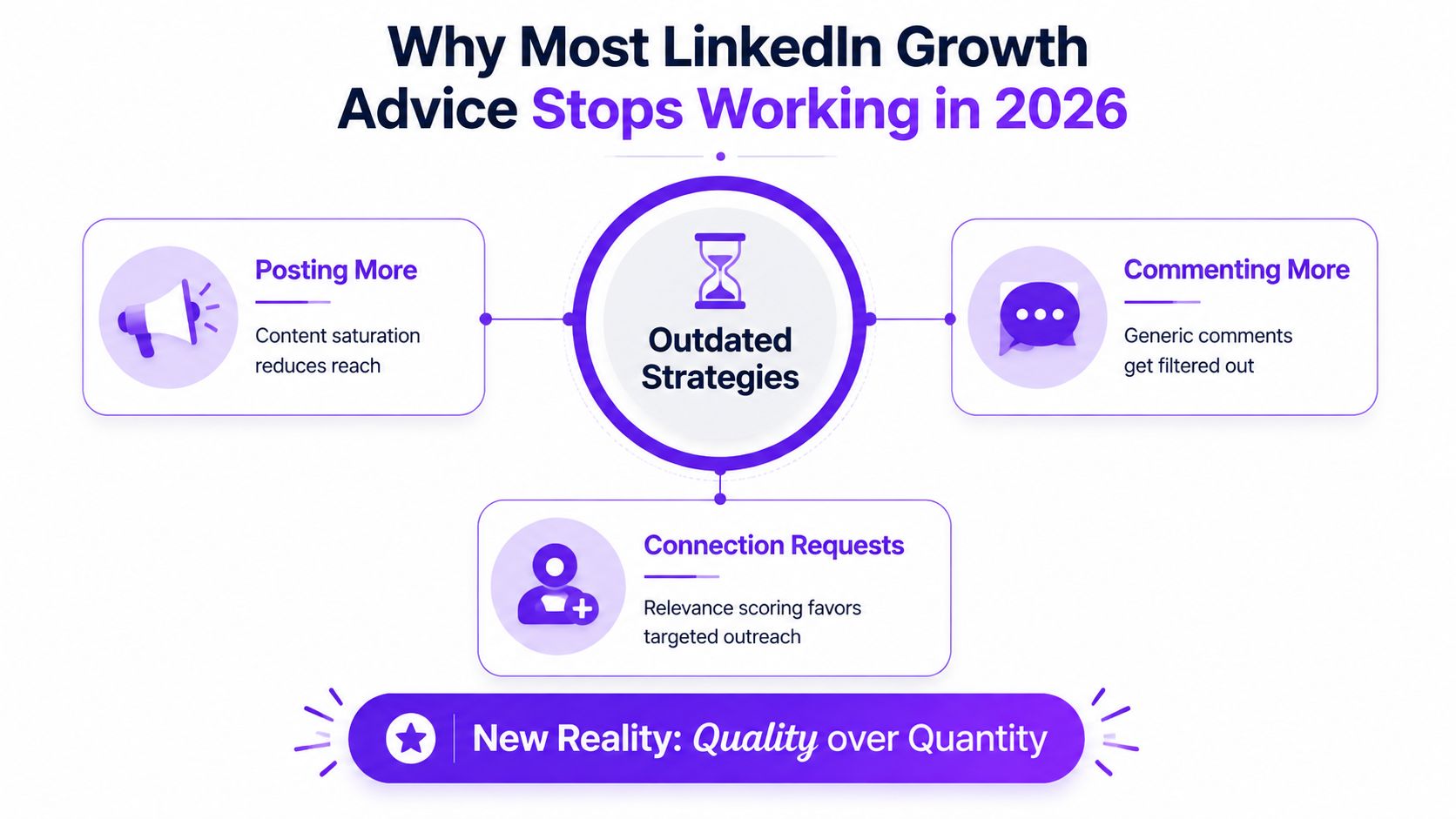
The old checklist still matters, but only if it leads to follows. Posting more helps when the post gives people a reason to stay. Commenting more helps when the comment sends them to a profile worth following. Without that, you get motion without conversion.
The bottleneck is not posting frequency
LinkedIn's own documentation shows that follower growth is tracked as a time-based metric, with follower analytics in the Analytics tab, a 30-day snapshot, and daily data in the API (LinkedIn Help). That matters because it shows what the platform can measure. It can see repeatable change, not just one good day.
The same pattern shows up in LinkedIn's product design for both people and pages. Members can view Total followers in creator analytics, and page admins can use follower views and management interfaces built for audience growth (LinkedIn Help). In practice, follower growth behaves like a reporting problem first and a creative problem second.
Practical rule: if your profile or page cannot tell you which posts bring followers, you are optimizing blind.
The popular “post daily” advice also misses a real constraint. Busy founders and creators rarely have time to maintain a high-output machine, and LinkedIn's own follower-growth guidance leans on posting, commenting, reposting, and distribution, not magic. A better model is to treat growth as a distribution design problem, where the goal is to create enough signal density that the right people see a reason to follow. That is also why some teams use a service like buy LinkedIn followers strategies to study how follower demand is shaped around profile signals and distribution, rather than treating every visitor the same way.
Volume without conversion is wasted effort
Raw activity can create impressions without creating audience. A post that gets seen but does not convert should be treated as a weak asset, not a win. The job is to move from “seen” to “followed.”
That is why a deliberate flow works better, profile first, content second, distribution third. If the profile is vague, the post has nowhere to send people. If the content is broad, the visitor still will not know why they should stick around.
For readers who want a paid shortcut after the organic basics are in place, one option is a community-driven service like Upvote Club, which is built around real engagement tasks rather than bots. Used carefully, that kind of tool supports the same principle this whole article is built on, stronger first signals, better distribution, and safer interaction. For readers refining the profile side of that funnel, the LinkedIn profile summary template can help turn profile visits into follows more reliably.
Set Up Your Profile and Personal Brand for Follows
Your profile is the first conversion page on LinkedIn. If the banner, headline, and About section feel generic, the follow button has to do too much work. A focused profile makes the decision easier.
Start with one clear topic and a visible follow path
The banner should signal what you're known for, not just look polished. The headline should promise a result or point of view that makes people curious enough to keep reading. Creator-focused guidance also points to Creator Mode and Creator Topics, and independent how-to guides explain that Creator Mode changes the main action from Connect to Follow, which lowers friction for visitors who are deciding whether to keep up with your posts (Audience My).
That small change matters because connection requests and follows are not the same behavior. If the page says “Connect” by default, some visitors will stop at networking. If it says “Follow,” the next step is obvious.
A clean profile checklist looks like this:
- Banner: show one topic, one audience, or one clear outcome.
- Headline: name the problem you help solve.
- About section: write in second person so the reader can see themselves in it.
- Creator Mode: turn it on if your goal is audience growth, not just networking.
- Custom URL: use a simple link that fits cleanly in bios, signatures, and speaker pages.
If you want a strong starting point for the About section, the LinkedIn profile summary template from Eztrackr is a practical reference because it keeps the summary focused on clarity instead of jargon.
A profile doesn't need more personality. It needs a clearer reason to follow.
Make the page easy to trust at a glance
A profile visitor makes a judgment fast. If the headline is broad, the About section rambles, and the featured area is cluttered, the follow action feels optional. If the page looks focused, the visitor gets a quick answer to three questions, who this is, what they post about, and why it's worth following.
A custom URL helps outside LinkedIn too. It's easier to drop into a speaker bio, newsletter footer, or email signature than a long default URL. Small friction points like that matter because follows often happen after repeat exposure, not on first contact.
If you use tools to test social proof, keep them separate from profile cleanup. A catalog item like LinkedIn Likes exists as a product listing, but the profile itself still has to do the heavy lifting. No badge or shortcut replaces a profile that clearly tells visitors why to follow.
Plan Content Formats and a Posting Cadence That Converts
Format choice shapes conversion more than posting frequency does. A strong idea in the wrong format can stall, while a clear idea in the right format can keep earning followers long after it is published. The goal is not to post everything. It is to repeat the formats that turn viewers into followers.
A practical content system starts with two pillars. One should be educational. The other can be personal, opinionated, or operator-focused. That gives you range without making your feed feel scattered.
Pick formats that create a reason to act. Carousels work well for saving and skimming. Short text posts can drive comments and profile clicks. Polls can create quick interaction, though they usually need a stronger follow-up post to convert that attention into lasting audience growth. Story posts help when you have a clear lesson or a point of view worth repeating.
If you want help shaping the wording, how to draft LinkedIn captions is a useful reference for structuring the opening, body, and close without making the post sound stiff.
A simple weekly rhythm is enough for most founders and creators. One post can teach. One can tell a story from real work. One can take a sharper position and invite a response. That cadence is realistic for busy operators and easier to keep up than a daily content treadmill.
- Monday: one short teaching post tied to a pillar.
- Wednesday: one story or lesson from your work.
- Friday: one opinionated post or carousel that invites comments.
The exact days matter less than the pattern. What matters is that the schedule is repeatable, because repeatable posting gives LinkedIn more chances to see which topics attract follows instead of one-off reactions. LinkedIn's follower-growth guidance for pages still points to posting, testing formats, and commenting on relevant content, but a time-budgeted plan is usually easier to sustain over months (LinkedIn Pages follower growth best practices).
Timing still matters, because early engagement shapes whether a post gets enough momentum to travel. Analysts at Buffer found strong posting windows on Wednesday afternoon and Friday afternoon, with a broader weekday peak in the afternoon and early evening (Buffer). That does not mean every audience behaves the same way, but it gives you a clean starting window for testing.
Use that window as a controlled experiment, not a rule. Post the same pillar in different slots, then watch which timing produces more comments, more profile visits, and more follows from the same type of content. The best slot is the one that consistently pulls in the right kind of attention for your audience.
The surrounding market still rewards consistency. One LinkedIn follower-growth guide says weekly posting can outperform monthly posting, and other guides recommend at least several posts per week to avoid a drop in reach (ConnectSafely AI). I treat that as a floor, not a target. If your cadence is too thin, LinkedIn has fewer chances to connect your content with people who are likely to follow.
A useful way to think about the week is simple. Use one format to build trust, one to start conversation, and one to signal point of view. That mix gives you enough variety to stay readable while still repeating the themes that convert.
Turn Engagement and Networking into a Follower Channel
Posting is only half the job. On LinkedIn, comments and outside traffic can bring in people who would never find your profile through your own feed alone. Engagement works as distribution, not etiquette.
A short daily routine can beat random activity
A founder I worked with had a small audience but strong opinions. He spent 15 minutes a day commenting on posts from creators above his level, direct peers, and likely buyers. He skipped the empty praise and added one concrete angle, one correction, or one example from his own work.
That approach works because each comment creates a second entry point to your profile. A thoughtful comment under a high-traffic post gets seen by people who never saw your original post, and if the comment gives them a reason to click, they move to your profile. Comment quality matters more than comment count.
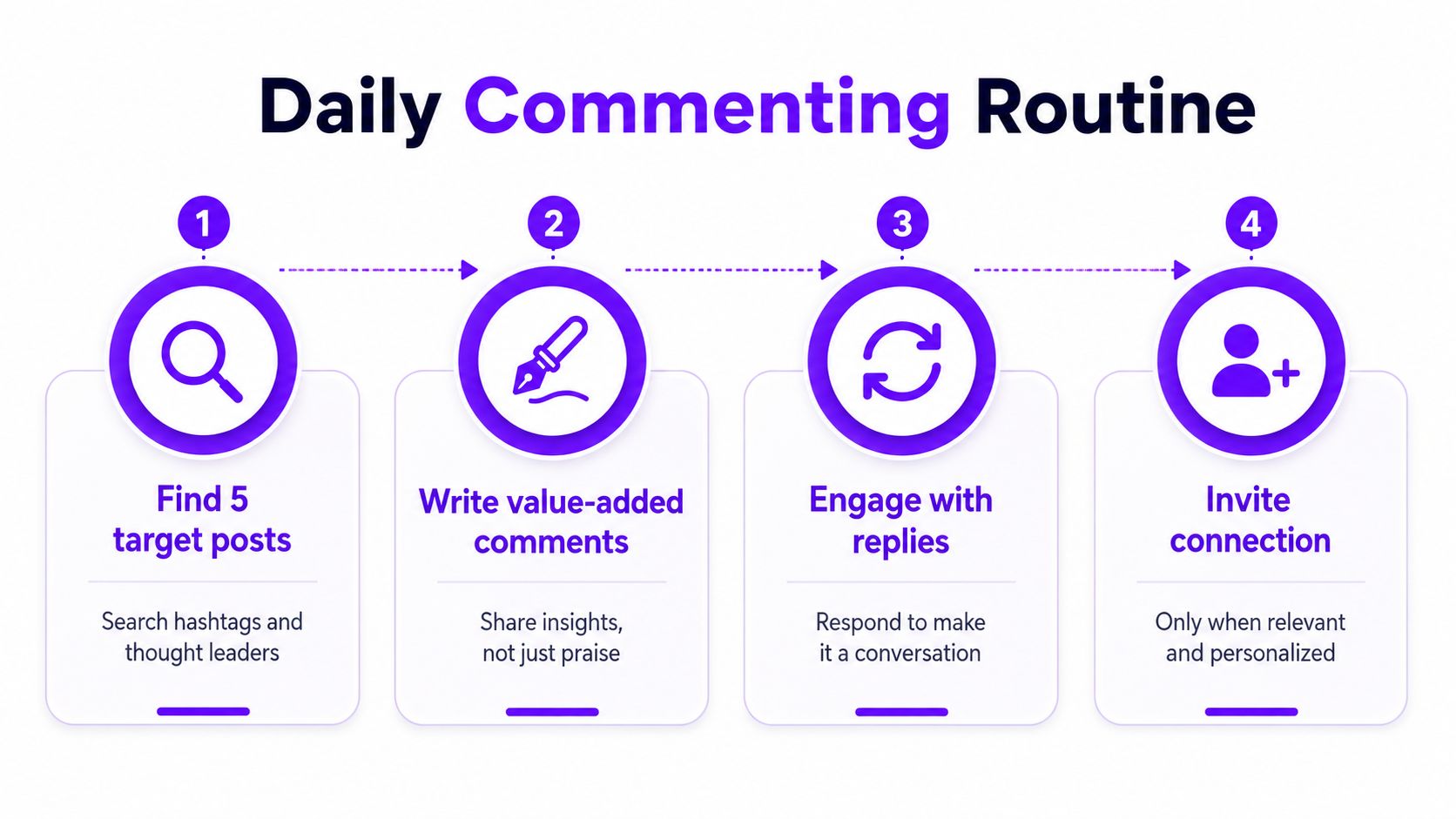
A simple routine looks like this:
- Find five target posts from creators, peers, and prospects.
- Write one useful comment on each, with a specific point.
- Reply quickly when someone responds, so it reads like a conversation.
- Send a connection request only when the context fits.
For a workflow that turns this habit into a repeatable follow channel, Upvote Club's LinkedIn follow flow uses the same idea. The point is to make engagement drive profile visits and follows, not to treat activity as random output.
Outside traffic matters more than in-platform engagement alone
People do not only follow you from LinkedIn. They also come in from your email signature, your other social bios, your website, and your blog. One guide recommends putting your LinkedIn profile link on other social channels and external pages so visitors can find and follow you from outside the platform (LinkedIn Preview).
That matters for creators who post less often. If someone sees your name on a podcast page, a newsletter, or a conference agenda, the follow can happen later when they search for you. The referral path does not have to be dramatic. It just has to be easy.
Don't treat comments as filler. Treat them as profile traffic.
A paid community-based boost around comments and first-page visibility can help when it supports real activity, not replaces it. Upvote Club's LinkedIn follow flow uses human accounts and transparent task completion rather than bots, so the assist stays tied to real engagement.
Measure Follower Growth With a Simple Weekly Loop
Weekly review keeps LinkedIn growth from slipping into habit and guesswork. The job is simple, find what brought in followers, what only created noise, and what deserves another round. You do not need a heavy dashboard. You need enough signal to make the next post sharper.
Start with the numbers that show follow behavior, not just activity. For company pages, LinkedIn gives admins follower analytics in the Analytics tab, along with follower trends and a 30-day snapshot. The API also exposes lifetime totals and daily follower counts within a selected date range. That is enough to compare one week with the next without building a reporting stack from scratch.
For member profiles, LinkedIn surfaces Total followers in creator analytics and follower views in management tools. So whether you are growing a personal brand or a company page, the measurement model is already there. The trick is to look at the pieces that explain movement, not the total by itself.
A weekly loop can stay very light.
- Check follower count and note whether the week added or stalled.
- Review the top post and identify which topic earned profile visits.
- Compare engagement patterns and look for comments and saves, not just likes.
- Keep the winning pillar and timing for the next week.
- Change one thing only, such as format, headline, or posting time.
That rhythm shows a common problem fast, strong engagement with weak follow conversion. Usually the post is interesting, but the profile or content promise is too vague to earn the follow. The opposite happens too. A profile can look polished while the content gives people no reason to return.
Use benchmarks as context, not as a finish line. Reported follower-count medians and top-quartile figures can help you judge whether you are well below, near, or beyond a rough middle zone (Kanbox). That comparison is useful for calibration, but it should not become the scoreboard.
What matters more is the direction of travel. If daily and lifetime follower totals both move up over several weeks, the system is working. If the daily line stays flat while output rises, the content mix needs attention.
The cleanest weekly tests stay narrow. Change timing, format, or headline, then compare follower conversion over the next week or two. If you are also trying to turn comments into profile visits, the follow-up matters too. A structured LinkedIn comment workflow helps keep that engagement tied to visible account activity instead of scattered effort. That gives you real evidence instead of a hunch dressed up as a strategy.
Seed the Golden Hour With a Safe Engagement Loop
The first hour after a post goes live is the window that matters most for distribution. Early likes, comments, and reposts often help a LinkedIn post move farther, but only if the activity looks like real audience behavior. The job is to shape that burst without crossing into fake velocity.
Use real people, not fake velocity
Any tool or process should pass a basic check, are the accounts real, is moderation strict, and can you see who completed the task? Upvote.club fits that safer category because it uses a community-driven model, real accounts, anti-bot moderation, emoji-based verification instead of passwords, and visible task completion. It also supports multi-platform growth across LinkedIn, Twitter, Instagram, TikTok, YouTube, and more, with free entry-level promotion available and advanced features if you want to move faster.
That matters because the goal is early engagement from verified human accounts, not empty traffic from bots or sloppy engagement pods. A few real interactions in the opening window look closer to normal audience behavior, which is better for the post and safer for the account. The point is not to fake a strong post, it is to give a good one a fair start.
If a growth service hides the people behind the task, it is the wrong fit for LinkedIn.
A narrow use case is the right one. You publish a post, your real network reacts first, and a community-based tool adds a few more human signals during the opening window. That supports distribution without replacing the work of writing something worth following.
Keep the Golden Hour tied to content quality
The Golden Hour only matters if the post gives people a reason to act. Timing cannot rescue weak positioning, and it cannot turn a vague post into something follow-worthy. The first-hour loop should sit on top of the profile work and content plan already in place.
A practical sequence looks like this. You post in your weekday window, your profile already says what you do, your comments and network bring the first reactions, and a community-driven engagement service can top up the early signal with real accounts if needed. That is a distribution assist, not a substitute for the post itself.
If you want to pair that with comment-driven growth, a LinkedIn comment workflow belongs in the same tactic set because it keeps visible interaction attached to new posts. Used carefully, it can support the first-hour signal without putting your account at risk.
Your 30-Day LinkedIn Follower Growth Playbook
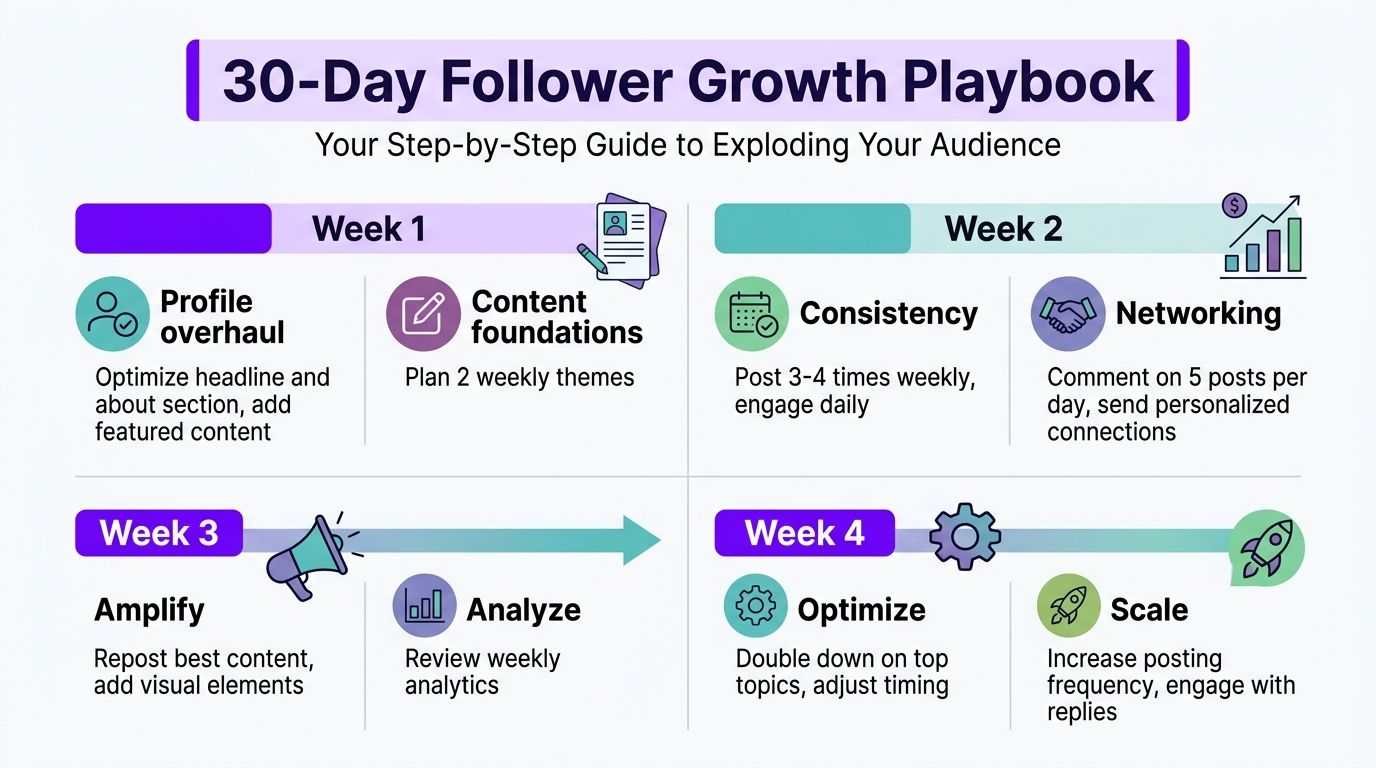
The simplest month-long plan is a distribution system with a feedback loop. Set the profile up to convert profile visits into follows, pick two content pillars, publish on a steady cadence, comment with purpose, and review what turns viewers into followers each week. Anything more elaborate usually turns into planning that never reaches the feed.
Week one belongs to profile cleanup and content themes. Week two is for consistency and a daily commenting habit that puts your name in front of the right people. Week three is where you look at which format earns profile visits, not just likes. Week four is for cutting weak topics and repeating the posts that brought in the right audience.
The growth trade-offs are easy to miss if you only chase reach.
- Connection-bombing strangers: it creates noise, not follow intent.
- Engagement bait: empty hooks can pull reactions without building trust.
- Bots and fake pods: they distort the signal and can put account integrity at risk.
- Copy-pasting the same post everywhere: format context matters more than many think.
A structured publishing workflow can help if it keeps the routine tied to real audience building. The newsletter flow at https://upvote.club/substack fits that use case because it keeps distribution habits anchored to actual content, not scattered posting. The wider pattern is the same across channels, steady content, visible interaction, and human signals that can stand up to scrutiny.
If you want a real engagement loop behind the playbook, Upvote Club gives you a community-driven way to create tasks for likes, comments, reposts, saves, and followers from verified human accounts. Visit Upvote Club to see how it can fit into a LinkedIn growth routine built on real signals, not bot noise.