Table of Contents
- Table of Contents
- The Reality of LinkedIn Growth in 2026
- Optimize Your LinkedIn Profile to Convert Visitors
- Fix the top half first
- Remove the usual conversion leaks
- Set a Posting Cadence You Can Actually Sustain
- Use a weekly rhythm you can repeat
- Headlines and Topics That Earn the Click
- Use four headline patterns that actually work
- Anchor topics to one niche
- Engagement Tactics That Move the Needle
- Treat the first hour like a signal window
- Comment where your audience already hangs out
- Keep connection outreach targeted
- Turn Existing Reach Into Followers With Community-Driven Amplification
- Put a follow decision in front of each entry point
- Use community-based amplification when timing matters
- Measure, Test, and Adjust Over a 90-Day Window

You can post on LinkedIn three times a week, leave thoughtful comments, tweak your headline, and still watch follower growth crawl if your profile leaks visitors and your posts never turn into real follows. That's the part most advice skips. The problem isn't just what you publish, it's whether people who land on your profile, see your content, or hear about you through other channels decide to follow you.
The people who win in 2026 treat how to grow LinkedIn followers as a system, not a hobby. They tighten the profile, set a cadence they can keep for months, publish around topics people click, work the first hour after posting, and use non-posting channels to turn existing reach into followers. If you want a broader networking angle alongside the follower game, this networking for businesses guide is a solid companion read.
Table of Contents
- The Reality of LinkedIn Growth in 2026
- Optimize Your LinkedIn Profile to Convert Visitors
- Set a Posting Cadence You Can Actually Sustain
- Headlines and Topics That Earn the Click
- Engagement Tactics That Move the Needle
- Turn Existing Reach Into Followers With Community-Driven Amplification
- Measure, Test, and Adjust Over a 90-Day Window
The Reality of LinkedIn Growth in 2026
You know the feeling. You've posted for months, maybe even years. You comment on other people's updates, your bio looks decent, and your profile photo isn't a disaster. Yet the follower count barely moves, which makes every new post feel like a coin toss instead of a system.
That's why I don't talk about LinkedIn growth as a list of tricks. I treat it as a sequence: profile, cadence, content, engagement, amplification, and measurement. If one part is weak, the rest underperform. A sharp post can still lose the click if your headline is dull. Great content can still fail if your profile doesn't convert the visit. And all the posting in the world won't help if you never review what's working over time.
LinkedIn's own follower-growth guidance says posting daily can grow followers 8x faster than posting weekly, and it also tells Pages to track follower analytics over time rather than obsess over one post. That's the mindset shift. Growth here is cumulative, not viral. Each post, profile visit, and connection request adds another chance to earn a follow, and the wins stack.
I'd also keep the networking side practical. A good networking for businesses guide helps frame LinkedIn as relationship building, not just broadcasting. That's the right mental model, because the people who follow you usually do it after repeated trust signals, not after a single clever post.
By the end of this guide, you should know exactly what to change this week, what to ignore, and how to judge progress over a 90-day window instead of getting distracted by daily noise.
Optimize Your LinkedIn Profile to Convert Visitors
Your profile is not a resume. It's a landing page with one job, turn a visitor into a follower before they leave. If the page feels generic, vague, or built around your job title instead of your point of view, you're wasting every profile view that your posts generate.
Fix the top half first
Start with the banner image. It should make a clear promise about who you help and what you talk about, not just repeat your logo. The headline should read like an outcome statement, not a corporate title. The About section should speak to the visitor in second person, because the person reading it is deciding in seconds whether you're worth following.
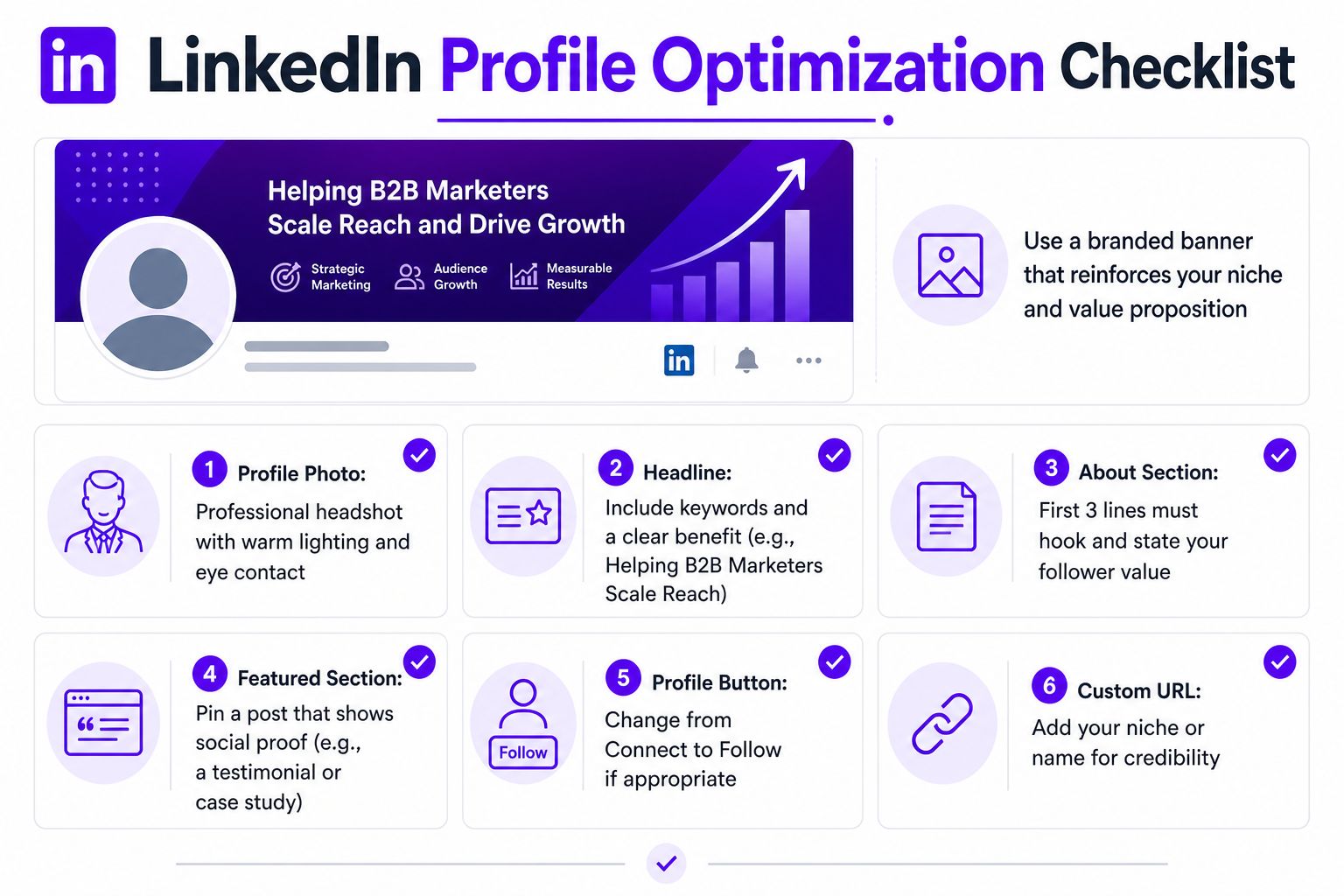
The Featured section needs proof, not filler. Pin your strongest post, a testimonial, a newsletter issue, or a clear example of your best work. Your experience entries should also stop reading like a duties list. Write them so a target follower sees credibility signals, subject matter depth, and a reason to trust your point of view.
If you want a simple rule, use this:
Practical rule: If a stranger lands on your profile and can't tell what you help with in a few seconds, the profile is costing you followers.
Remove the usual conversion leaks
Most accounts make the same mistakes. They hide the value proposition in a vague headline, bury the best work below the fold, and leave the About section written like a bio nobody asked for. They also forget that the profile button and custom URL matter. Small changes here can lift how many visitors follow after they click in.
Use the effective DM templates for founders as a reminder that direct outreach works better when it's specific and human. That same standard applies to your profile copy. Make it easy for a visitor to understand why your feed is worth their attention.
If you want a practical reference point, I also keep our LinkedIn growth hub at Upvote Club in mind when I'm auditing a profile. And if your content is already getting attention, LinkedIn Likes is a product name you may see in the market, but the point is simple, the first impression has to justify the follow.
Set a Posting Cadence You Can Actually Sustain
LinkedIn's own guidance says posting daily can grow followers 8x faster than posting weekly. That's a real ceiling, but it's not the right target for everyone. If you're a full-time creator or a team with content ops in place, daily posting can make sense. For most professionals, it turns into burnout, sloppy ideas, and inconsistent quality.
Independent analysis from Buffer, based on over 1 million posts, points to 2 to 5 posts per week as the sweet spot for LinkedIn growth. That's the range I'd give most operators. It's frequent enough to stay visible, but realistic enough to keep up for months. Practitioner benchmarks also say many beginners can reach 1,000 followers in 3 to 6 months with 3 to 5 posts per week, an optimized profile, and active comment engagement, which fits the same operating logic. Buffer's LinkedIn follower guide is the clearest public case for that cadence.
Use a weekly rhythm you can repeat
My default rhythm is simple.
- Monday: one opinion post with a strong point of view.
- Wednesday: one how-to post tied to a narrow problem.
- Friday: one story, lesson, or mistake you've lived through.
If you have more bandwidth, add a fourth or fifth post, but don't create a schedule you'll hate by week three. Batch your ideas on one day, draft in one block, and keep a running list of topics so you're not staring at a blank screen every morning.
The point isn't raw volume. It's dependable repetition. The platform rewards accounts that look active, focused, and worth returning to. A steady cadence also gives you clean data later, because you can judge follower movement against a repeatable rhythm instead of random bursts.
I'd also keep the distribution side tied to a real workflow. Our medium growth page at Upvote Club is a good example of how consistent publishing and community support can sit inside one system. On LinkedIn, the same logic applies. Pick a cadence, keep it, and give it a full 90-day run before changing the game.
Headlines and Topics That Earn the Click
A dull post doesn't fail because the algorithm hates you. It fails because nobody stops for it. The headline is the first filter, and on LinkedIn that means you need language that gives people a reason to click before they scroll away.
Use four headline patterns that actually work
The strongest patterns are straightforward. Specific numbers get attention because they signal clarity. Contrarian takes work because they break the expected pattern. How-to promises work because they reduce uncertainty. Story openings work because people want to know what happened next.
A few rewrites make the difference obvious.
-
Weak: “Thoughts on content marketing”
-
Strong: “What I'd do if I had to grow a LinkedIn audience from zero”
-
Weak: “Lessons from posting consistently”
-
Strong: “I posted on LinkedIn every week for months, here's what changed”
-
Weak: “How to improve your profile”
-
Strong: “3 profile fixes that make visitors more likely to follow”
-
Weak: “A note about engagement”
-
Strong: “I stopped chasing likes and started writing for one niche, everything got easier”
Those aren't magic formulas. They work because they create a clear promise. They tell the reader what kind of payoff to expect, which makes the click more likely.
Anchor topics to one niche
If you want followers, stop sounding like a generalist with a calendar. Pick one audience and one set of problems. Then mine your own work, client calls, mistakes, wins, and repeat questions for evergreen angles. You don't need endless originality. You need repeatable relevance.
One more rule matters. Watch which older posts still draw comments or profile visits, then build the next topic from that signal. That's better than guessing what the audience might care about this week.
A strong headline on a weak topic still underperforms. A weak headline on a strong topic wastes the topic. You need both.
The video below is worth a look if you're testing how your own profile language comes across in motion.
Engagement Tactics That Move the Needle
Posting is only one layer. If you ignore engagement, you're asking each post to do all the work alone. I don't like that strategy, because LinkedIn rewards accounts that look alive around the post, not just inside the post.
Treat the first hour like a signal window
The first sixty minutes after publishing matter because that's when real likes, comments, and reposts tell the platform the post deserves more reach. I call this the Golden Hour. Don't leave it to chance. Tell teammates, peers, or trusted contacts when a post goes live, then reply quickly to every real comment so the thread keeps moving.
Comment where your audience already hangs out
Your own feed is too small a stage. Commenting on high-visibility posts in your niche gets your name in front of people who already care about the topic. Use comments that add a point, a counterpoint, or a real example. Skip the empty praise. People remember the person who contributes, not the person who drops “great post” and disappears.
Keep connection outreach targeted
For a warm, established account, a sensible range is about 20 to 25 connection requests per day. If you're warming up a newer account, keep it around 5 to 10 per day. Aim for an acceptance rate of 30 to 40 percent. If it slips near 15 percent, tighten targeting before sending more requests. That pattern is cleaner than spraying invites and hoping for the best, and it keeps your network relevant. Bearconnect's organic follower guidance is useful here because it puts the pacing in plain numbers.
Use the commenting guide at Upvote Club as a reminder that good engagement is a daily habit, not a burst of activity. My simple stack is this, publish, comment on three to five relevant posts, reply to comments fast, and send a small batch of targeted requests. Repeat it until it feels boring. Boring is good. Boring is repeatable.
Turn Existing Reach Into Followers With Community-Driven Amplification
A lot of LinkedIn growth is a conversion problem, not a content problem. People already find you through search, newsletter reads, event attendance, email traffic, and profile visits. The mistake is assuming they'll follow on their own.
Put a follow decision in front of each entry point
If someone lands on your profile from search, the banner and headline should make the follow choice obvious. If they come from a newsletter, the end of the email should point them to your profile or page. If they found you through an event, your follow ask should sit inside the post-event follow-up. If they arrive from email traffic, don't send them to a dead-end page. Send them somewhere that makes the next action easy.
That's the hidden part most guides skip. Existing attention needs a conversion moment. Otherwise you're paying the attention tax without collecting the follow.
Use community-based amplification when timing matters
With our Upvote.club service, we use a community-driven growth model that helps members build real engagement without bots. When someone signs up, they receive 13 free points and 2 task slots. They verify each network once with an emoji-based system, and they never need to share passwords. They earn points by completing tasks for others, then use those points to create their own tasks.
Those tasks can generate real likes, comments, reposts, saves, and followers from verified human accounts. That matters during the Golden Hour, because early activity is often the difference between a post that stalls and one that keeps circulating. This is the same broad tactic influencer agencies use for client content, just without the private agency layer.
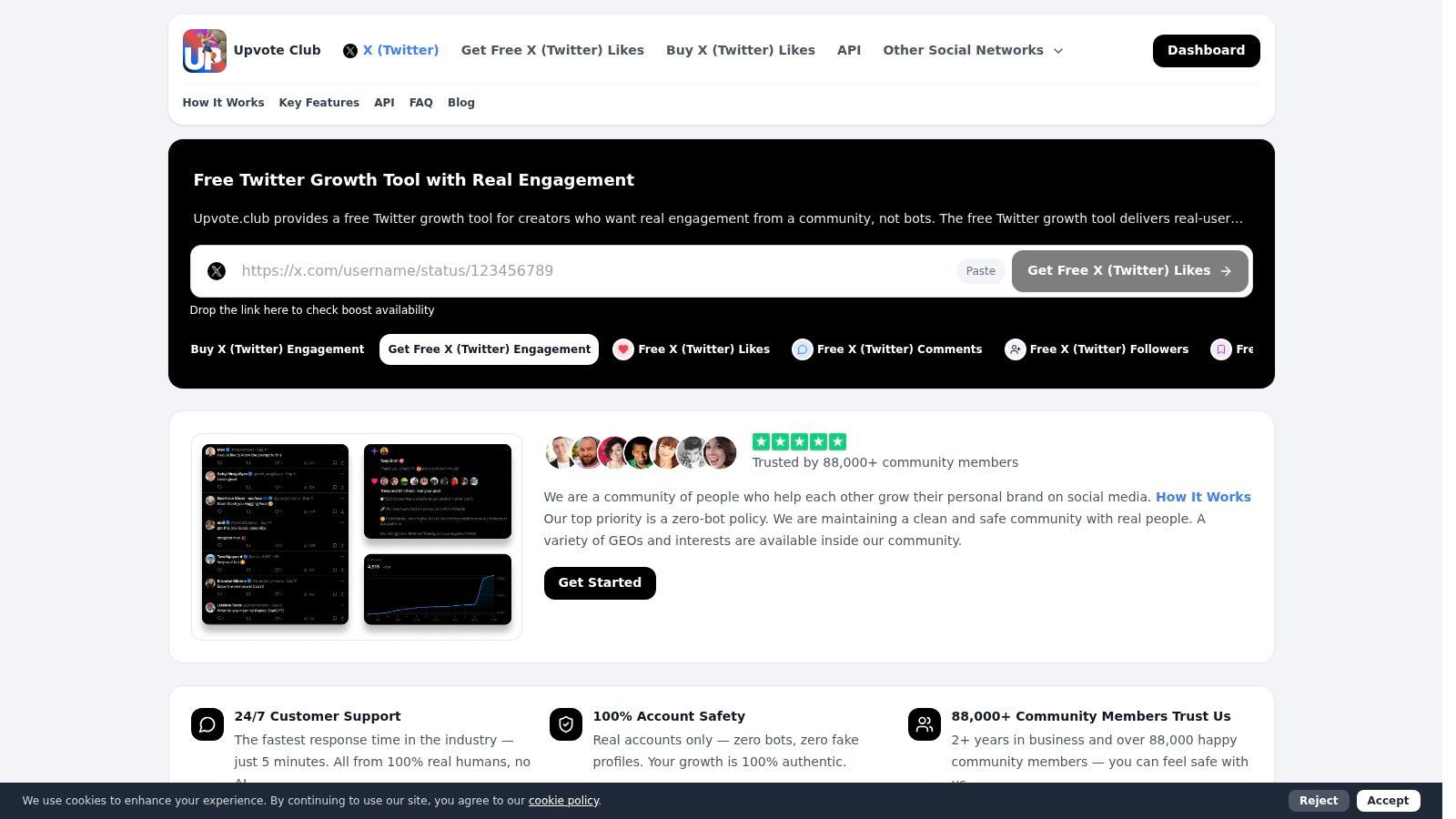
I'd use this as one lever, not the whole plan. Strong profiles and steady content still do the heavy lifting. Community-driven amplification just helps real engagement show up when timing matters and the post needs an early push from human accounts.
Measure, Test, and Adjust Over a 90-Day Window
Follower growth on LinkedIn is cumulative, so short windows lie to you. One strong week can flatter a weak system. One slow week can make a good system look broken. That's why I judge the work over 90 days, not a handful of posts.
The numbers that matter are simple. Track net new followers per week, profile views, search appearances, and follower demographics inside LinkedIn's analytics. Don't get distracted by vanity metrics that don't move people toward your profile or your page. LinkedIn's own guidance points Pages toward follower analytics as a core measurement tool, so the right question is whether your posting frequency and profile changes are producing more follows over time, not whether a single post went oddly viral. LinkedIn's follower-growth guidance makes that measurement mindset plain.
A simple test works fine. Run one headline style for a week, then swap to another style the next week. Watch which version earns more profile visits and follows, then keep the winner. If profile views rise but followers don't, the profile needs work. If engagement is weak in the first hour, fix the Golden Hour routine. If results bounce around wildly, the cadence is inconsistent.
The fastest way to stall is to blame the algorithm for a weak system. Fix the conversion layer first, then the cadence, then the content, then the early engagement.
If you want a cleaner way to create early engagement while you build the rest of your LinkedIn system, visit Upvote Club. We use a community model that helps members trade real tasks for real engagement, without bots or password sharing. If you're serious about turning LinkedIn attention into followers, that's a practical place to start this week.