Table of Contents
- Why Your LinkedIn Headline Is Your Most Important 220 Characters
- Your headline has three jobs
- Stop writing for your coworkers
- Finding the Right Keywords for Your Headline
- Pull keywords from job descriptions
- Audit people who already have the job
- Build a short keyword bank
- Proven Headline Formulas for Any Profession
- Formula comparison
- My favorite formula for most people
- Different formula, different job
- Crafting Your New Headline with Before and After Examples
- Example one: software engineer
- Example two: marketer
- Example three: project manager
- The rewrite pattern I use every time
- How to Test Your Headline for Real World Results
- What I track
- My testing method
- What counts as a win
- Your Headline Is a Tool Not a Title
- Keep it active
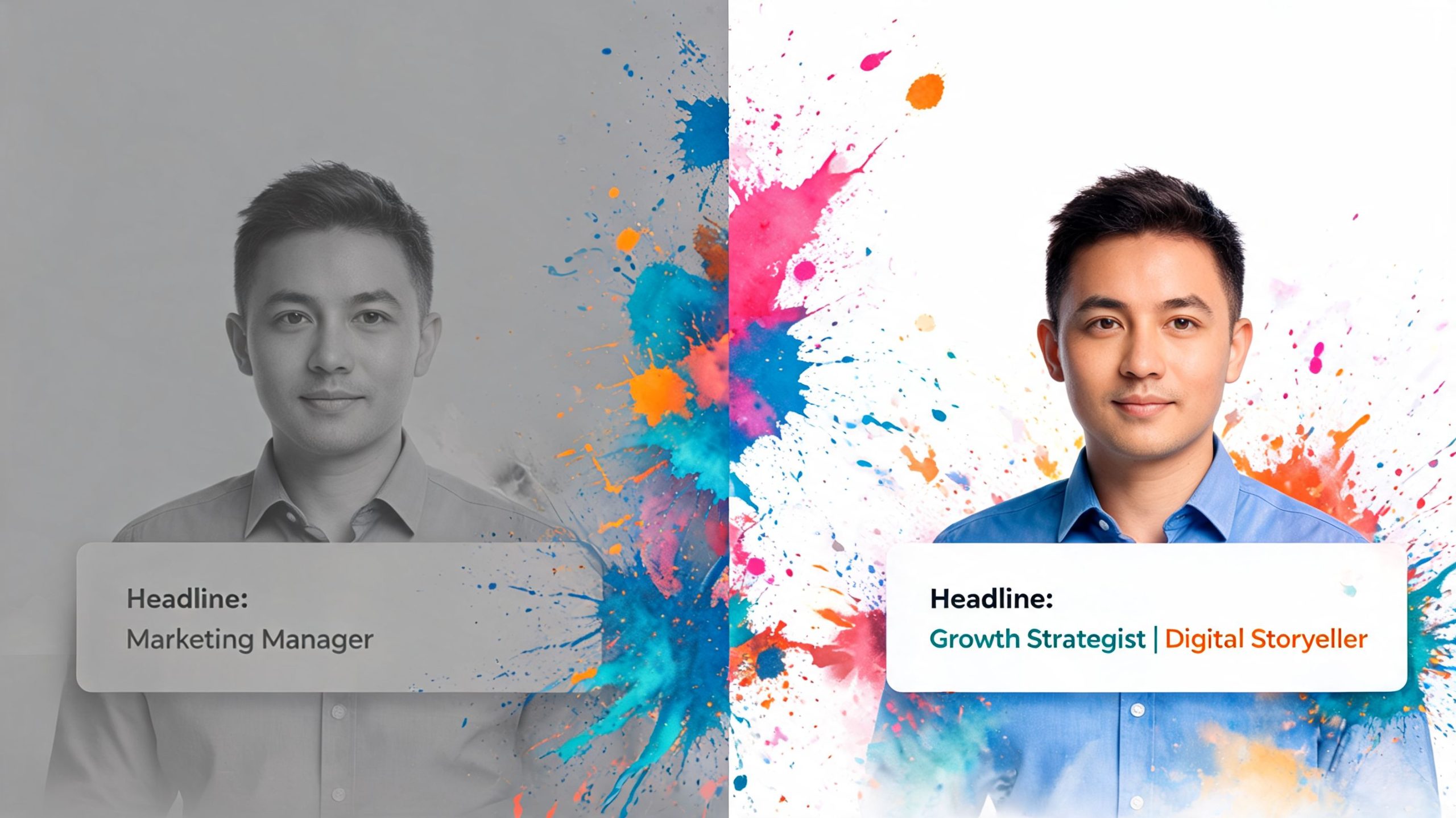
Your current LinkedIn headline probably says something accurate and forgettable. Something like “Marketing Manager at Acme” or “Software Engineer.” I see that all the time, and I’ve fixed it on my own profile more than once.
That kind of headline tells people almost nothing that helps you get found or remembered. A strong headline for linkedin should pull search traffic, make the right person click, and tell them what you do in a way that sounds sharp, not inflated.
Why Your LinkedIn Headline Is Your Most Important 220 Characters
Treating the headline like a job title field is the first mistake.
Your headline is the line LinkedIn keeps showing over and over: in search, comments, connection requests, and profile previews. If it wastes space, you waste attention. LinkedIn gives you 220 characters, and I think you should use them with intent.
A small profile element can change visibility more than people expect. For example, LinkedIn profile photo data shows that profiles with professional photos receive 21 times more profile views and 36 times more messages. Your headline isn't a photo, but the lesson is obvious: tiny profile choices affect whether people notice you at all.
If your profile photo also needs work, clean visual consistency helps. I like using polished, studio-quality AI portraits when someone doesn't want to book a full photo shoot right away.
Your headline has three jobs
I use this test every time I rewrite a headline:
- Search job. It needs to contain the words recruiters, clients, or peers are typing.
- Click job. It needs to make a person think, “This looks relevant.”
- Positioning job. It needs to tell the market what lane you're in.
If your headline only names your employer, it fails all three.
Practical rule: If a stranger reads your headline and still has to guess your specialty, your headline is weak.
Stop writing for your coworkers
Your coworkers already know what you do. Your next recruiter doesn't. Your next client doesn't. Your next partner definitely doesn't.
That means “Account Executive at X,” “Founder,” and “Consultant” are all lazy unless the rest of the line adds context. I want to know your field, your method, or your angle.
Here's the shift I recommend. Don't write your headline as an HR label. Write it as a short positioning statement.
A simple example:
| Weak | Better |
|---|---|
| Marketing Manager | B2B Marketing Manager | SEO, Content Strategy, Demand Gen |
| Software Engineer | Backend Software Engineer | Python, APIs, Cloud Systems |
| Founder | Founder | Building workflow software for finance teams |
If you want more LinkedIn-specific profile ideas beyond the headline, I’d also review practical profile growth tactics on Upvote Club’s LinkedIn page.
Finding the Right Keywords for Your Headline
I don't guess keywords. I collect them.
A good headline for linkedin starts before you write anything. You need the same language your target market uses. Not your internal company jargon. Not your favorite buzzwords. The words that keep appearing in job descriptions and strong profiles.
LinkedIn gives top priority to headlines for search filtering, and profiles that include core skills in the headline can rank up to 80% higher in recruiter searches, according to this keyword-focused LinkedIn headline analysis. That’s why keyword work comes first.
Pull keywords from job descriptions
I use a simple method. Open 5 to 10 job descriptions for the role you want. Then I scan for repeated terms.
Look for:
- Role labels like Product Manager, RevOps Manager, Data Engineer
- Hard skills like SQL, Python, Figma, Demand Generation
- Industry terms like FinTech, SaaS, Healthcare
- Credentials like PMP, CPA, AWS Certified
Don't copy one posting word for word. Pull the terms that show up repeatedly. Repetition tells you what the market cares about.
Audit people who already have the job
After job descriptions, I check profiles of people already in the role I want.
I pay attention to:
- The first few words in their headline
- Which skills appear most often
- Whether they mention a domain, such as B2B SaaS or eCommerce
- Whether they frame themselves around delivery, systems, growth, or leadership
This tells you what “normal” looks like in your space. Then you can write a headline that fits the search pattern without sounding cloned.
If your target role is “data analyst,” but strong profiles keep using “SQL,” “Power BI,” and “predictive modeling,” leaving those out is a bad decision.
Build a short keyword bank
I tell people to stop stuffing every term into one line. Build a shortlist instead.
Use a table like this:
| Keyword type | What to collect | Example |
|---|---|---|
| Core role | Main title recruiters search | Content Strategist |
| Skill terms | Tools, methods, platforms | SEO, GA4, Editorial Planning |
| Domain | Industry or audience | B2B SaaS |
| Proof signal | Credential or known strength | HubSpot Certified |
Then write from that bank. You'll sound clearer because you're choosing, not dumping.
The best headlines feel tight because the writer already did the sorting before touching the text box.
Proven Headline Formulas for Any Profession
Blank fields make people overthink. Formulas fix that.
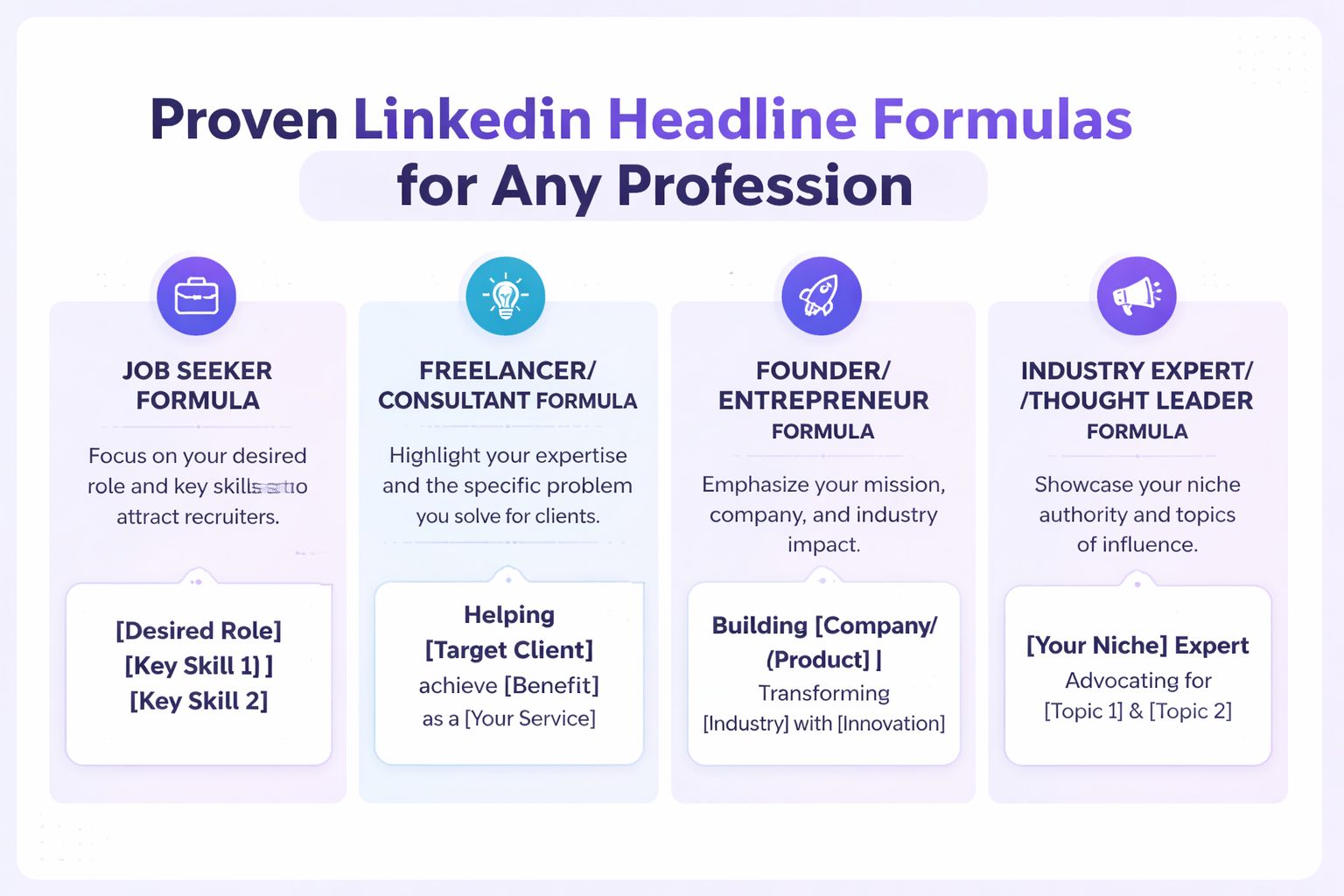
I don't mean robotic templates. I mean structures that force clarity. When I rewrite a headline, I choose a formula based on the job the profile needs to do.
One structure stands out because it has actual performance data behind it. Research analyzing 61,000 LinkedIn profiles found that the R-S-I-C format, meaning Role, Specialization, Impact, Credentials, generated 2.4 times more recruiter replies than generic keyword-only headlines, based on this LinkedIn headline research breakdown.
Formula comparison
Here’s how I think about the main options:
| Formula | Best for | Example structure |
|---|---|---|
| Role + Skills | Job seekers | [Role] | [Skill 1] | [Skill 2] |
| Helping + Audience + Benefit | Freelancers, consultants | Helping [Audience] with [Outcome] | [Service] |
| Building + Product + Market | Founders | Building [Product] | [Who it serves] |
| R-S-I-C | Most professionals | [Role] | [Specialization] | [Impact] | [Credential] |
My favorite formula for most people
For most professionals, I’d use this:
[Role] | [Specialization] | [Impact or outcome] | [Credential or credibility signal]
Why? Because it covers the full decision chain. Who you are. What you focus on. What kind of result you drive. Why someone should trust it.
Examples:
- Project Manager | SaaS Implementations | Leading cross-functional delivery | PMP
- Content Strategist | B2B SEO | Building editorial systems that drive qualified traffic
- Data Analyst | SQL, Power BI | Turning operational data into reporting decisions
Notice what these do right. They don't try to sound poetic. They sound usable.
Different formula, different job
If you freelance, your client doesn't care about your employer nearly as much as the problem you solve.
Use this instead:
- Helping B2B startups improve conversion paths through UX writing
- Helping founders turn long-form content into short-form distribution systems
If you're a founder, mission and market fit matter more than your technical title.
Try:
- Building payroll software for remote teams
- Founder | AI workflow tools for support teams
I also like adapting these formats for cross-platform personal branding. If you publish articles outside LinkedIn, it helps to keep your positioning consistent across channels like Medium growth workflows.
A good formula doesn't make you sound generic. It stops you from sounding vague.
Crafting Your New Headline with Before and After Examples
Many learn this fast once they see the rewrite.
I’m going to show you the exact transformation I’d make, not abstract advice. The goal is simple: move from a label to a useful statement.

Example one: software engineer
Before
Software Engineer
This says almost nothing. Front end or back end? Startup or enterprise? APIs or mobile? Hiring manager or recruiter has to guess.
After
Senior Software Engineer | Backend Development with Python and AWS | Building scalable FinTech systems
Why this works:
- It leads with a recognizable role
- It adds searchable technical terms
- It names a domain
- It tells me the scale and type of work
Example two: marketer
Before
Marketing Manager at ABC
This is the classic dead headline. Accurate and weak.
After
B2B Marketing Manager | SEO, Content Strategy, Demand Generation | Growing pipeline through organic acquisition
The rewrite gives you:
- a market category
- practical skill keywords
- a business outcome
That’s enough for a recruiter, founder, or agency lead to understand your lane fast.
If you're also rebuilding your supporting materials, a solid AI resume builder can help you align your resume wording with the same role and keyword strategy you're using in the headline.
Example three: project manager
Before
Project Manager
Too broad. Construction? IT? Product? Client delivery?
After
Project Manager | Cross-functional SaaS Delivery | Agile workflows, stakeholder alignment, launch execution
This one works because it removes ambiguity. A person reading it knows what environment you operate in and what you handle.
Your headline should answer “what kind?” before anyone has to ask.
Here’s a quick walkthrough if you want to see another practical angle on headline writing and profile messaging:
The rewrite pattern I use every time
When I edit a weak headline, I usually follow this order:
- Start with the role you want to be known for.
- Add two or three search terms that belong to that role.
- Add context like industry, audience, or work type.
- Finish with impact if you can state it clearly.
That keeps the line readable. It also stops you from turning your headline into a messy keyword pile.
How to Test Your Headline for Real World Results
A headline is often changed once, then left alone for a year. That's sloppy.
A headline is not finished when it's written. It's finished when it performs. If you don't test it, you're just guessing with better formatting.
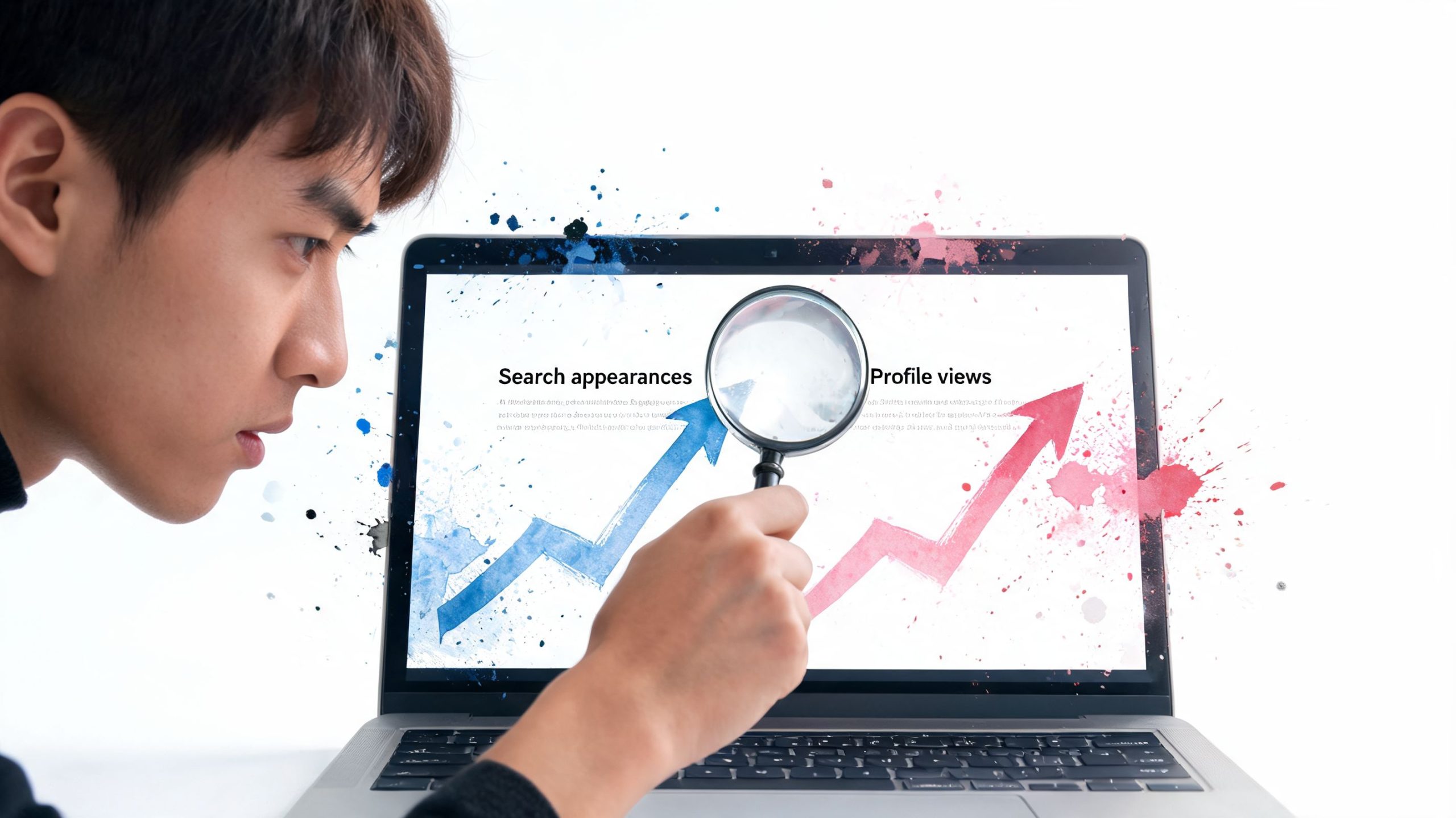
Headline testing matters because the upside can be big. Optimized headlines can yield up to 6 times more opportunities, and 72% of A/B tests show a 25 to 40% uplift in views for variants that combine skills and metrics, according to this LinkedIn headline A/B testing reference.
What I track
I keep the process simple and consistent. I watch:
- Search appearances
- Profile views
- Connection requests
- Inbound messages from relevant people
You don't need a fancy dashboard to start. LinkedIn already gives enough signal for a practical test.
My testing method
I usually create two or three versions.
| Version | Focus | Example pattern |
|---|---|---|
| A | Skills-first | Role | Skill 1, Skill 2 | Domain |
| B | Outcome-first | Role | Outcome | Skill 1, Skill 2 |
| C | Credibility-first | Role | Specialization | Credential |
Then I run one version long enough to gather a clean baseline, switch, and compare.
What I don't do:
- change the headline every other day
- rewrite the whole profile at the same time
- judge performance from one random spike
Test one variable at a time. If you change your headline, banner, photo, and About section together, you won't know what actually worked.
What counts as a win
A winning headline doesn't need to impress everyone. It needs to attract the right people.
If recruiter messages get more relevant, that's a win. If profile views rise but nothing useful happens, that version may be noisy, not strong. Relevance beats vanity.
I also care about what happens after I post. A better-positioned profile usually gets better responses to comments, content, and connection requests because people immediately understand who I am.
For people who want to measure engagement quality around LinkedIn activity, I’d also look at tools and workflows connected to content response signals, including options around LinkedIn saves tracking and promotion ideas.
Your Headline Is a Tool Not a Title
The biggest shift is mental.
Stop treating your headline like a static label you set once after a promotion. Treat it like a working tool. When your goals change, your headline should change too. New role target, new niche, new audience, new positioning.
I update mine when I want different conversations. That's the standard I recommend. If you're job hunting, consulting, building an audience, or moving into a different field, your old headline may already be costing you attention.
Keep it active
Use this maintenance cycle:
- Review it regularly when your role or target changes
- Check if the keywords still match the jobs or clients you want
- Rewrite for clarity first and polish second
If you're also growing your network on LinkedIn, the next logical move after fixing your headline is improving who sees your profile and who you connect with. For this, smarter outreach and LinkedIn connection growth tactics start to matter.
Your headline is not your identity. It's your current positioning. That makes it flexible, and that's a good thing.
If you want more traction after fixing your profile, Upvote Club is worth a look. I like that it works as a community system, not a bot farm. You complete tasks, earn points, and use those points to get real engagement from verified human accounts across platforms like LinkedIn, Twitter, Reddit, TikTok, YouTube, and more. It gives you a practical way to support your content during the first hour after posting, which is often the window that decides whether a post gets ignored or picked up.