Table of Contents
- Table of Contents
- Why Your Follower Count Is Stuck
- The wrong model
- The model that works
- How to Get Followers on Twitter Fast
- How to Get 1000 Twitter Followers for Free
- Is 1000 Followers on Twitter a Lot?
- Build a Profile That Attracts Followers
- Pass the three-second test
- The pinned post does more work than most bios
- Create Content People Actually Want to See
- Use formats that fit discovery
- Build recurring post types
- What Is the 4-1-1 Rule on Twitter?
- Write for scanning, not for admiration
- Use Active Engagement to Drive Follows
- Replies beat passive posting when nobody knows you
- What a strong reply looks like
- Where to show up besides replies
- Can You Buy Twitter Followers?
- Get Consistent Engagement with Our Community
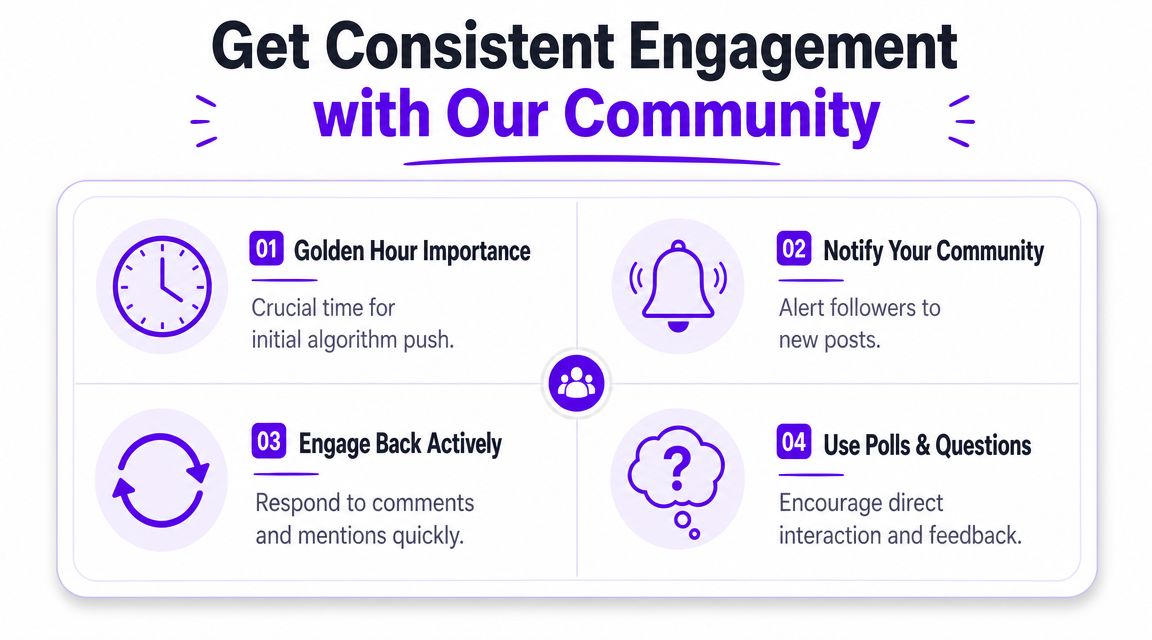
- Why early interaction matters
- How we use Upvote.club responsibly
- Measure and Refine Your Twitter Strategy
- Track the signals tied to follower conversion
- Use a simple review loop
You're posting on X, getting a handful of likes, maybe a reply or two, and your follower count barely moves. That's the point where many start taking bad advice. They post more often, copy viral formats, or chase random trends that don't fit their niche.
The problem is simpler. Most accounts don't lack effort. They lack a system that turns visibility into profile visits, and profile visits into follows. If you want to learn how to get followers on Twitter, you need a profile that converts, content people stop for, replies that put you in the right rooms, and a way to get real interaction early enough for the post to keep moving.
Table of Contents
This table of contents maps the complete Twitter follower growth system, from fixing profile conversion and creating discoverable content to active engagement, community support, and performance review. Use the links below to jump directly to the part of your growth process you need to improve.
- Why Your Follower Count Is Stuck
- How to Get Followers on Twitter Fast
- Build a Profile That Attracts Followers
- Create Content People Actually Want to See
- Use Active Engagement to Drive Follows
- Can You Buy Twitter Followers?
- Get Consistent Engagement with Our Community
- Measure and Refine Your Twitter Strategy
Why Your Follower Count Is Stuck
You publish a solid post, check back an hour later, and it has barely moved. A few likes. No replies. No profile visits worth mentioning. That pattern usually has less to do with content quality than with distribution in the first hour.
Follower growth on X stalls when posts fail at one of two jobs: getting seen and giving people a reason to check your profile. Good writing helps, but reach and conversion decide whether that writing turns into followers.
I see the same failure loop across stuck accounts. They post into a quiet timeline, get weak early interaction, lose momentum during the Golden Hour, and never collect enough attention to trigger the second step that matters: profile visits. Once that happens a few times in a row, creators start posting more random thoughts, which makes the account even harder to place in someone's mind.
The wrong model
A lot of accounts treat growth like a publishing problem only. On X, it works more like a funnel.
A post has to earn attention, then interest, then a profile click, then a follow. If any step is weak, the whole chain underperforms.
Here's what usually keeps accounts flat:
- Posts with no clear angle or packaging. Strong ideas get ignored when the hook, structure, or format gives people no reason to stop.
- No early interaction. If nobody engages soon after publishing, distribution slows fast.
- Success measured by likes only. Likes can signal approval, but profile visits and follows show whether a post converts.
- No presence in active communities. Accounts that never join conversations depend too much on their own limited reach.
One practical test matters here. If a post gets impressions but almost no profile visits, it is not doing follower-growth work.
The model that works
The accounts that grow consistently usually combine three things: clear positioning, posts built for response, and reliable early interaction.
The third piece gets overlooked. X rewards signs of life early. Replies, reposts, saves, and discussion in the first stretch after publishing can decide whether a post keeps circulating or disappears. That is why I pay close attention to the Golden Hour. If a good post gets traction early, it often earns far more distribution than the same post published into silence.
There is a trade-off. Forced engagement on weak content does not hold up, and great content with no initial push often dies before the right people see it. The practical answer is to publish stronger posts and make sure they do not launch cold. That can come from your own network, coordinated community participation, or a structured tool such as Twitter engagement community on Upvote Club, used responsibly to support real visibility rather than fake popularity.
If your account feels stuck, the problem is usually not that X is suppressing you. The account is missing a repeatable system for discovery and early interaction. That is also why teams focused on pipeline, not vanity metrics, often pair content strategy with outbound and community distribution. For a lead-gen angle on this, see DMpro for scalable Twitter leads.
How to Get Followers on Twitter Fast
Fast follower growth on X still follows the same chain: get seen, earn profile visits, then convert those visits into follows. Speed comes from compressing that loop, not from posting more random content. The fastest organic path is a clear niche profile, posts packaged for discovery, high-signal replies in active conversations, and enough early interaction that strong posts keep circulating in the first hour.
If you want results sooner, prioritize the highest-leverage moves first. Fix the bio and pinned post so visitors know why to follow. Ship formats people actually stop for. Spend focused time in niche reply threads where your audience already hangs out. Then support your best posts with early human engagement so distribution does not stall before the right people see them.
- Convert first. A confusing profile wastes every impression you earn.
- Publish for response. Hooks, media, and clear angles beat volume.
- Borrow attention. Useful replies put you in rooms that already have momentum.
- Protect the Golden Hour. Early likes, comments, and discussion help strong posts travel farther.
How to Get 1000 Twitter Followers for Free
Getting to 1,000 followers for free is realistic if you treat it as a system instead of an overnight stunt. Focus on free levers only: niche clarity, consistent discovery content, daily value-added replies, and community participation. Track profile visits as closely as likes. When impressions rise but follows do not, the profile or offer is the bottleneck. When profile visits are strong but follows stay flat, the bio, pinned post, or niche promise needs work.
There is no honest free shortcut that skips distribution. What does work is compounding the free parts of the funnel every week: publish a few high-signal posts, reply where your ideal followers already engage, and use free community task tools when you need early interaction on posts that already deserve attention. If you want a free community workflow built around follow and engagement tasks, start at Twitter follow community tasks. That page is for organic community support, not a guaranteed follower pack.
- Ship 3–5 discovery posts per week in formats that fit your niche.
- Reply daily to accounts your ideal followers already watch.
- Review profile visits weekly and fix conversion gaps before scaling volume.
Is 1000 Followers on Twitter a Lot?
One thousand followers is a meaningful early milestone, not a huge audience by platform standards. For a new or niche account, it usually means your positioning is clear enough that strangers keep choosing to follow. For established creators or brands, 1,000 is a starting base more than a status signal. What matters more than the round number is who those followers are and whether they engage.
In practice, 1,000 relevant followers often outperform 10,000 random ones. If those followers visit your profile from niche posts, reply, save, and share, you have a working conversion system. If the count is mostly inactive accounts, the number looks bigger than the business or community value behind it. Use 1,000 as a quality checkpoint: does your content attract the right people, and do they stick around?
Build a Profile That Attracts Followers
A profile either converts attention into follows or wastes it.
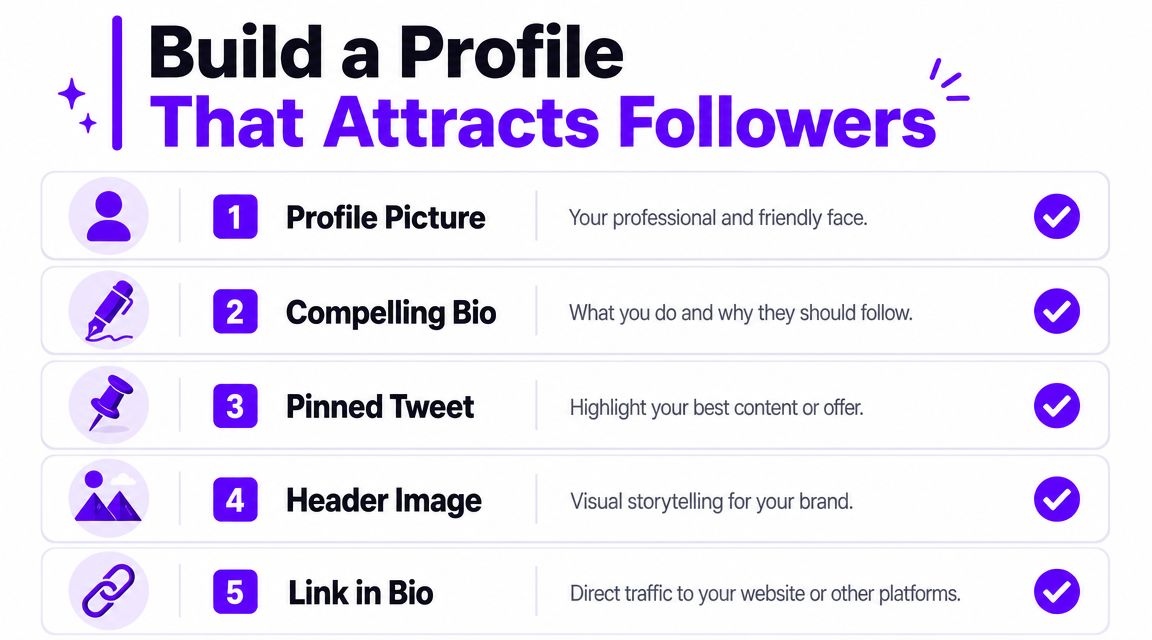
Someone sees a strong post, clicks through, scans your page, and decides in seconds whether you are worth adding to their feed. That decision is rarely about polish alone. It is about clarity. If your profile does not explain what you talk about, who it helps, and what kind of value shows up consistently, follow-through drops fast.
Pass the three-second test
I audit profiles with one simple question. If a qualified stranger lands here from a single post, do they immediately understand why this account exists?
A strong profile usually gets five parts right:
- Profile photo that looks current. Use a clear headshot for a personal brand. Company accounts should use a clean logo with strong contrast.
- Name field with context. A niche cue can help if it stays readable and does not look stuffed with keywords.
- Bio with a specific promise. State what you do, who it is for, and what the follower can expect to learn or get.
- Header image that supports positioning. Show your product, outcome, category, proof, or a short line that reinforces the bio.
- Link that matches intent. Send profile visitors to the next logical step, not a generic homepage with no context.
Here is the difference in practice:
| Element | Weak version | Better version |
|---|---|---|
| Bio | “Building stuff. Thoughts on tech.” | “Sharing growth, content, and product lessons for indie founders.” |
| Header | Generic stock image | Visual tied to your niche or offer |
| Link | Homepage with no context | Newsletter, product page, or best resource |
| Name | First name only | First name plus niche cue if useful |
Good profiles reduce friction. Great profiles pre-frame the follow.
If you work in lead generation or outbound, a useful reference is DMpro for scalable Twitter leads, which shows how profile clarity affects the next step after a visitor lands.
I also test profile conversion by sending focused early engagement to strong posts, then watching which visits turn into follows. A structured Twitter engagement community on Upvote Club can help with that if you use it to get real visibility during the Golden Hour, not to inflate weak posts.
The pinned post does more work than most bios
The pinned post is your profile's sales page. A weak one costs followers every day.
Many accounts pin an outdated launch post, a joke that only existing followers understand, or a post that performed well but says nothing about what the account consistently delivers. New visitors need orientation.
Pin a post that answers one of these questions:
- What do you know well
- What should I read first
- Why should I follow you now
The best pinned posts usually fit one of these formats:
- A thread that teaches one useful thing
- A short case-style breakdown of your work
- A “start here” post linking to your best content
- A product or newsletter post, if the account already has a tight niche
Your profile does not need to appeal to everyone. It needs to be obvious to the right person.
The two profile mistakes I see most often are vague bios and self-referential pinned posts. Fix those, and the same traffic from your posts will convert better without increasing volume.
Create Content People Actually Want to See
Most posting advice is still stuck in the plain-text era. That's a miss. Recent platform guidance discussed in industry coverage shows that video, images, and interactive formats can materially outperform plain text for reach and engagement, and that follower growth advice should pay more attention to content packaging, as noted by Microposter's guide to growing on Twitter.
That doesn't mean text is dead. It means format choice matters more than many creators admit.

Use formats that fit discovery
Match the format to how people can understand and share the idea fastest: use threads for step-by-step teaching, images for visual proof or summaries, short videos for demonstrations, and polls for low-friction discussion. Choosing the right format makes a strong idea easier to notice, consume, and engage with in the feed.
- Threads work when you're teaching, breaking down a process, or telling a story with payoff.
- Single images work when one chart, screenshot, checklist, or visual summary can carry the point.
- Short videos work when your face, screen, or demonstration adds speed and clarity.
- Polls work when you want low-friction interaction and a reason to continue the conversation in replies.
If you need help with the technical side of posting video, Taja AI's Twitter video guide is useful because it stays practical.
A lot of creators also use lightweight social proof pushes on visual posts. If the goal is to help a strong image post get moving early, our Twitter like task page at Upvote Club is one way to organize that through a community model.
Build recurring post types
The easiest way to stay consistent is to stop inventing a new format every day. Pick a few repeatable templates.
Here are formats that tend to work well across niches:
- Contrarian lesson posts
Start with a common belief in your field, then explain where it breaks. - Mini teardown posts
Break down a landing page, creator strategy, product onboarding flow, or campaign. - Before-and-after screenshots
Show a draft, revision, result, or workflow change. - Teach-one-framework threads
Keep it narrow. One framework, one lesson, one outcome. - Question-led posts
Ask a niche-specific question, then answer it in the replies or a follow-up thread.
What doesn't work well for most accounts:
- Generic motivation
- Context-free hot takes
- Threads padded to look longer
- Dense paragraphs with no visual rhythm
Here's a simple way to think about it.
| Format | Best use | Common mistake |
|---|---|---|
| Thread | Teaching or storytelling | Too much setup before the point |
| Image post | Fast explanation or proof | Visual says nothing on its own |
| Video | Demonstration or personality | Slow opening |
| Poll | Starting discussion | Question is too broad |
This walkthrough covers practical post construction:
What Is the 4-1-1 Rule on Twitter?
The 4-1-1 rule is a simple content mix: share roughly four pieces of useful curated or educational content, one soft self-promotional post, and one harder call-to-action or conversion post. On X, that ratio keeps your feed valuable enough that people stay, while still giving you room to talk about your work without turning every post into a pitch.
I treat it as a balance check, not a rigid calendar law. If every post sells, trust drops and follows slow down. If you never mention what you do, visitors may like your posts without understanding why they should follow. Use 4-1-1 to keep teaching and conversation ahead of promotion, then measure whether the mix still sends profile visits and follows.
- 4: helpful posts, insights, or curated finds for your niche
- 1: soft self-promo that still teaches something
- 1: clearer CTA for a product, newsletter, or next step
Write for scanning, not for admiration
People don't read tweets the way they read essays. They scan, decide, and move on.
So write for movement:
- Put the point early.
- Break lines aggressively.
- Use one idea per post.
- Cut setup that only matters to you.
- End with a reason to react, save, or visit your profile.
The strongest posts are easy to understand at a glance and still worth a second look.
If you're serious about how to get followers on Twitter, treat packaging as part of the message, not decoration added later.
Use Active Engagement to Drive Follows
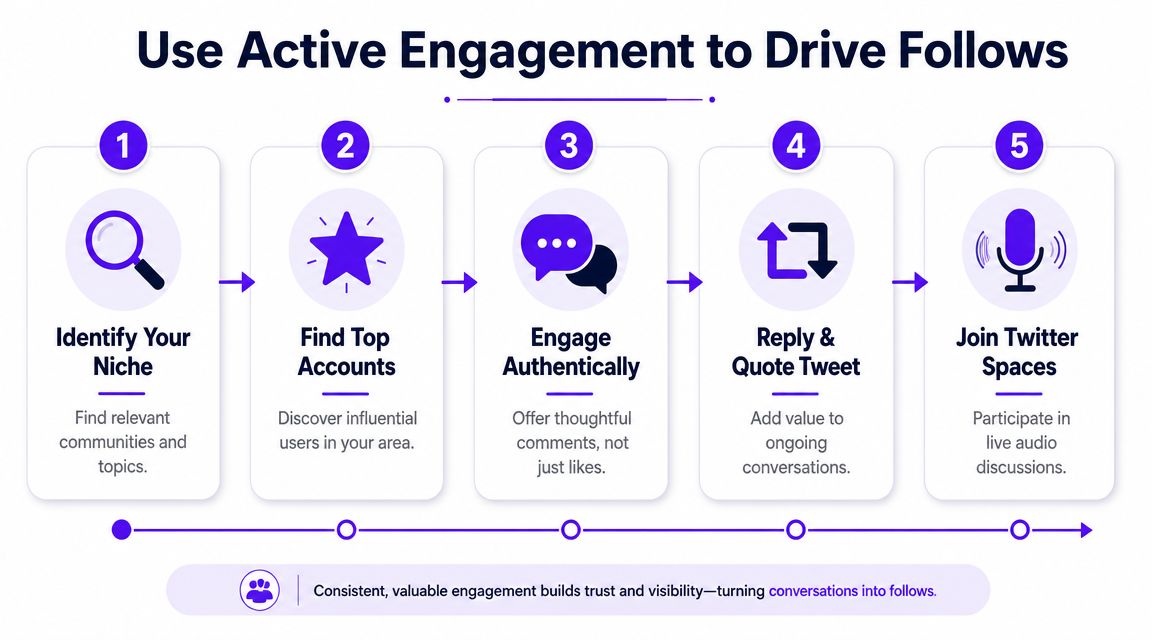
If your account is still small, replies often do more for discovery than your own original tweets. That's because you're borrowing attention from conversations that already have momentum.
Direct engagement with established creators can materially accelerate follower growth. Growth guides for X recommend finding top posts in a niche, then replying with value-added comments. That puts your profile in front of an already-engaged audience and increases the chance of follow-back behavior, according to Creator Economy's guide to growing on X.
Replies beat passive posting when nobody knows you
A reply can put you in front of exactly the audience you want. But only if the reply adds something.
Weak replies look like this:
- “Great post”
- “So true”
- “Needed this”
- A self-promotional link dropped into someone else's thread
Strong replies do one of four things:
- add a missing angle
- give a short example
- challenge a point respectfully
- summarize the takeaway better than the original audience expected
That's why speed matters too. The earlier you reply to a high-signal post, the better your chances of being seen. A lot of modern playbooks center on watching niche leaders, turning on notifications, and using search to find active conversations early. If you want a broader business lens on why interaction quality matters, Bulby's business engagement insights are a helpful side read.
What a strong reply looks like
Here's a practical framework for replies that attract profile clicks.
- Start with agreement or tension
Show you understood the post. - Add one useful layer
Bring a tactic, example, or trade-off. - Keep it short enough to finish fast
Long replies lose casual readers. - Avoid selling
Your profile should do that job, not the reply itself.
Examples:
| Situation | Weak reply | Better reply |
|---|---|---|
| Creator shares a growth tip | “Amazing advice” | “This works better when the profile is already niche-clear. Otherwise traffic comes in and bounces.” |
| Founder posts a launch lesson | “Love this” | “The part most teams miss is the first wave of comments. Early discussion changes how long the post keeps circulating.” |
| Marketer shares thread advice | “Threads are king” | “Threads work, but screenshots and short clips often get faster discovery when the topic can be shown visually.” |
If you want to coordinate comment activity around your own posts through a community workflow, our Twitter comment tool on Upvote Club is built for that type of task exchange.
Good replies don't ask for attention. They earn it by being useful inside the conversation already happening.
Where to show up besides replies
Replies are the main engine, but they aren't the only place to build recognition.
Try mixing in:
- Quote posts with a real opinion. Don't restate. Add context, disagreement, or an example.
- X Communities. Good for niche credibility if you contribute consistently.
- Spaces. If you speak well, live audio can build trust faster than text.
- Mentions with purpose. Mention people when you're building on their work, not fishing for reach.
The trade-off is time. Active engagement can swallow your day if you do it without a plan. Set windows for it. Track which creators, topics, and post types send profile traffic. Then keep the ones that produce real discovery.
Can You Buy Twitter Followers?
Yes, you can buy Twitter followers, but cheap bulk packs are usually a bad trade. Low-quality purchased followers inflate the count without improving reach, profile conversion, or trust. They often do not engage, can signal spammy patterns, and do nothing for the visibility → profile visits → follows system this article is built around. If growth is the real goal, buying inactive numbers works against it.
There is a difference between buying vanity followers and using paid distribution carefully. Organic growth still comes from content, replies, and conversion. Paid options only make sense when you understand what you are buying and what risk you accept. For a dedicated breakdown of that commercial path, see buy Twitter followers guide. This guide stays focused on the organic system: profile, content, engagement, and early interaction that earns follows from people who actually want to see your posts.
- Avoid: bot packs, fake accounts, and guaranteed follower dumps with no engagement quality.
- Prefer: systems that support real visibility and conversation around strong posts.
- Remember: a higher count only helps if the followers are relevant and active.
Get Consistent Engagement with Our Community
Upvote.club helps creators get consistent human engagement through a community task exchange. Members complete likes, comments, and follows for one another, earn points, and use those points to create engagement tasks for their own posts.
Use the community as an early distribution layer for content that already deserves attention: publish a strong post, create the relevant tasks, and stay active in the resulting conversation. It supports visibility during the opening window rather than selling guaranteed followers or replacing content quality.
Why early interaction matters
People often treat distribution as if it happens evenly over time. On social platforms, it usually doesn't. The first responses shape whether a post keeps getting shown and whether new viewers trust it enough to engage.
That creates a practical problem. Small accounts may publish strong posts but still get ignored because they don't have an active base ready to respond.
A useful fix is to build a repeatable engagement layer around publication. That can include:
- A private peer group that reacts when posts go live
- Direct outreach to close followers
- Questions or polls that make replying easy
- Fast responses from the author to keep the thread active
- A community task system for getting human interaction on likes, comments, and follows
How we use Upvote.club responsibly
With our Upvote.club service, we use a community engagement model built around task exchange. Members complete likes, comments, and follows for each other, then earn points they can use to create their own tasks across social platforms. When a user registers, they get 13 free points and 2 task slots to start. Social accounts are connected through an emoji-based verification flow that does not ask for social passwords; Google or Apple sign-in can also be used where available. If someone wants more capacity, they can obtain that through a paid plan. This is not a guaranteed follower pack. It is a community workflow for engagement tasks that can support visibility when your content already deserves attention. For follow-focused tasks on X, start at Twitter follow community tasks.
That setup matters because it changes the behavior. You're not buying empty numbers. You're participating in a moderated exchange where people complete engagement actions and task progress stays visible.
There's still a trade-off. Early engagement helps distribution, but it only works well when the post itself deserves attention. If the content is weak, no tool fixes that. Community-driven support works best when it gives a strong post the push it needs during the opening window.
A practical workflow looks like this:
- Prepare the post before publishing.
- Make sure the hook and media are tight.
- Publish at a time when you can stay active.
- Trigger your community support quickly.
- Reply back to every real comment that starts a conversation.
Used this way, community engagement is not a shortcut around content. It's a distribution layer for content that already has a reason to win.
Measure and Refine Your Twitter Strategy
The biggest mistake after publishing is guessing what worked. You need to look at the signals that map to follower growth.

Track the signals tied to follower conversion
X Analytics lets you measure impressions, profile visits, and retweets to identify what attracts new followers, and the platform's own analytics guidance points to profile visits and retweets as stronger follower-conversion signals than likes through X's analytics tools.
That's a better lens than vanity metrics. A post can collect likes and still send almost nobody to your profile. Another post can get fewer likes, but produce stronger profile traffic and more follows because the topic, format, or audience fit is better.
So when you review posts, ask:
- Did this create profile visits
- Did people repost it
- Did this format perform better than plain text
- Did the topic attract the right audience
- Did my replies and conversation activity support it
Use a simple review loop
A clean review system beats complicated reporting. The practical rhythm is to check recent performance, compare it with the previous period, and repeat what's already proving itself.
Don't build your strategy around your favorite posts. Build it around the posts that pull the right people into your profile.
Here's a simple loop:
| Review question | What to do next |
|---|---|
| Which posts earned profile traffic | Make more in that format |
| Which posts got reposted | Rework that topic into a series |
| Which replies drew attention | Keep engaging with those accounts |
| Which media formats performed best | Shift more output toward those formats |
Once you do this regularly, growth becomes less random. You post, participate, review, and adjust. That's the operating system behind steady follower growth on X.
If you want a simple way to support the early engagement side of that system, try our Twitter follow community tasks. Upvote Club is built as a community-driven option for likes, comments, and follows through engagement tasks — not guaranteed follower packs, and without asking for social passwords.