Table of Contents
- Table of Contents
- The Silence After You Hit Post
- The Core Components of Twitter Engagement
- What counts as engagement
- Why these signals matter
- How Engagement Rate Is Calculated on X
- The formula X uses
- Why impressions change the picture
- Engagement Benchmarks and Algorithmic Impact
- What good looks like
- Why low numbers can still matter
- Actionable Ways to Increase Authentic Interactions
- Use formats people already react to
- Work the first hour on purpose
- A Community-Driven Method for Consistent Engagement
- Why bought engagement fails
- How we do it with a real community
- Measuring Success and Avoiding Engagement Pitfalls
- Where to check your numbers
- What to avoid if you want durable growth
Twitter engagement is any interaction a user has with a tweet, from a like to a link click or profile click, and X uses those signals to decide whether your content deserves wider distribution. On the platform, engagement rate is calculated as total engagements divided by total impressions, multiplied by 100, and recent benchmark data shows the median brand engagement rate fell from 0.029% in 2024 to 0.015% in 2025 (Sprout Social on Twitter engagement).
You know the feeling. You write a post that should work. The hook is sharp, the topic is timely, and the timing looks fine. Then you hit publish, refresh a few times, and get nothing back except impressions that don't turn into replies, reposts, clicks, or followers.
That silence usually isn't a writing problem alone. It's a distribution problem. On X, posts don't move because they're merely published. They move when people interact, and those interactions tell the system that the post is worth showing to more users. If you've been searching for what is a Twitter engagement, the short answer is simple. It's the set of actions people take on your tweet, and those actions decide whether your post stalls or spreads.
Table of Contents
- The Silence After You Hit Post
- The Core Components of Twitter Engagement
- How Engagement Rate Is Calculated on X
- Engagement Benchmarks and Algorithmic Impact
- Actionable Ways to Increase Authentic Interactions
- A Community-Driven Method for Consistent Engagement
- Measuring Success and Avoiding Engagement Pitfalls
The Silence After You Hit Post
A founder posts a product update. A journalist posts a sharp take on a breaking story. A creator shares a thread they spent an hour refining. All three can land in the same place. A handful of impressions, no replies, and no sign that the post is going anywhere.
That happens because publishing is only the first step. X still needs proof that people care. A passive view doesn't carry much weight by itself. A click, reply, repost, or profile visit tells the platform much more.
The post that gets seen isn't always the post that was written best. It's often the one that got enough early interaction to stay in circulation.
This is why engagement matters more than vanity. If nobody interacts, the post has no momentum. If a few people do something with it, even a small action, the system has a reason to keep testing it in more feeds.
For most creators and brands, the main problem isn't “How do I get one viral tweet?” It's “How do I get enough real interaction, often enough, that my good posts stop dying on arrival?” That's the practical use of understanding what is a Twitter engagement. Once you know what counts, you can shape posts and workflows around it.
The Core Components of Twitter Engagement
What counts as engagement
On X, engagement isn't one thing. It's a roll-up of nine distinct actions: Likes, Replies, Retweets, Media Views (2-second duration), Detail Expands, Profile Clicks, Hashtag Clicks, Link Clicks, and New Followers gained, according to Social Status's breakdown of Twitter metrics.
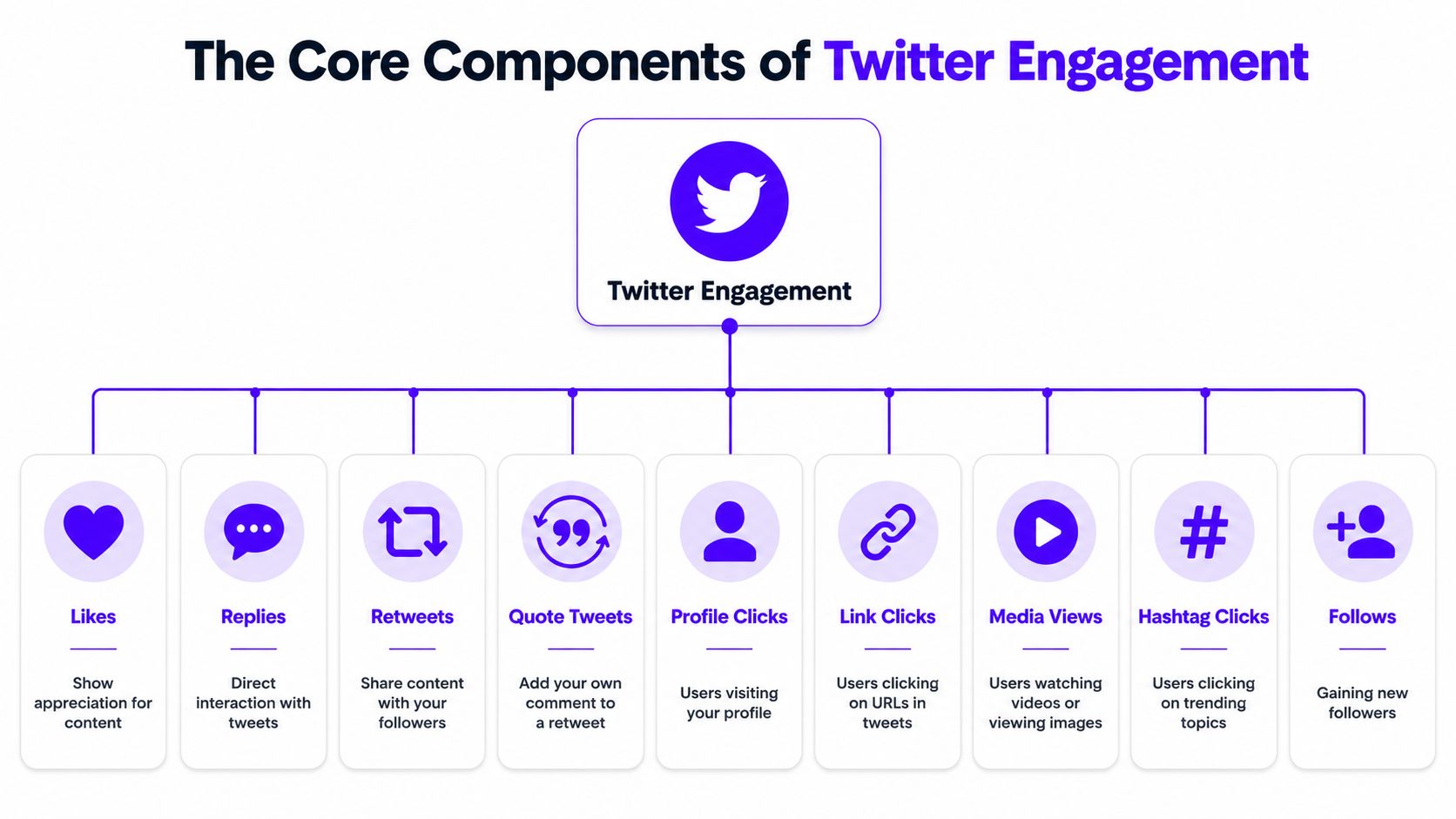
Users often focus on the obvious public actions. Likes. Replies. Retweets. Those matter, but they're only part of the picture. X also tracks quieter signals that many users ignore when judging performance.
A detail expand means someone tapped into the tweet to inspect it more closely. A profile click means the post created enough interest for someone to check who you are. A link click is often one of the strongest signs of intent because the user chose to leave the feed and take another action. If you're working on audience growth, a new follower from a tweet is also counted inside engagement.
For teams running campaigns, this wider definition changes how you write and design posts. A tweet can be doing useful work even when reply count looks modest. It might be pulling profile visits, link clicks, or follows. That's one reason I tell people to stop judging every post by comments alone and start reading the full signal set. If you want a practical tool for driving activity around X posts, Twitter growth tasks on Upvote Club are built around those real interaction types rather than fake bulk numbers.
Why these signals matter
The broad list matters because every action answers a slightly different question.
- Likes show light approval.
- Replies show conversation.
- Retweets show a user thought the post was worth passing on.
- Media views show people stayed with the asset.
- Detail expands show curiosity.
- Profile clicks show the post created identity interest.
- Hashtag clicks show topic interest.
- Link clicks show action.
- New followers show ongoing interest, not one-off attention.
When people ask what is a Twitter engagement, they usually expect a simple “like or comment” answer. That's incomplete. Engagement is better understood as a basket of actions that tell X whether your post is getting ignored, skimmed, examined, shared, or acted on.
How Engagement Rate Is Calculated on X
The formula X uses
X uses a formula that trips people up because it doesn't match how many other platforms talk about engagement. The official formula is Total Engagements divided by Total Impressions, multiplied by 100, as explained in Metricool's guide to Twitter engagement.
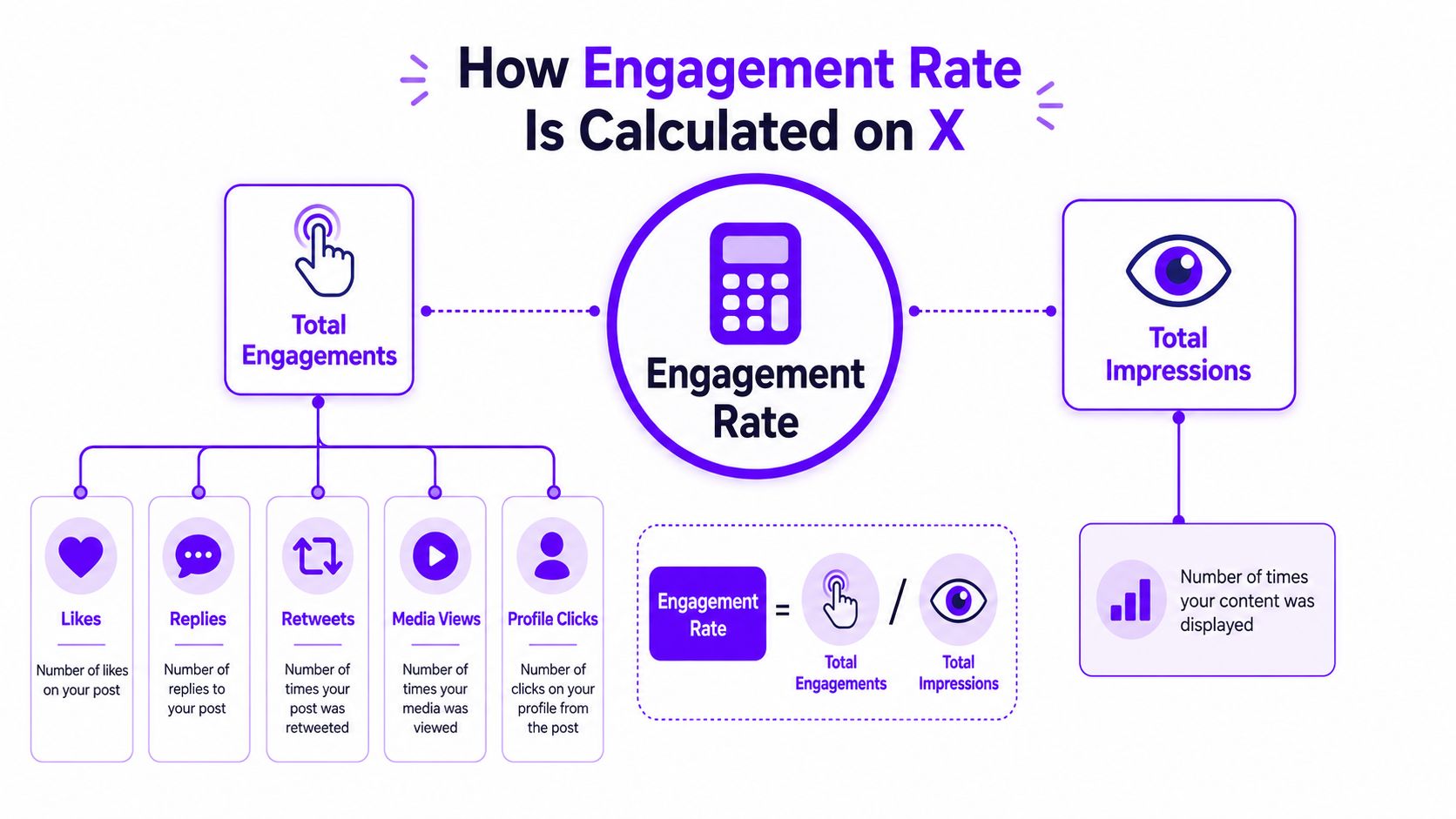
That impressions denominator matters. X doesn't publicly provide a standard unique reach metric for ordinary posts, so the platform uses displays, not unique viewers. If the same user sees your tweet more than once, those repeated displays still add to impressions.
This is why some good tweets look weaker on paper than creators expect. You might get solid interaction from a small core audience, but if the post racks up a lot of repeated displays, the rate can still look low. If you're testing ways to increase lightweight interaction such as likes during early distribution, Twitter like support options can fit into a broader posting workflow.
Why impressions change the picture
Think of impressions as “times your post appeared,” not “number of different people who cared.” That's a big difference.
A post shown many times with only a few actions will show a low engagement rate. A post shown fewer times with a similar action count can show a better one. So the rate isn't just about whether your content was good. It's about how often action happened relative to display volume.
Practical rule: Judge engagement rate in context. On X, a low-looking percentage doesn't always mean the post failed. It may mean the post got broad display but weak action per display.
That context also changes how you compare X with Instagram, Facebook, or LinkedIn. If you carry over expectations from other channels, you'll read Twitter metrics badly and make bad content decisions. On X, the better question is often not “Why isn't this rate higher?” but “Which posts convert impressions into actions more often?”
Engagement Benchmarks and Algorithmic Impact
What good looks like
Benchmarks help, as long as you don't treat them like a scorecard detached from context. According to Rival IQ's 2024 benchmark report on Twitter engagement, the median engagement rate for brands across industries on Twitter is 0.029%. The same source says above 0.5% is considered solid and over 1% is considered excellent for most brands.
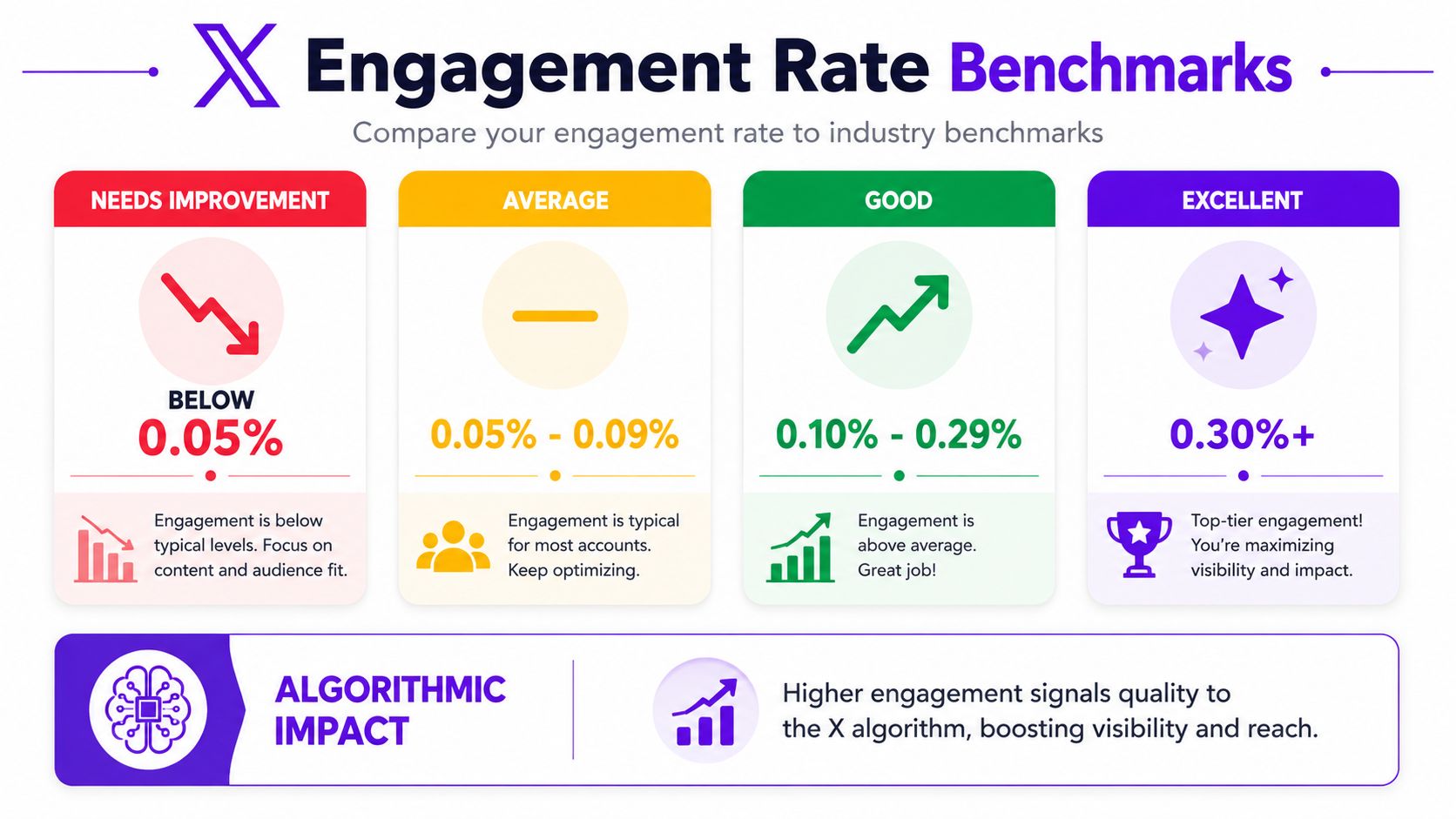
Those numbers tell you two things right away. First, X is a hard platform for brands. Second, many people underestimate how rare strong interaction really is.
If you're sitting below your target, don't jump straight to “the algorithm hates me.” In practice, weak engagement usually comes from one of four issues:
| Issue | What it looks like |
|---|---|
| Weak hook | People scroll past without clicking |
| No interaction trigger | The post informs, but gives no reason to reply or click |
| Bad format choice | Text-only post where a visual would have done more work |
| No early activity | The post never gets enough initial traction to keep circulating |
Why low numbers can still matter
The benchmark isn't the full story. The platform uses engagement signals to judge relevance and visibility, which means interaction affects distribution, not just reporting. Sprout Social's Twitter engagement guide also notes that a post's engagement signals directly influence whether X sees the content as worth showing more broadly.
That changes the way you should look at “small” wins. A tweet doesn't need celebrity-scale interaction to matter. It needs enough meaningful action that the platform keeps testing it in front of more users.
One good reply can start a thread. One repost from the right account can shift the audience mix. A cluster of profile clicks can turn a casual post into follower growth. That's the powerful effect of engagement. It isn't just a report metric. It's distribution fuel.
Actionable Ways to Increase Authentic Interactions
Use formats people already react to
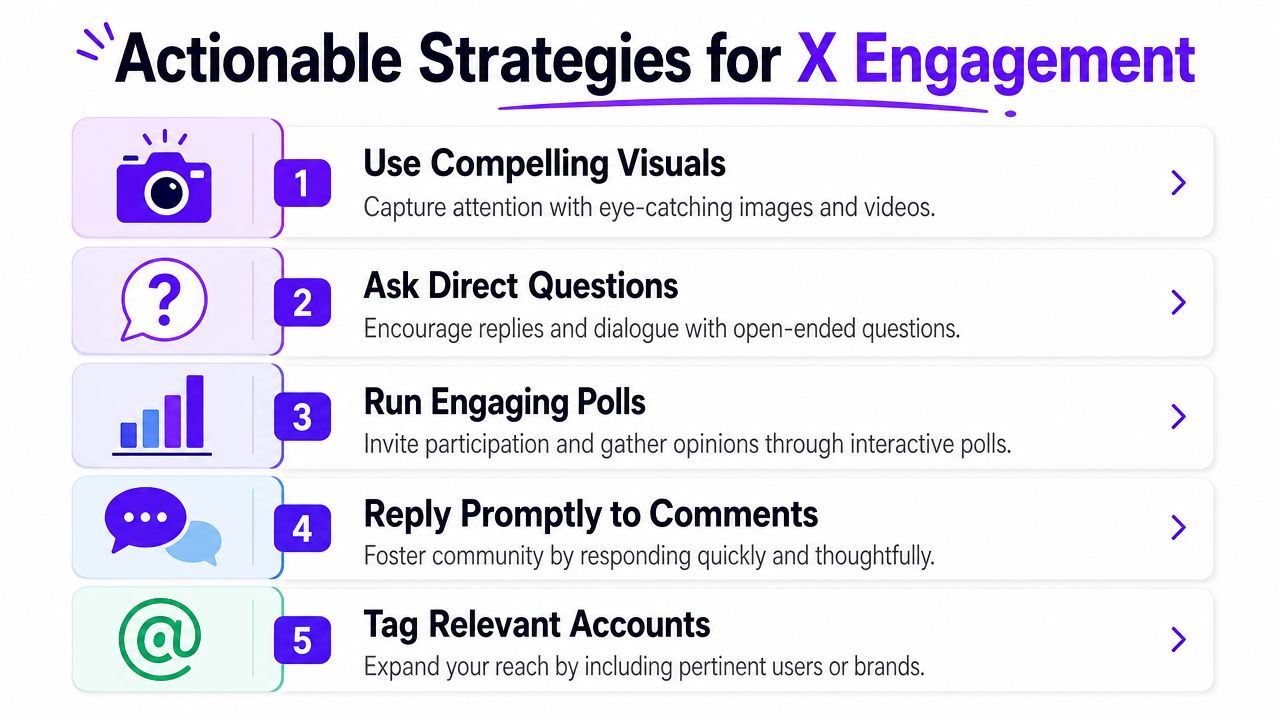
Content format matters more on X than many teams admit. Cross River Therapy's Twitter statistics roundup reports that tweets with images averaged 272,000 likes, tweets with videos averaged 183,000 likes, and tweets with GIFs averaged 158,000 likes as of August 2021. Visual posts beat plain text in that data set, which matches what most active operators already see in the feed.
That doesn't mean “add random images to everything.” It means give the eye a reason to stop.
Here are the methods that work most often:
- Use a visual with a job: Charts, screenshots, mockups, short clips, and annotated images pull attention when they clarify the point instead of decorating it.
- Ask for a response people can answer fast: “Agree?” is lazy. “Which one would you ship first?” gives users an actual decision.
- Write for the reply, not just the read: Good X posts often leave a clean opening for someone to add an example, disagree, or share their own process.
- Keep the first line active: If the first line doesn't create tension, surprise, or utility, the rest of the tweet doesn't get a chance.
- Tag selectively: Relevant people or brands can widen exposure, but random tagging looks needy and often gets ignored.
If you're building content with AI assistance, it's worth keeping a swipe file of prompt patterns and editing workflows. I like pointing people to resources for AI users because better drafting often leads to cleaner hooks, stronger visual concepts, and more reply-ready posts.
A simple tactic that still works is the direct question paired with a concrete image or screenshot. If you want more discussion-oriented activity, Twitter comment task support fits that goal better than chasing empty impressions.
Work the first hour on purpose
The first hour after posting matters because that's when a post either starts moving or starts sinking. Most users leave this phase to chance. That's a mistake.
I treat that window like an active distribution block, not a publishing afterthought.
- Be present after posting: If someone replies and you answer quickly, the post often gets more life than a post you abandon.
- Seed the right conversations: Share the post with relevant peers, team members, or communities that actually care about the topic.
- Choose one desired action: Don't ask for replies, clicks, reposts, and follows all at once. Pick the main action that matches the post.
- Match format to goal: If you want discussion, use a question. If you want clicks, make the value on the other side of the link obvious.
Fast early interaction is often the difference between a post that tops out in your current circle and a post that keeps getting tested outside it.
A Community-Driven Method for Consistent Engagement
Why bought engagement fails
A lot of people try to solve the early-traction problem by buying fake engagement. It usually creates the wrong kind of signal. You may get numbers on the post, but not the kind of interaction that helps with real distribution, trust, or conversion.
The biggest mistake is confusing impressions with engagement. They are not the same thing. One is passive display. The other is action. That gap matters in paid work too. Washington Beer Blog's piece on Twitter engagement vs. impressions points out that X charges for actual engagements in campaign bids rather than impressions without action, and cites data showing engagement-driven campaigns yield 30% higher ROI when optimized for clicks over views.
That's why cheap engagement packages are such a bad habit. They train people to chase visible counts instead of useful actions. They also create a mismatch between what the account appears to have and what the audience does.
If the interaction doesn't come from real people with real accounts, it usually fails the only test that matters. Does it create actual momentum on the post?
There's also a brand problem. Journalists, founders, creators, and hiring managers can usually spot weird engagement patterns. A post with hollow activity makes the account look less trustworthy, not more.
If your end goal includes revenue, signups, or member support, community interaction matters more than inflated metrics. That's why I often recommend reading practical guides on how to turn followers into backers, because the same principle applies here. Audience action beats passive audience size.
How we do it with a real community
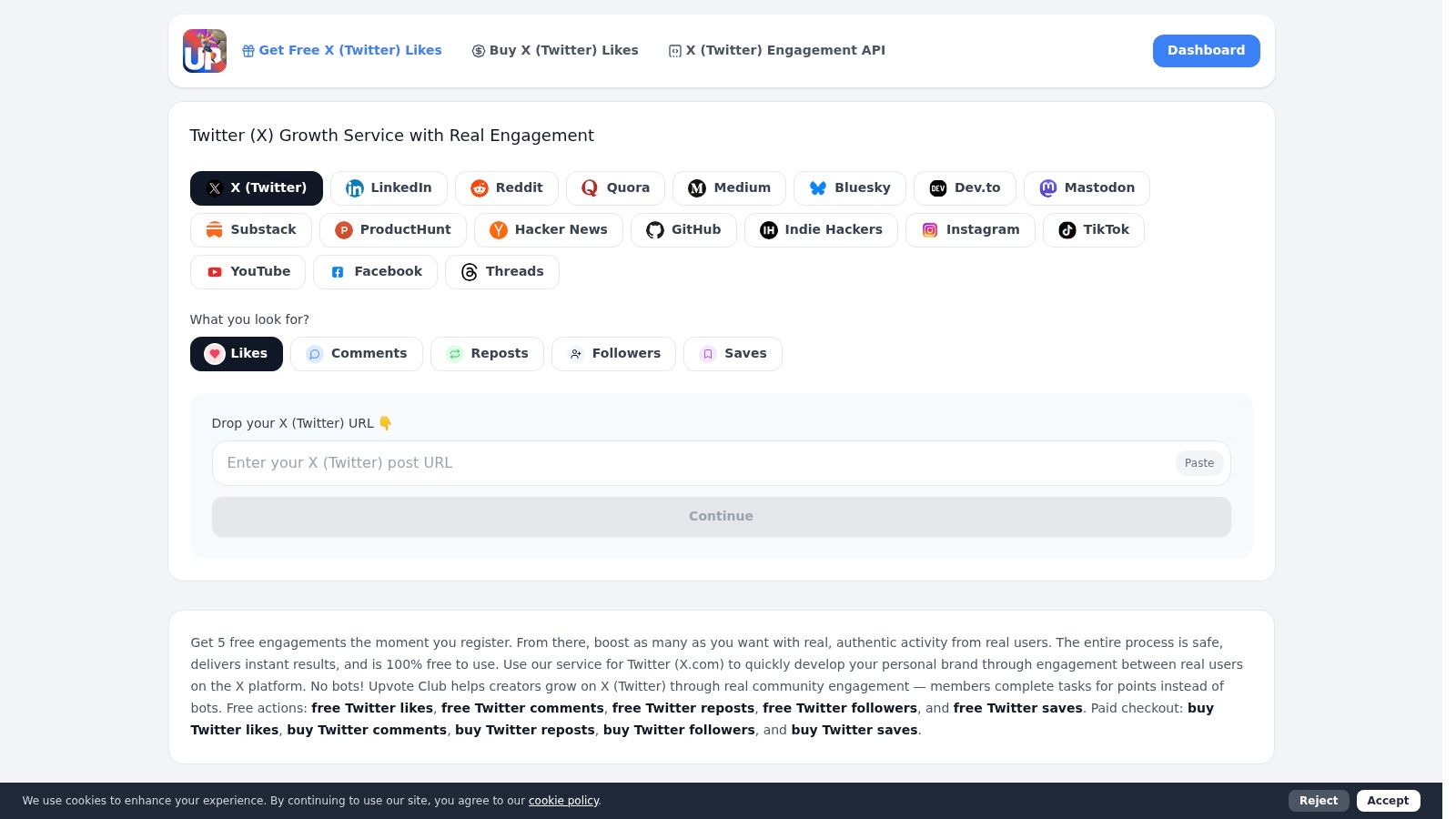
The model we use at Upvote.club is different from buying likes. We run a community-based system where users help each other with real engagement from verified human accounts. Users create tasks for actions like likes, comments, reposts, saves, and followers, and other members complete those tasks to earn points they can spend on their own promotion.
That structure matters because it creates participation instead of pure purchase. Upvote.club isn't built around bot traffic. Moderation is strict, bot accounts aren't allowed, and users can see who completed each task. The point is safety, accountability, and a cleaner path to getting interaction that looks and behaves like actual platform usage.
Here's how the mechanics work in practice:
- Starting access: When a user signs up, they get 13 free points and 2 task slots.
- Basic use: Those points can fund an initial task. For example, 2 likes on Twitter might cost 4 points.
- Point earning: If users want more points, they complete tasks for others.
- Verification: The first time someone completes a task, the system asks them to verify their social accounts once per network. No passwords are required. The platform uses an emoji-based verification method instead.
- Task capacity: Every 24 hours, users receive 1 free task slot. More slots come through subscription plans, which also provide points.
What makes this useful on X is timing. The same basic playbook used by agencies works here too. Get real interaction into the first hour after posting so the tweet has a better chance to stay in circulation. Content quality still matters. It always will. But good content without early movement often gets buried.
There are only two ways to grow on social platforms in any lasting way. Post strong content consistently, and get engagement. The first part is your job. The second part becomes much easier when there's an active community ready to exchange real actions instead of a shady service pushing fake traffic.
For creators, marketers, indie hackers, and teams, that's the practical answer to what is a Twitter engagement strategy that can hold up over time. Build posts worth responding to, then make sure those posts don't spend their most important hour alone.
Measuring Success and Avoiding Engagement Pitfalls
Where to check your numbers
You don't need third-party software just to see whether your posts are getting traction. The U.S. Chamber's guide to Twitter Analytics notes that Twitter Analytics gives you a 28-day breakdown in the Tweets tab, where you can review daily impressions, total engagements, and engagement rate per day. On mobile, you can tap the three vertical lines on a specific tweet to see performance details.
That native view is enough to spot patterns.
- Check which posts earn profile clicks: Those posts often signal strong topic-account fit.
- Review link-click posts separately: A tweet that drives traffic may look different from one that drives replies.
- Compare visual and text-only posts: Format patterns usually show up fast.
- Look at timing around publication: Posts that get early interaction often separate themselves quickly.
What to avoid if you want durable growth
Bots, fake likes, and bulk engagement packages create short-term noise and long-term problems. They don't help you learn what your audience wants, and they can damage trust if the pattern becomes obvious.
A safer path is to use tools and communities that keep human participation visible. If you're evaluating options around follower growth, the page for Twitter follower options is one place to compare how community-based participation differs from low-quality automation. An essential test is simple. Can you trace the activity back to real users, and does that activity support ongoing account growth rather than a cosmetic spike?
Real engagement teaches you. Fake engagement hides your weaknesses.
If you want a practical way to support the Golden Hour with real user activity, Upvote Club gives you a community-based system for earning and exchanging likes, comments, reposts, and followers from verified human accounts, without sharing passwords or relying on bots.