Table of Contents
- The Lure of the Instant Audience
- Why the pitch works
- How much does a viewbot cost?
- What bot sellers leave out
- Is viewbotter.com legit?
- How a Free Viewer Bot Actually Works
- The basic mechanism
- Is there a YouTube view bot?
- Why fake viewers still look fake
- What the bot can’t do
- How to viewbot for free?
- The High Price of ‘Free’ Platform Risks and Penalties
- Is view botting illegal?
- Is a free viewer bot safe (or bannable)?
- The platform doesn’t need to ban you to hurt you
- The hidden cost is bad data
- Why bot sellers stay vague
- How to Spot Bot Viewers and Fake Engagement
- The mismatch test
- The content-fit check
- Why this matters for your own strategy
- A Community-Powered Method for Real Growth
- What good early traction looks like
- Viewer bots versus community-driven growth
- My recommendation
- Building Your Audience the Right Way
- What to do instead of using a free viewer bot
- My final take
A free viewer bot uses automated sessions to inflate a stream’s viewer count without bringing real people. The short-term number can violate platform rules, distort analytics, reduce distribution, and expose the channel to suspension or a ban.
This guide explains how free viewer bots work, why platforms can detect their behavior, and how to replace fake traffic with early engagement from real people for safer, durable growth.
I get the appeal when the room looks empty. I also think a free viewer bot is one of the fastest ways to poison your channel metrics, trip platform filters, and train yourself to chase fake momentum instead of real traction.
The Lure of the Instant Audience
A free viewer bot sells one thing better than almost any legit growth tool. Relief.
When a stream sits empty, the silence feels public. You start thinking the problem is visibility, not content, timing, packaging, or distribution. Bot sellers know that. They package fake viewers as a way to get over the first hump.
That demand is obvious. On Twitch, the game category “Bots” reached 159,010 live viewers across 2 live channels in the referenced data from Streams Charts. The same market is full of free trials and entry offers because creators with no traction are easy targets.
Why the pitch works
The pitch works because an empty stream feels publicly unsuccessful: fake viewers promise instant social proof, a possible discovery boost, and relief without upfront spending. Bot sellers turn that emotional pressure into a simple offer — move the counter now and worry about audience quality later.
The promise usually looks like this:
- You look active: A stream with viewers looks less abandoned.
- You hope for discovery: Many creators believe a boosted count will help category placement.
- You avoid spending money: “Free” sounds safer than paid promotion.
That logic is understandable. It’s also where many creators start making bad decisions.
Practical rule: If a tool sells numbers first and audience quality second, it’s probably built to fool a dashboard, not help a creator.
A lot of creators drift from one fake metric to another. They try free viewer bots on Twitch, then look at things like Instagram follower boosts, then start stacking vanity tactics across platforms. The pattern is the same. The numbers move, but the audience doesn’t.
How much does a viewbot cost?
Most “free” viewer bots are not free forever. Pricing usually follows a ladder: a short free trial (often 10–25 viewers for 15–60 minutes), a low freemium daily allotment, then paid weekly or monthly plans that scale concurrent viewers, chat bots, and follow bots.
The sticker price is the wrong question. Even a $0 trial can cost you reach, clean analytics, or an account review if the platform treats the pattern as fake engagement. Treat cost as money plus risk — not just the checkout page.
What bot sellers leave out
They rarely talk about the tradeoff. A fake audience doesn’t watch, react, buy, subscribe, or come back tomorrow. It fills the room with empty seats that happen to be counted.
Worse, it creates the wrong operating habit. Instead of fixing distribution, improving content hooks, or getting real early engagement, you end up nursing a metric that can disappear the moment the service stops.
The short version is blunt. A free viewer bot can make you feel less invisible for a few minutes. It can also make your account look manipulated, your analytics less useful, and your growth strategy weaker.
Security traps sit in the same blind spot. Some free downloads and “forever free” tools ask for passwords, OAuth logins, or .exe installs. If a free viewer bot wants credentials or a local install, close the tab — malware and credential theft are common failure modes in this market.
Is viewbotter.com legit?
Viewbotter.com is a real commercial viewer-bot vendor that markets free trials and paid plans. “Legit” as a business does not mean safe for your channel. Their own trial materials still describe bots that inflate counts while soft-pedaling suspension risk and algorithmic penalties.
Use that as an evaluation rule for any brand in the cluster: a working dashboard and a working ToS violation can coexist. If the product’s job is fake concurrent viewers, it remains a platform-risk tool — not a growth strategy.
How a Free Viewer Bot Actually Works
A free viewer bot is not an audience tool. It’s a simulation tool.
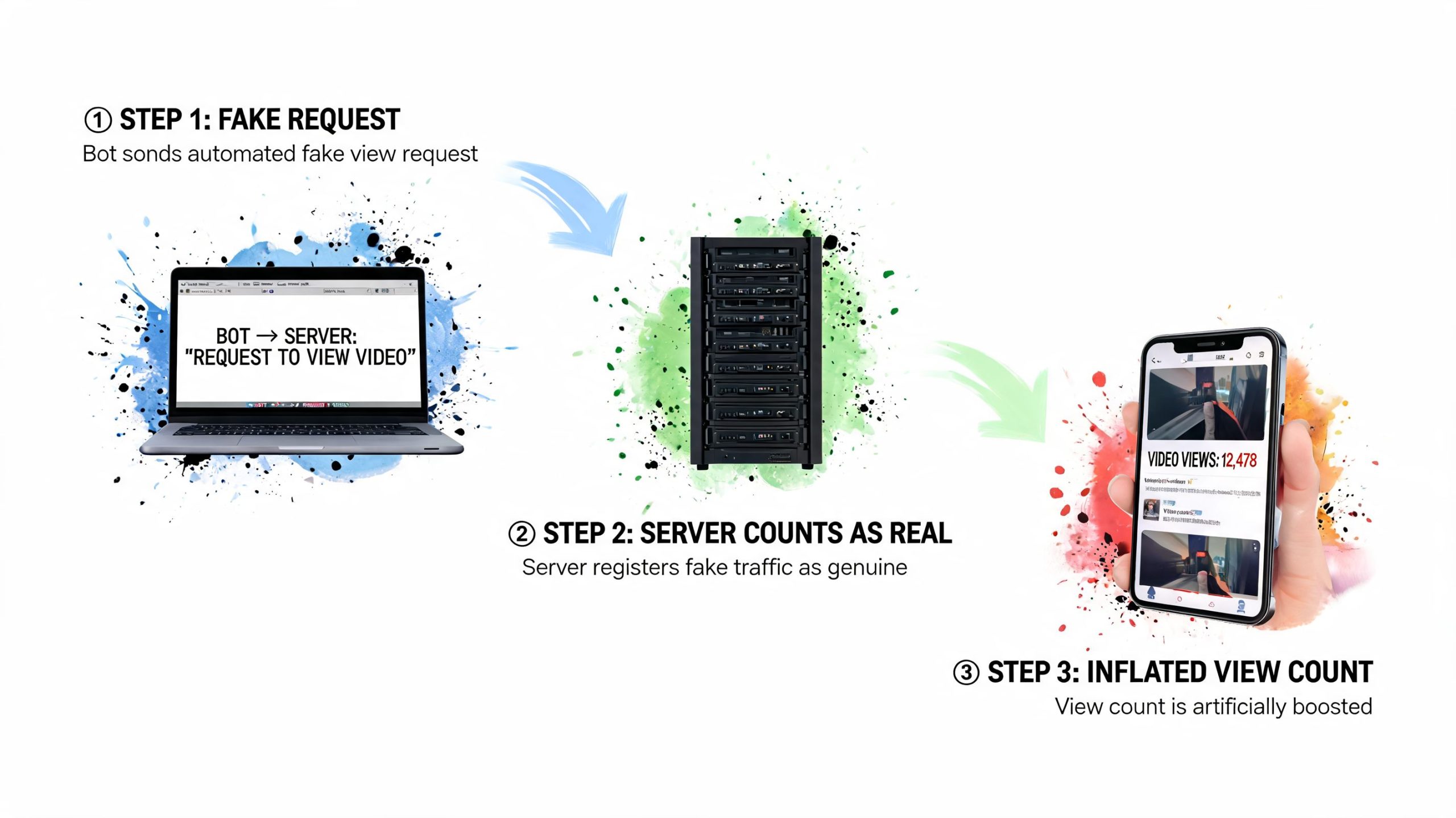
It doesn’t bring interested people to your stream. It spins up automated sessions and tries to make a platform count them as viewers. That’s the whole game.
If you want Twitch-specific depth on viewer bots versus organic discovery, see our companion guide on viewer bots on Twitch. This article stays on the broader free-viewer-bot pattern across live platforms.
The basic mechanism
The technical setup is straightforward. According to the documentation around PrimeViewerBot, these systems spawn multiple automated browser instances across different IP addresses via proxy services so they can look like separate viewers to a simple counter, as shown in the PrimeViewerBot technical writeup.
In plain English, that usually means:
- The bot service opens many browser sessions.
- Those sessions route through different proxy paths.
- Each session connects as if it were a separate person.
- The platform’s basic viewer counter may register them.
That’s why these tools can push the number up without creating any real interest.
One naming trap: Streamer.bot (and similar chat/automation tools) is not a free viewer bot. It helps you run stream actions and integrations. A free viewer bot tries to counterfeit the audience count itself.
Is there a YouTube view bot?
Yes. YouTube view bots (and live-viewer bots for YouTube streams) exist in the same market as Twitch free viewer bots. They inflate view or concurrent-viewer counts with automated sessions instead of interested people.
YouTube still cross-checks viewership against engagement ratios and account history. Inflated counts can fade, trigger review, or weaken distribution even when the raw number looks impressive for a short window.
Why fake viewers still look fake
Modern platforms don’t stop at the raw count. They also look at behavior. Bot sessions often fail there.
Real viewers act like people. They arrive at different times. Some leave early. Some stay longer. Some chat. Some click through to profiles or follow. Some tab away and come back. Bots usually don’t create that messy human pattern very well.
If you want to understand how automation and detection can intersect on social platforms more broadly, this piece on smart analytics and Twitter bot setup is useful because it shows how behavior patterns matter more than just volume.
A number without matching behavior is a flag, not a win.
You can see the same principle in tools built around platform workflows, including browser-based helpers such as the Chrome Social install flow. The difference is intent. Legit tools support user actions. A free viewer bot tries to counterfeit them.
What the bot can’t do
A viewer bot can inflate a counter, but it cannot build trust, create relevant chat, return as a loyal viewer, provide useful feedback, or show whether your content genuinely holds attention.
In short, after the count appears it still can’t do the things that matter:
- It can’t build trust
- It can’t create relevant chat
- It can’t become a repeat viewer
- It can’t give you useful feedback
- It can’t tell you whether your content is working
That last point matters most. Fake traffic corrupts your read on reality. If your stream gets a bump but no real conversation, no follows, and no carryover, your metrics stop helping you make better decisions.
How to viewbot for free?
“How to viewbot for free” almost always means a time-capped trial, a tiny daily free allotment, an open-source script, or a download that wants trust you should not give. Those offers can move a counter for minutes. They do not create a real audience.
If you are hunting a free viewer bot because the room feels empty, treat every unlimited-free promise as a trap: password asks, .exe installs, and “undetectable forever” claims are common red flags. The safer read of the market is simple — free usually means a sales funnel into paid botting, not a risk-free growth method. For Twitch-focused mechanics and alternatives, use the viewer bots on Twitch guide; the rest of this article covers what those free offers actually cost in platform risk.
The High Price of ‘Free’ Platform Risks and Penalties
The real price of a “free” viewer bot is platform risk: artificial views can violate Terms of Service, trigger suspension or a ban, reduce discovery, and corrupt the analytics you need to improve. A bot may move the counter briefly, but the account and data damage can last much longer.
Research cited in the market points to a messy reality. Most “free views” services deploy bots from inactive accounts, which directly violates platform terms, and sellers highlight the short-term count increase while skipping over suspension risk and algorithmic penalties, as noted in this ViewBotter trial analysis.
Is view botting illegal?
View botting is usually a Terms of Service violation, not a criminal offense by itself. Platforms forbid artificial engagement; they can suspend accounts, remove features, or bury distribution without involving law enforcement.
Separate questions — fraud, unauthorized access, or selling malware — can cross into legal risk. For most creators asking “is view botting illegal?”, the practical answer is: it is against platform rules, and those rules are enough to damage a channel even when no court case ever appears. The same ToS logic applies on YouTube view botting as on Twitch or Kick.
Is a free viewer bot safe (or bannable)?
A free viewer bot is not safe for long-term channel health. Platforms can ban or suspend accounts, but they do not need a permanent ban to hurt you — reduced reach, suppressed discovery, and distrusted metrics are common outcomes.
If your GSC-style question is “is this bannable?”, treat fake concurrent viewers as bannable behavior under platform rules. Short-term “got away with it” streaks still leave a contaminated engagement pattern that weakens future posts.
The platform doesn’t need to ban you to hurt you
A platform can hurt a botted channel without issuing a permanent ban by reducing reach, suppressing discovery, distrusting its engagement signals, or placing the account under additional review. You may keep the account and still lose future distribution.
Creators often think the only real danger is a permanent ban. Softer punishments that can be just as damaging include:
- Reduced reach: Your content gets shown less often.
- Suppressed discovery: You stop surfacing where new users might find you.
- Distrusted metrics: Internal systems treat your engagement pattern as low quality.
- Review friction: Your account can end up under more scrutiny later.
That means you can “get away with it” in the short term and still damage your future distribution.
The hidden cost is bad data
A bot-inflated account becomes hard to manage because your numbers stop meaning what they should mean.
You can’t tell:
| Metric problem | What it breaks |
|---|---|
| Viewer count is inflated | You misread stream appeal |
| Engagement is disconnected | You misjudge audience interest |
| Retention signals are distorted | You can’t tell what content holds attention |
| Platform trust drops | Future posts may struggle even when they’re good |
That’s why I push people away from fake audience tools. They don’t just risk punishment. They wreck diagnosis.
Hard truth: Once you contaminate your data with fake viewers, every later decision gets worse.
This is the same reason manipulative growth shortcuts on other platforms usually backfire. If you’re weighing similar tactics outside streaming, it helps to look at adjacent examples like Reddit upvote services. The platform changes, but the pattern doesn’t. Artificial activity creates short-lived surface gains and long-lived trust problems.
Why bot sellers stay vague
They don’t talk much about enforcement because that conversation kills conversions. If they told creators, plainly, that fake views can trigger account trouble and weaken future reach, a lot fewer people would sign up for the trial.
So they market the visible upside and hide the downstream damage.
That’s why I’m opinionated here. If your channel matters to you, don’t let a throwaway traffic trick become the reason your real content gets buried.
Before you trust any free viewer bot pitch, run a short checklist: Does it ask for a password or install? Does it promise “undetectable forever”? Does it sell numbers without explaining behavior signals? Can you separate delivered bots from organic follows and chat? If those answers look bad, walk away.
How to Spot Bot Viewers and Fake Engagement
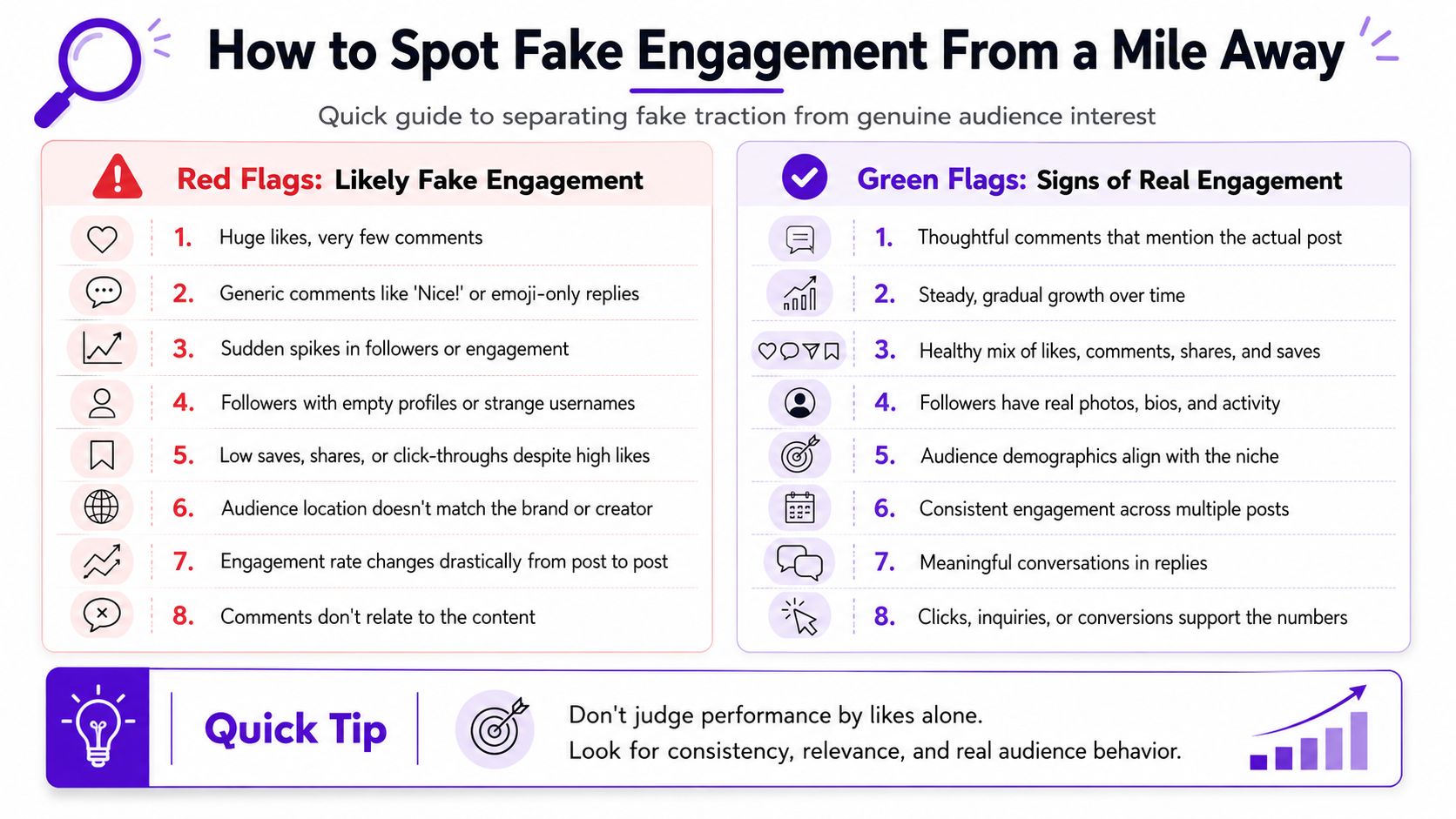
Spot bot viewers by checking for mismatched signals: a large silent audience, mechanical spikes and drops, generic comments unrelated to the content, and no corresponding follows, shares, profile visits, or meaningful discussion. One odd signal is not proof, but several appearing together strongly suggest padded engagement.
The mismatch test
Start by checking whether the visible metrics make sense together.
A stream claiming a large live audience with almost no chat activity is suspicious. So is a post with a pile of reactions and comments that say nothing specific. Real people respond unevenly, but they usually leave context.
Watch for these signs:
- Silent crowd: High viewer count, dead chat, no reactions tied to what’s happening on screen.
- Mechanical timing: A sharp rise right after going live, then a flat line or equally sharp drop later.
- Generic replies: Short comments that could fit any post, or strings of random emoji with no connection to the content.
- No downstream action: Viewers appear, but follows, shares, profile visits, or meaningful discussion don’t.
The content-fit check
The second test is whether the engagement matches the actual post.
If someone publishes a niche video essay and gets comments that read like filler copied from a gaming clip, something’s off. If a business account gets applause-style reactions but no serious questions, that’s another clue.
A lot of manipulated engagement fails this basic relevance test. That’s true on streams, short-form video, blogs, and social posts. If you’ve spent time on publishing platforms, even things like Medium claps and engagement patterns start to show the same tells. Real reactions have texture. Fake ones usually don’t.
If the audience signal looks detached from the content itself, assume the metric is being padded.
Why this matters for your own strategy
Spotting fake engagement isn’t just about calling out other people. It protects you from copying tactics that look successful from the outside.
A bloated metric can make a weak strategy look smart. Don’t learn from a dashboard that’s been staged.
A Community-Powered Method for Real Growth
The answer to fake engagement isn’t to get better at hiding it. The answer is to stop chasing counterfeit signals and build the kind of activity platforms want.
Industry discussion around social growth keeps landing on the same point: platforms reward real engagement signals, and community-driven activity from real people is a safer alternative than bot-driven inflation, as described in this SocialPlug free Twitch viewers discussion.
That’s the standard I use when I assess any growth method. If the interaction comes from real people and matches how actual users behave, you’re working with the platform instead of trying to spoof it.
What good early traction looks like
Creators don’t need fake crowds. They need a real first wave.
That first wave matters because platforms test content early. If people engage quickly, the post, stream, or video gets a stronger chance of continued distribution. If nobody reacts, the content often dies before it gets a fair shot.
The practical model is simple:
- Publish something worth reacting to
- Get real people to interact early
- Use that activity to trigger wider distribution
- Let organic discovery build from there
This is why community-based growth works better than a free viewer bot. It gives you actual interaction, not hollow counts.
Viewer bots versus community-driven growth
Viewer bots create automated, rule-breaking counts with no feedback value; community-driven growth creates human likes, comments, saves, and follows that match normal platform behavior. Bots offer a fragile number, while real participation can produce useful feedback and lasting momentum.
| Feature | Free Viewer Bot | Upvote.club Community |
|---|---|---|
| Source of activity | Automated sessions or inactive accounts | Community members completing real actions |
| Type of signal | Inflated count | Real likes, comments, saves, followers |
| Platform fit | Conflicts with platform rules | Matches normal user behavior |
| Feedback value | None | Real response from real users |
| Long-term usefulness | Weak and unstable | Better for ongoing momentum |
A healthy growth loop is based on participation. That’s one reason community operators and founders keep circling back to creator networks, peer support, and member contribution systems. If you want a strong outside read on that, these SubmitMySaas community building tips line up with what works in practice.
My recommendation
If you’re serious about growth, build around human action, not fake presence.
That means:
- Stop using tools that only inflate public counters.
- Get your content in front of real communities that can react.
- Focus on the opening window after publishing, when early interaction matters most.
- Keep your metrics clean enough that you can trust what they’re telling you.
This is also where I’ll speak plainly about our approach. With our Upvote.club service, I’ve built the model around community participation instead of bot delivery. Users create tasks to receive likes, comments, saves, and followers. They earn points by completing tasks for others, then use those points on their own posts.
We’ve also made the system practical. When a user registers, they get 13 free points and 2 task slots. Where required, social profiles use an emoji-based fingerprint check, and we never ask for your social-media password. Members can gain more capacity through activity, streaks, referrals, or a subscription.
My rule for safe growth: If I can’t explain where the engagement came from, who performed it, and why it makes sense to the platform, I won’t use the tactic.
That’s the line more creators need to adopt.
Building Your Audience the Right Way
There are only two paths that hold up over time.
First, make content people want. Second, get real engagement early enough for the platform to notice. Everything durable comes from one or both. Organic growth beats free viewer bot vanity spikes because the signals stay usable.
Analysis around platform ranking points in the same direction. YouTube and Twitch use current viewership as a primary ranking signal, but platforms also cross-check that signal against engagement ratios and account history, which is why fake boosts fade and real interaction holds up better, according to this YouTube discussion of ranking and viewbot effects.
What to do instead of using a free viewer bot
Instead of using a free viewer bot, improve your hook and packaging, publish at the right time, bring the content to relevant peer communities, and measure human actions such as comments, saves, shares, watch behavior, and return visits.
Use that as a clean operating system for growth:
- Fix the content first: Better hooks, titles, packaging, and timing beat a fake audience.
- Win the opening window: Early human reactions matter more than inflated counters.
- Use peer networks: Communities can give you the first push without corrupting your metrics.
- Track what people do: Comments, saves, shares, watch behavior, and return visits tell the truth.
If you’re trying to build across social platforms and not just streaming, tactical guides like this one on how to increase X followers in 2026 can help you think in terms of repeatable audience habits rather than vanity spikes.
My final take
A free viewer bot is easy to try because the pain it solves is emotional. You don’t want to feel ignored. I get that.
But fake viewers don’t build a channel. They hide problems, add risk, and teach you to trust a number that doesn’t mean anything. Real growth is slower, cleaner, and far more useful because it gives you signals you can act on.
If you want a safer way to get that early traction, try Upvote Club. With our Upvote.club service, you can get likes, comments, saves, and followers from community members across Twitter, Instagram, TikTok, YouTube, Reddit, LinkedIn, Medium, Product Hunt, GitHub, and more. We use a community model, not bots. You complete tasks, earn points, and use those points to promote your own content during the window when early engagement matters most. No social-media password sharing. Moderation when abuse is found. New accounts start with 13 free points and 2 task slots. If you’re done gambling with fake numbers, this is the method I recommend.