

Table of Contents
- Pods don't work for organic reach the way people hope.
- If you want reach, pods are mostly a dead end. If you want a narrow pipeline action, they can still have a place.
- An engagement pod is a group that trades reciprocal likes and comments
- Pods range from a five-person group chat between colleagues to 500-person automated networks.
- Members agree to engage with each other's posts within a defined time window
- Typically, 10 to 30 professionals with related interests join.
- Pods come in several forms, from low-tech group chats to fully automated networks
- Pods come in three shapes, carrying different levels of risk.
- L4L stands for like for like: you like my post, I like yours back.
- The rest of the 4-alphabet (L4L, S4S, C4C, sub4sub) is the same trade with a different currency.
- Pods are treated as artificial engagement and can lead to reduced visibility or account restriction
- LinkedIn's wording puts it on prior agreement. "Respond authentically to others' content" is the permitted behaviour.
- Pod-driven posts started losing 40-70% of their reach to non-followers
- We analysed 52,847 LinkedIn posts from B2B founders, comparing pod-boosted content against organic posts.
- You end up known among other people trying to get known
- The platform's AI looks for three primary signals:
- A real community's engagement is driven by actual interest in the content itself
- Pick the right people, save them somewhere you will actually return to, and show up in their comments on purpose, daily, with no reciprocity contract.
- In 2026, comments and dwell time carry far more algorithmic weight than likes
- Roughly 70% of a post's reach is set in the first 60-90 minutes after publishing.
Pods don't work for organic reach the way people hope.
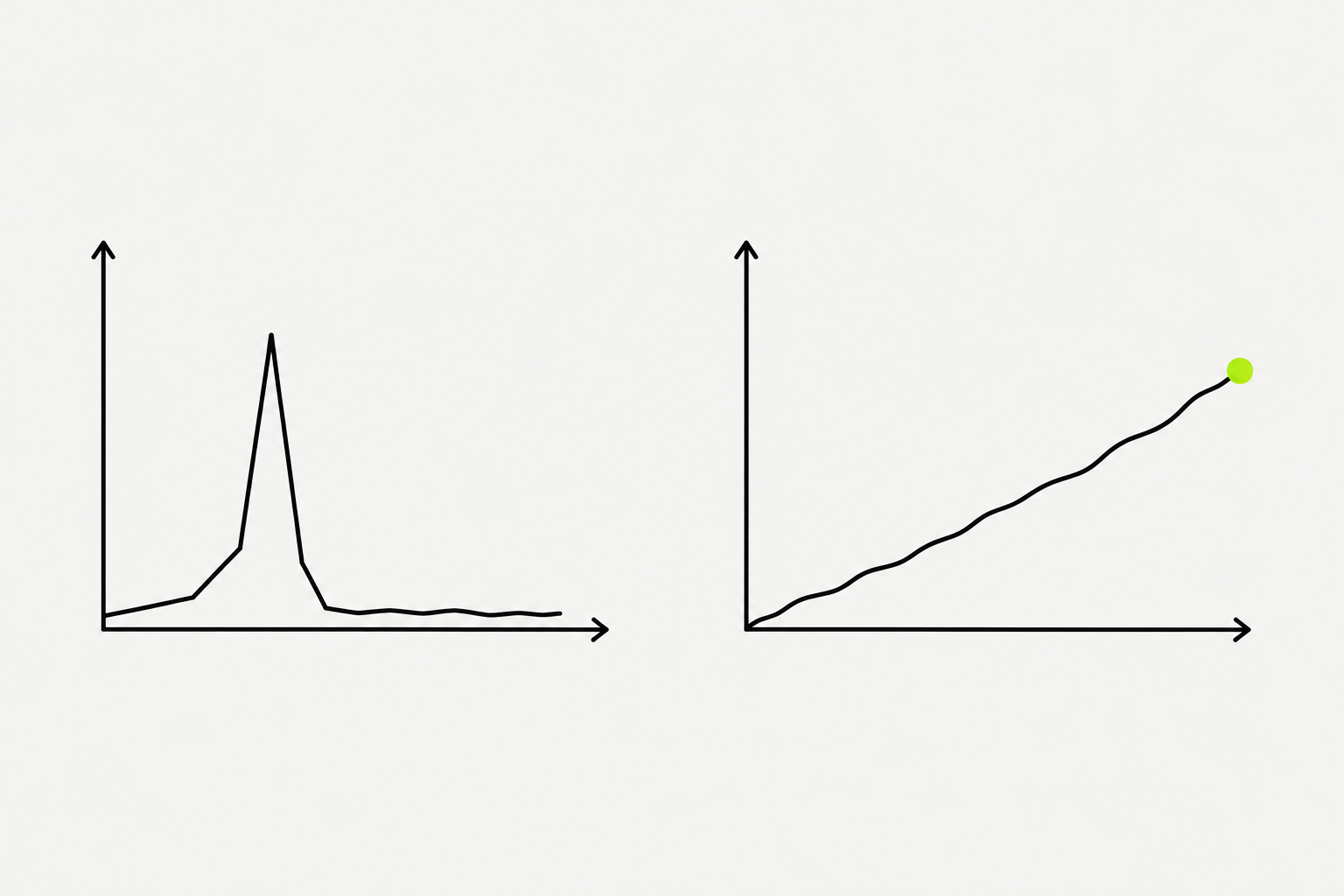
No, not if by "work" you mean organic reach growth. LinkedIn engagement pods can still inflate visible activity, but they optimize the wrong metric. Posts show higher like and comment counts in the first hour, which is the window the algorithm uses to decide initial distribution.
If you want reach, pods are mostly a dead end. If you want a narrow pipeline action, they can still have a place.
- Pods produce a short-term impressions bump.
- The temporary spike no longer converts into wider distribution, followers, or pipeline.
- A pod can help create social proof around a narrow commercial motion.
What you can try now: LinkedIn Engagement Rate Calculator
An engagement pod is a group that trades reciprocal likes and comments
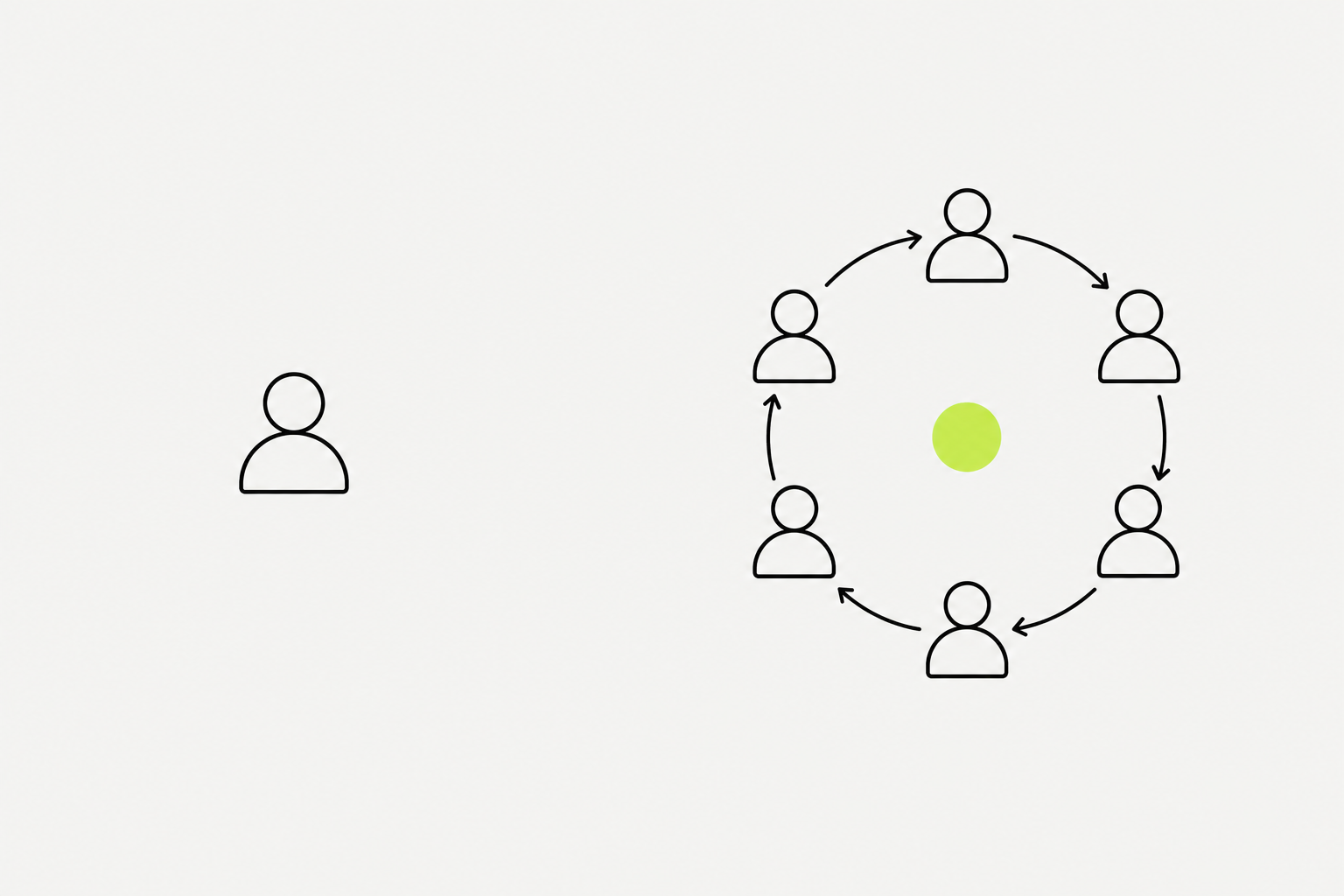
An engagement pod is a private group whose members reciprocally engage with each other's posts, usually within minutes of publishing, to trigger the early momentum the feed rewards. Members share their new posts to a chat or channel and the group piles on likes and comments regardless of whether they genuinely care about the content. Pods exist because the feed leans heavily on early engagement to decide how far to distribute a post, so a burst of activity in the first minutes can meaningfully lift reach.
Pods range from a five-person group chat between colleagues to 500-person automated networks.
- LinkedIn engagement pods (also called "comment pods," "engagement groups," or "reciprocity groups") are groups of LinkedIn users who agree to engage with each other's content (like, comment, share) to boost algorithmic reach.
- Some are casual and small, others are large and rule-bound, requiring members to engage within a set window or be removed.
- The aim is to manufacture reach the post did not earn on its own merit.
What you can try now: The Fake Conversation Economy: LinkedIn Engagement Pods
Members agree to engage with each other's posts within a defined time window
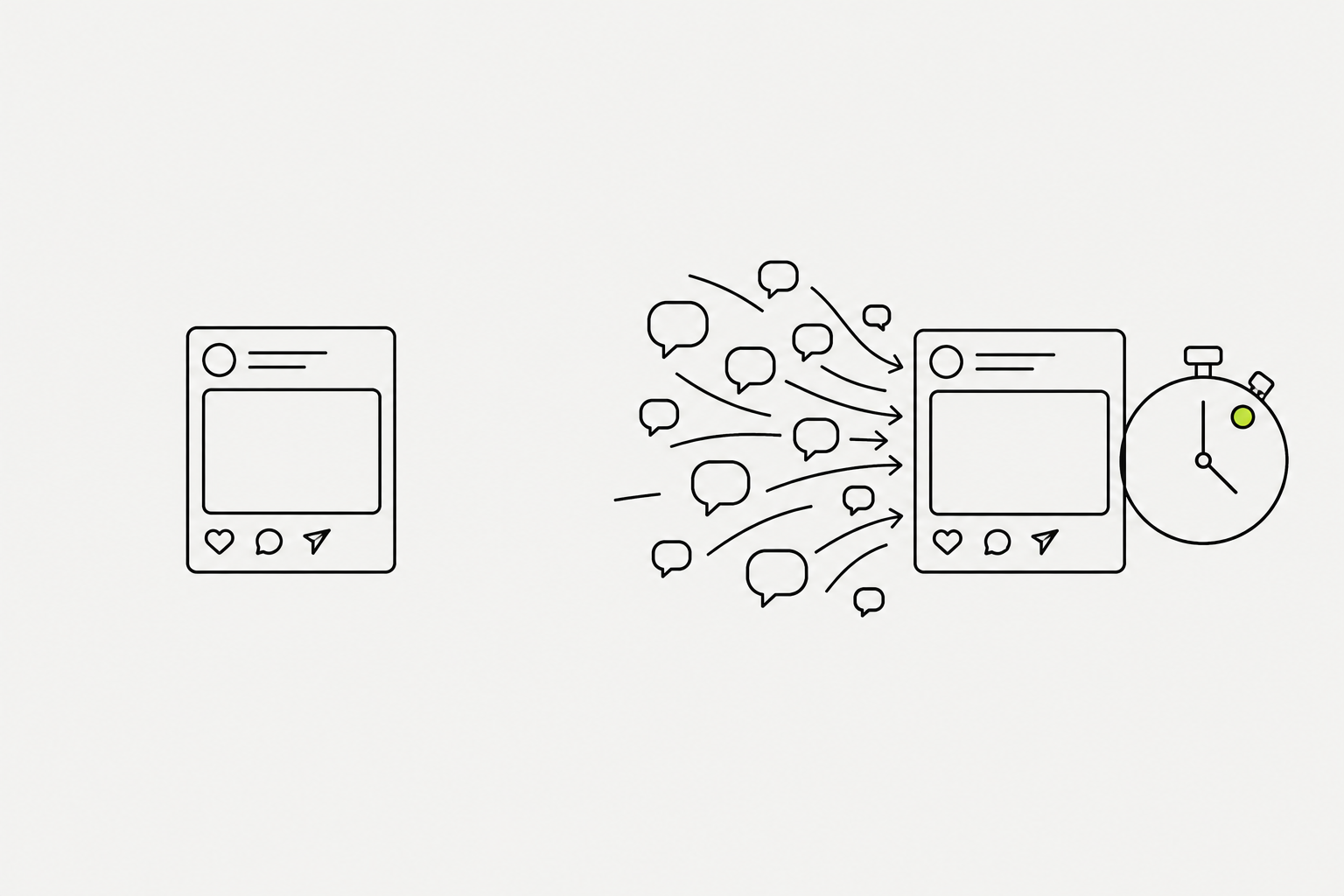
The mechanic is simple: post goes live, pod members are notified, they rush to like and comment within the first 30-60 minutes to exploit LinkedIn's early-velocity window, then the favor rotates. The system relies on mutual benefit, if you don't engage, others won't engage with your posts either. Every pod membership comes with an obligation to comment on other people's content, which takes time and cognitive bandwidth.
Typically, 10 to 30 professionals with related interests join.
- Posting Schedule: Members share their new posts within the group.
- Engagement Window: Other members engage within the first 30-60 minutes.
- Reciprocity: Members expect their posts to receive similar attention.
What you can try now: LinkedIn Comment & Engagement Scripts for Social Sellers
Pods come in several forms, from low-tech group chats to fully automated networks
Pods operate in two formats: manual and automated. Manual pods are usually run inside private LinkedIn groups, WhatsApp threads, or Slack channels. Automated pods use third-party tools that detect new posts from pod members and trigger like/comment actions programmatically.
Pods come in three shapes, carrying different levels of risk.
- Manual chat pods - a group message where members post links and others engage by hand.
- Comment pods - narrower groups focused only on comments, since comments carry more algorithmic weight than reactions.
- Paid engagement services - vendors selling likes and comments outright, which also cross into fake-account territory.
What you can try now: Is Your LinkedIn Extension Putting Your Account at Risk?, Avoiding automated engagement penalties
L4L stands for like for like: you like my post, I like yours back.
F4F means "follow for follow." It's a deal between two accounts: I follow you, you follow me back. F4F trades follows, L4L trades likes.
The rest of the 4-alphabet (L4L, S4S, C4C, sub4sub) is the same trade with a different currency.
- L4L is usually a per-post arrangement rather than a permanent one, and it's aimed at making individual posts look popular instead of growing the follower count.
- More followers with the same likes means a lower engagement rate, and that's the figure both algorithms and brands read.
- Engage for Engage (E4E): A more generalized term encompassing any form of mutual engagement.
What you can try now: Free LinkedIn Engagement Rate Calculator
Pods are treated as artificial engagement and can lead to reduced visibility or account restriction
LinkedIn's Professional Community Policies tell members not to agree ahead of time to like or reshare each other's content. Don't do things to artificially increase engagement with your content. We don't permit the use of any third party software, including "crawlers", bots, browser plug-ins, or browser extensions that scrape, modify the appearance of, or automate activity on LinkedIn's website.
LinkedIn's wording puts it on prior agreement. "Respond authentically to others' content" is the permitted behaviour.
- Fine: a colleague posts, you read it, you have a reaction, you write it.
- Not fine by LinkedIn's wording: a group with a rule that everyone engages with everything, a rota, a link-drop channel, or any arrangement where the engagement is promised before the content exists.
- Not fine, plus tooling risk: anything that comments for you.
What you can try now: LinkedIn comment examples & templates (by situation, 2026)
Pod-driven posts started losing 40-70% of their reach to non-followers
Pods consistently inflate vanity metrics while quietly suppressing the deeper behavioral signals LinkedIn actually uses to decide whether your content is worth pushing to cold audiences. Posts surfaced by pods in 2026 receive roughly 30-50% less downstream reach than the same post engaged organically. More engagement, half the reach.
We analysed 52,847 LinkedIn posts from B2B founders, comparing pod-boosted content against organic posts.
- 43% lower organic reach after the first 24 hours
- 61% fewer meaningful comments from target prospects
- 52% less profile traffic from content viewers
What you can try now: How a Simple Google Sheet Helped Me Post Consistently on LinkedIn for the First Time in 5 Years
You end up known among other people trying to get known
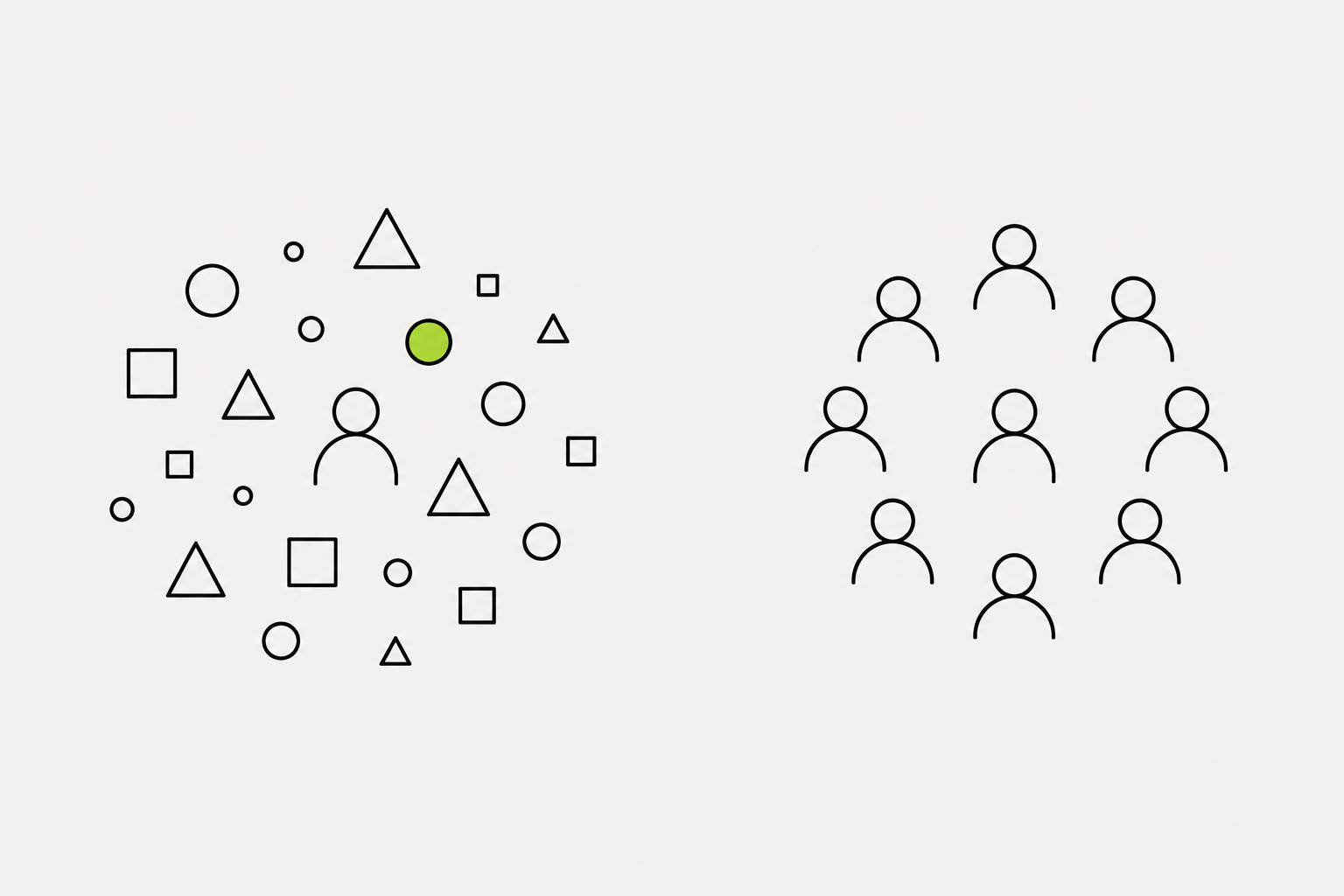
Your audience drifts away from your buyer. The feed learns from that signal and shows your posts to more people like them. Your comment section stops persuading anyone.
The platform's AI looks for three primary signals:
- Timing clusters - multiple accounts engaging within seconds of each other, consistently
- Reciprocal engagement graphs - the same accounts engaging each other's posts repeatedly across weeks
- Dwell time mismatch - high comment counts on posts where aggregate read time is abnormally low
What you can try now: Am I Shadowbanned on LinkedIn? How to Self-Test, LinkedIn Engagement Pods: The Cost, and How to Recover
A real community's engagement is driven by actual interest in the content itself
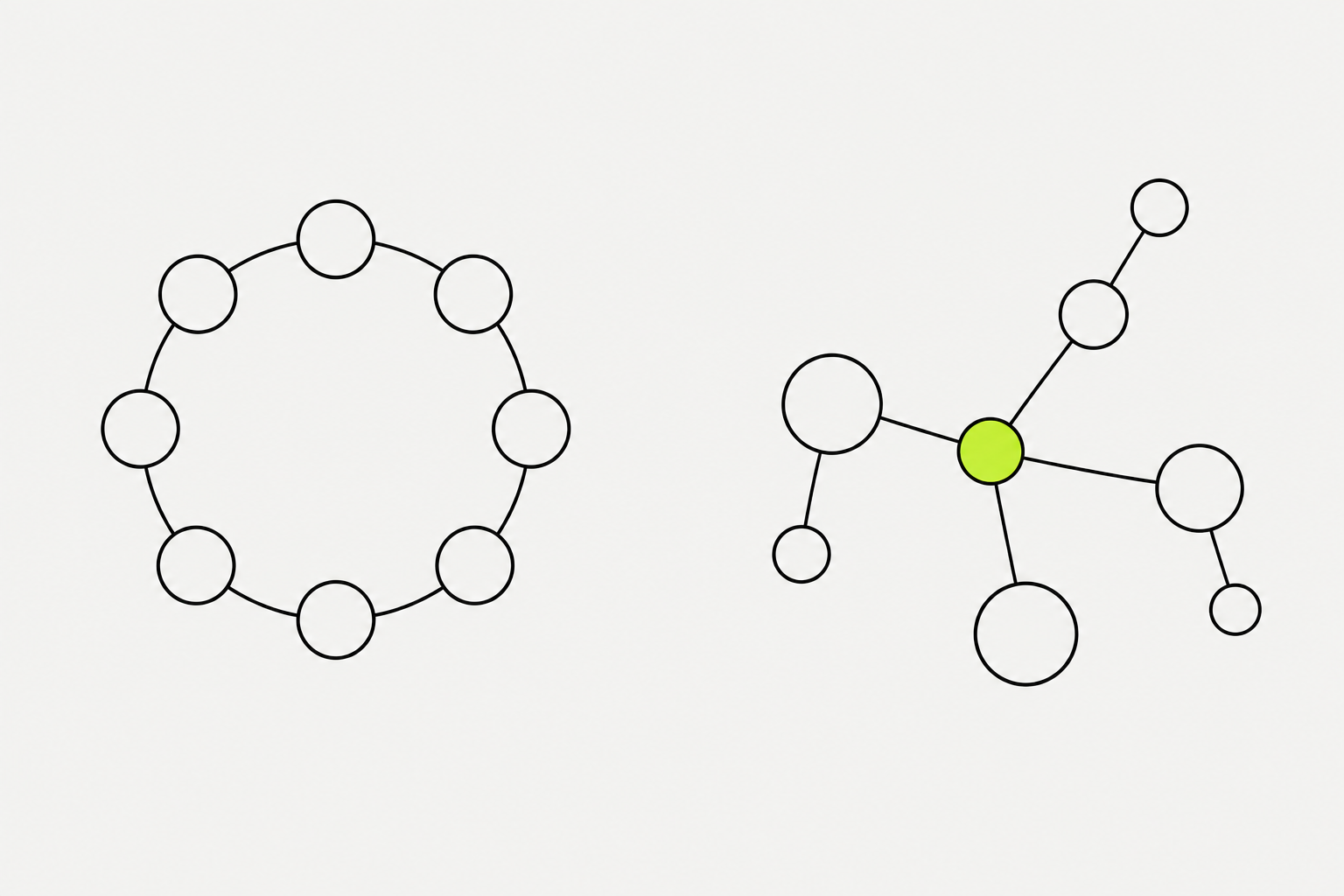
Instead of a pod, build a real network of 5-15 people who genuinely care about your work and your industry. Most creators naturally reciprocate genuine engagement. Over several weeks, you develop a mutual support network that provides real early engagement without any artificial coordination.
Pick the right people, save them somewhere you will actually return to, and show up in their comments on purpose, daily, with no reciprocity contract.
- Reply meaningfully to every comment in the first hour your post is live.
- Cross-team comments inside the company. Teammates commenting on each other's posts is fine when the comments are substantive and the network is small.
- Build network depth through participation in real communities.
What you can try now: Advanced LinkedIN Tracker
In 2026, comments and dwell time carry far more algorithmic weight than likes
You need to track engagement quality. If you rebuild your signal hierarchy around one metric, make it saves. Sort your posts by Saves in the last 30 days.
Roughly 70% of a post's reach is set in the first 60-90 minutes after publishing.
- Comment-to-impression ratio: this tells you what percentage of people who see your post are compelled to comment.
- Average comment length: if most comments are under 10 words, the engagement is shallow.
- Unique commenters ratio: are the same 10 people commenting on every post, or are you attracting new voices?
What you can try now: Social Media Analytics Spreadsheet