Table of Contents
- Why Your LinkedIn Activity Might Not Be Working
- What Is the SSI Score and Where to Find It
- What the score is actually measuring
- How to find your SSI score for free
- The Four Pillars of Social Selling Explained
- Establish your professional brand
- Find the right people
- Engage with insights
- Build relationships
- A Practical Plan to Improve Your SSI Score
- Fix your profile before posting more
- Build a smaller, sharper network
- Comment like a peer, not a spectator
- Treat relationships as ongoing work
- SSI Score Myths and Realistic Benchmarks
- What to believe and what to ignore
- What counts as a realistic score
- Using Your SSI Score for Long-Term Growth
A client once told me, “I post every week, I comment sometimes, and LinkedIn still feels dead.” I checked the profile and the problem wasn’t effort. It was that the effort was scattered.
Why Your LinkedIn Activity Might Not Be Working
I see this a lot with smart professionals who are putting in real effort. They post regularly, add a few people each week, maybe leave short comments here and there, and still get almost nothing back. Low reach. Weak conversations. No clear pipeline effect.
The problem is usually not effort. It is that the activity does not work together.
LinkedIn rewards accounts that send a clear signal. A profile that explains what you do. A network built around the work you want. Comments that add a point of view. Follow-up that turns a new connection into a real relationship. If one piece is missing, the rest of your activity loses force.
That is why ssi score linkedin is useful. It gives you a way to check whether your behavior matches the platform’s priorities. I do not treat SSI like a scoreboard. I use it like a diagnostic tool. If content is not landing, the score often points to the weak spot faster than guesswork does.
In practice, I keep seeing the same three issues:
- Content without context. Posts may be solid, but the headline, banner, and About section do not tell visitors why they should trust you or what you want to be known for.
- Networking without direction. Connection requests go out, but they are not tied to a target audience, industry, buying group, or hiring path.
- Engagement without substance. Likes and one-line comments create light activity, but they rarely start the kind of conversations that lead to trust, referrals, or meetings.
There is also a trade-off that many LinkedIn guides skip. Posting more can raise visibility, but volume without relevance usually brings the wrong audience. I would rather see two sharp posts a week, ten useful comments, and a handful of intentional connection requests than daily posting aimed at everyone.
If your content well is running dry, reuse the material you already have. One of the better examples I have seen is transforming webinar content for social. A single webinar can produce opinion posts, short clips, quote graphics, and comment prompts that feel native to LinkedIn instead of forced.
One tactic that works better than people expect is community-based engagement. A small circle of peers, clients, or industry contacts who regularly engage in a genuine way can help your posts reach the right second-degree audience. That only works when the interaction is real. Empty hype comments do nothing for reputation. Focused discussion does. If you want to strengthen that side of the account, start with a more relevant audience and a cleaner follower mix through LinkedIn follow growth tools.
A simple rule has held up well for me. If LinkedIn feels flat, do not start by posting more. Fix the system around the post first.
What Is the SSI Score and Where to Find It
I have seen plenty of LinkedIn users treat SSI like a scoreboard they need to beat. That usually sends them in the wrong direction. They post more, send more requests, and refresh analytics more often, yet the account still feels flat.
SSI is more useful as a diagnostic.
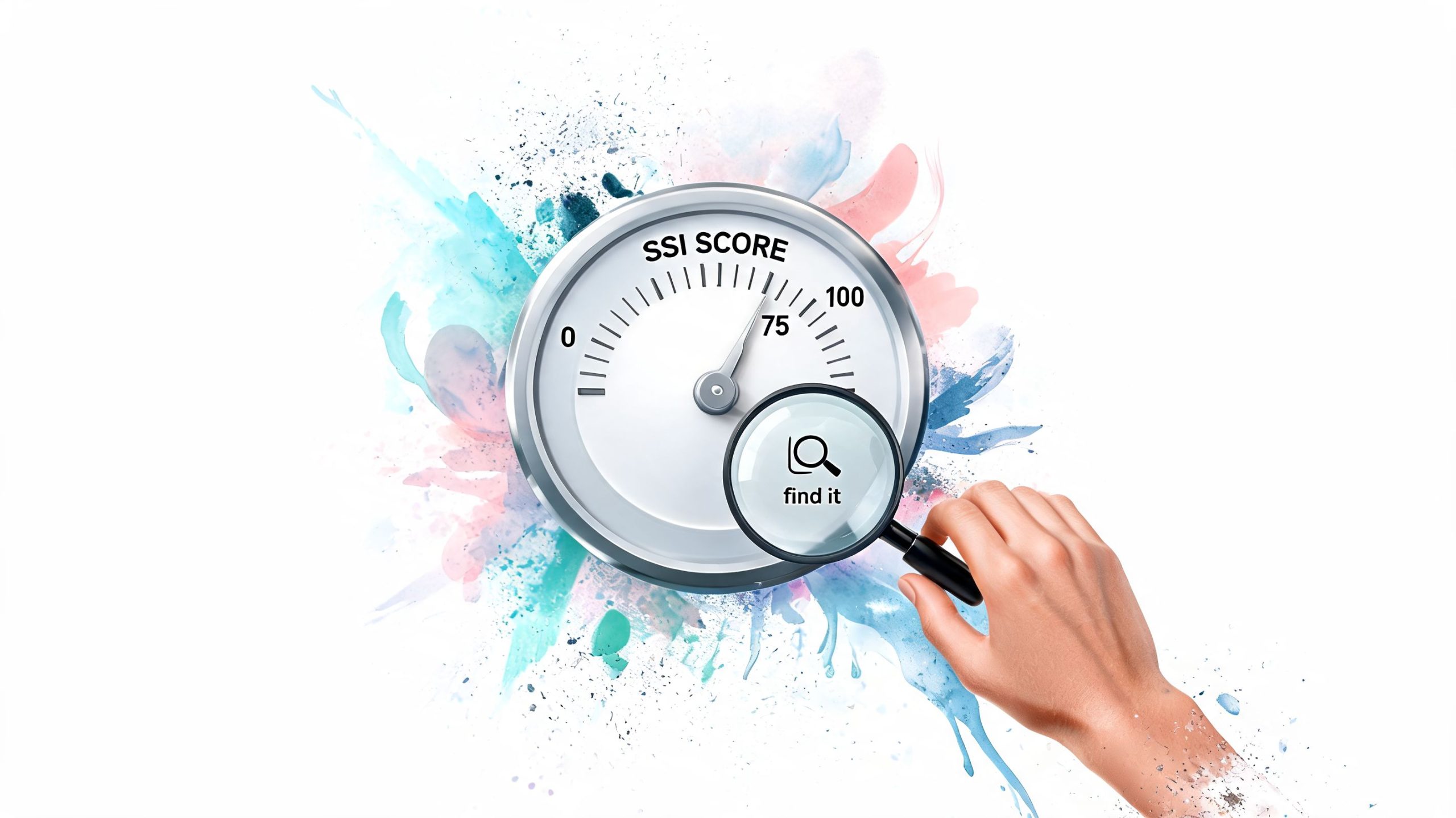
The LinkedIn Social Selling Index, or SSI, is a 0 to 100 score LinkedIn uses to summarize how consistently you use the platform across four areas. According to a Canner AI guide, the score updates daily, reflects a 90-day window, and divides evenly across four pillars. The same guide notes that top 1% SSI profiles with scores of 75+ get seven times more profile views.
The practical takeaway is simple. A short burst of activity can lift your score for a while, but SSI tends to reward steady behavior more than a one-week sprint.
What the score is actually measuring
LinkedIn splits the score into four equal parts:
| Pillar | What LinkedIn is looking at |
|---|---|
| Professional brand | How complete and clear your profile is, plus how you show up publicly |
| Right people | Whether you’re finding and connecting with relevant people |
| Engagement | How you participate through posts, comments, and content sharing |
| Relationships | Whether you build trust over time instead of collecting contacts |
That breakdown matters more than the total number.
A low overall SSI can come from one weak area dragging everything down. In practice, I often see solid content paired with poor targeting, or a polished profile paired with almost no real interaction. The score helps surface that mismatch. It does not act like a magic number that creates results by itself.
How to find your SSI score for free
You can check it in a few minutes:
- Log in to LinkedIn on desktop.
- Open LinkedIn’s SSI dashboard from the sales section.
- Review your total score and the four-pillar breakdown.
- Look for the lowest pillar first, then compare it to what you did over the last few weeks.
When I audit an account, I rarely spend much time on the total score at first. The weakest pillar usually tells me what is broken. If engagement is low, the issue may be inconsistent posting or weak conversations. If the right-people pillar is low, the network itself may be off.
If you want one place to review tools and tactics around this channel, start with these LinkedIn growth resources.
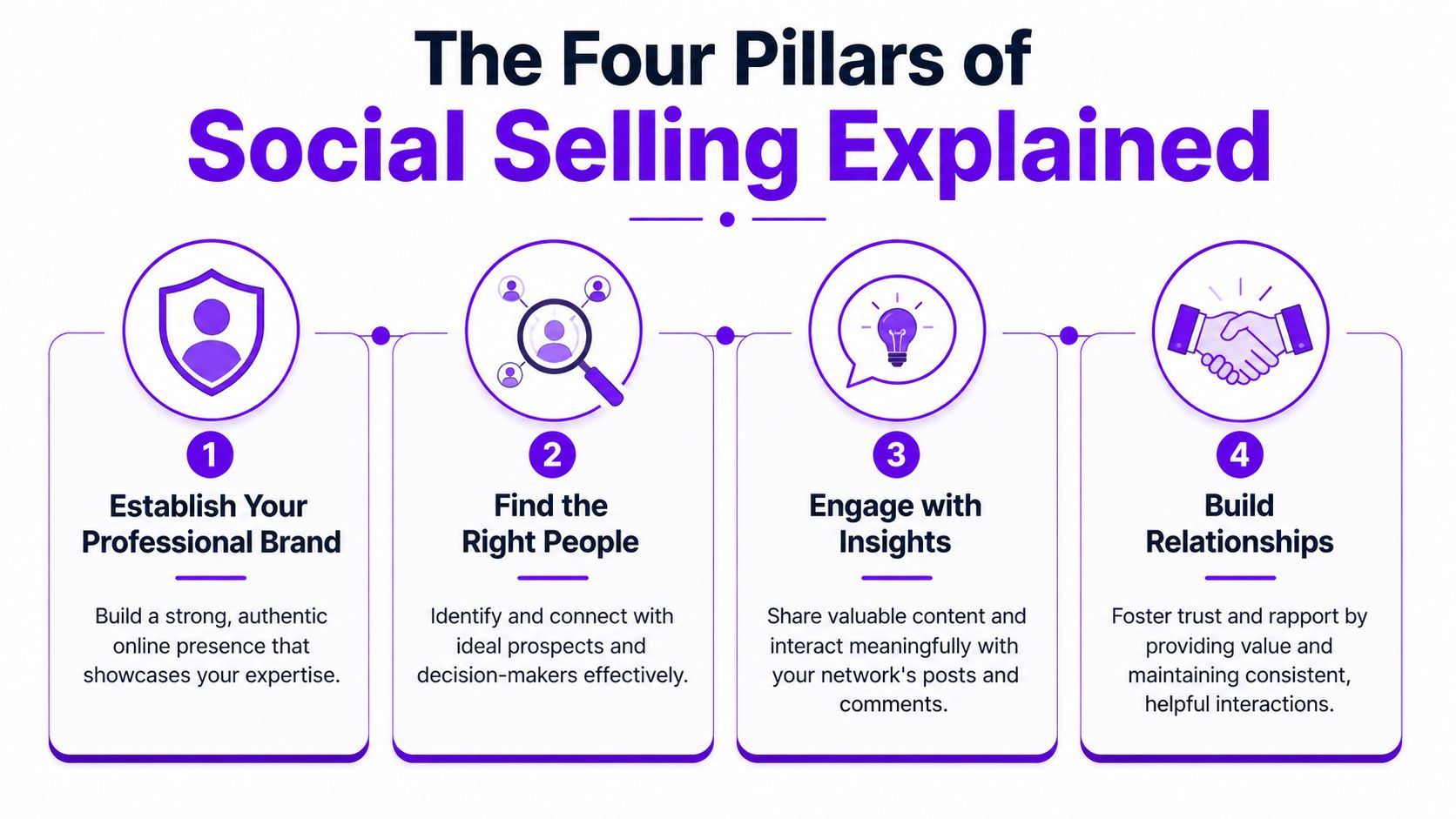
The Four Pillars of Social Selling Explained
Think of SSI like a four-legged stool. If one leg is weak, the whole thing wobbles. A lot of LinkedIn users try to compensate with more posting, but that only works when the other parts are stable.
Establish your professional brand
This is your profile and your public signal. When someone clicks your name after seeing a comment or post, LinkedIn wants that visit to lead somewhere useful.
A strong brand pillar usually includes a clear headline, a banner that supports the work you do, a clean About section, and posts that match your lane. A weak one often looks like this: generic job title, no point of view, and a feed full of reposts that don’t tell people what you know.
This pillar matters because LinkedIn is trying to match people with relevant professionals. If your profile is vague, the platform has less context.
Find the right people
This pillar is about targeting. Not volume.
People get this wrong by sending connection requests to anyone in the same broad industry. The result is a noisy feed and weak downstream engagement. A better approach is to define a narrow group: buyers, hiring managers, founders in a certain niche, editors, product leaders, or peers in a specific function.
Your network shape affects your feed quality. Your feed quality affects what you comment on. What you comment on affects who notices you.
This is why SSI works better as a feedback tool than a vanity score. It shows whether your outreach is attracting the right circle.
Engage with insights
This is the pillar frequently discussed, and usually the one they oversimplify. It’s not just “post more.” It’s whether your activity creates actual discussion.
Useful engagement includes writing comments that add context, disagreeing politely, sharing a post with your take, or publishing something that gives your network a reason to respond. Empty reactions may keep you lightly active, but they rarely change how people remember you.
If you want a direct action tied to this pillar, one practical support option is building a routine around leaving better comments through LinkedIn comment actions.
Build relationships
This last pillar is where a lot of strong creators still fall short. They can write. They can post. But they don’t follow up.
Relationships on LinkedIn are built in the boring parts: replying to comments, answering DMs, checking back with people, and staying visible without immediately asking for something. The platform can measure some of that indirectly through ongoing interaction patterns.
Here’s the shortest way I can put it:
- Brand gets the click
- Targeting gets the right people in the room
- Engagement starts the conversation
- Relationships keep the conversation alive
A Practical Plan to Improve Your SSI Score
The best SSI gains usually come from fixing simple things you’ve ignored for too long. Not hacks. Not automation theater. Just cleaner execution across the four pillars.

Fix your profile before posting more
If your headline just says your job title, rewrite it. People should understand what you do, who you help, or what topic they should expect from your content. The same goes for your About section. It should sound like a person, not a resume pasted into a text box.
Start here:
- Rewrite your headline with role plus topic focus. Something like “B2B content strategist helping SaaS teams turn research into pipeline content” is stronger than “Marketing Manager.”
- Clean your visual layer. Use a current headshot and a banner that supports your field.
- Align featured content. Pin work that shows how you think, not just where you’ve worked.
I’ve seen people spend weeks trying to fix distribution when the core issue was that profile visits didn’t convert into connection requests or replies.
Build a smaller, sharper network
SSI improves faster when your network gets more relevant. Don’t chase random acceptance. Chase fit.
Use search intentionally. Look for people by title, niche, and problem set. If you’re a developer building AI tooling, don’t just connect with “tech people.” Connect with founders, technical operators, product leads, and writers already discussing your lane.
A few habits work well:
- Send fewer requests, but make them tighter. Mention a shared topic, a post, or a reason the connection makes sense.
- Follow before connecting when you’re not ready to send a note.
- Use content as a filter. If someone never talks about the topics you care about, they may not belong in your core network.
If you need topic ideas while doing this, this list on what to post on LinkedIn is useful because it pushes you toward formats that start conversations rather than just filling a calendar.
Comment like a peer, not a spectator
When people think they’re engaging by clicking like and leaving “great post,” many SSI scores stall. LinkedIn reads that as light activity. Humans do too.
The cited benchmark for the engagement pillar says commenting 10 to 15 times per day on posts from ideal connections, with comments of 50+ words, can lift reach by 20% to 30%. It also notes that companies with high-SSI teams are 51% more likely to exceed revenue targets (LaGrowthMachine guide).
That doesn’t mean you should spam long comments everywhere. It means detailed, relevant comments are more useful than thin reactions.
A comment that works usually does one of three things:
- Adds an example from your own work
- Challenges a weak assumption without sounding hostile
- Extends the post with a next step, caveat, or use case
Field note: Good comments are often better than average posts. They put your name in front of the right people with less effort and less risk.
A practical comment template is simple: agree or disagree, add context, end with a real question if the conversation can support one.
Here’s a helpful walkthrough if you want to study the rhythm of LinkedIn interaction before building your own system:
If your main issue is getting traction with the right people early, your connection workflow matters too. One clean place to support that effort is LinkedIn connection growth.
Treat relationships as ongoing work
Many individuals stop too early. They connect, maybe exchange one comment, then disappear.
The relationship pillar improves when people repeatedly see you as useful, responsive, and relevant. That can happen through comments, replies, direct messages, and follow-ups after a post performs well.
Use a lightweight routine:
| Weekly action | Why it matters |
|---|---|
| Reply to every thoughtful comment | It extends discussion and makes people more likely to return |
| Check in with a few strong connections | It keeps good contacts active without forcing a pitch |
| Share a relevant resource privately | It gives people a reason to remember you |
Professionals often find themselves overcomplicating matters. You don’t need a clever nurture sequence. You need better recall. If the same people keep seeing you add something worth reading, the relationship builds itself over time.
SSI Score Myths and Realistic Benchmarks
A client once asked me why his SSI jumped after a month of heavy commenting, but inbound leads stayed flat. The answer was simple. He had improved the score faster than he had improved his positioning.
That is the core mistake people make with ssi score linkedin. They treat it like a magic number instead of a lagging indicator of useful platform behavior. The score can point you in the right direction. It cannot rescue weak targeting, vague messaging, or low-trust engagement.
One myth keeps coming up: a higher SSI automatically gives your posts more reach. I have never seen strong evidence that LinkedIn ranks content directly off the score itself. What I have seen is more practical. People who complete their profiles, post with a clear point of view, build relevant connections, and stay active in conversations usually perform better. SSI tracks those habits. That does not make the score the cause.
Analysts at Kanbox make a similar point in their LinkedIn SSI score analysis. The behaviors behind the score correlate with better visibility, but the score itself is not something to worship.
What to believe and what to ignore
Use this filter.
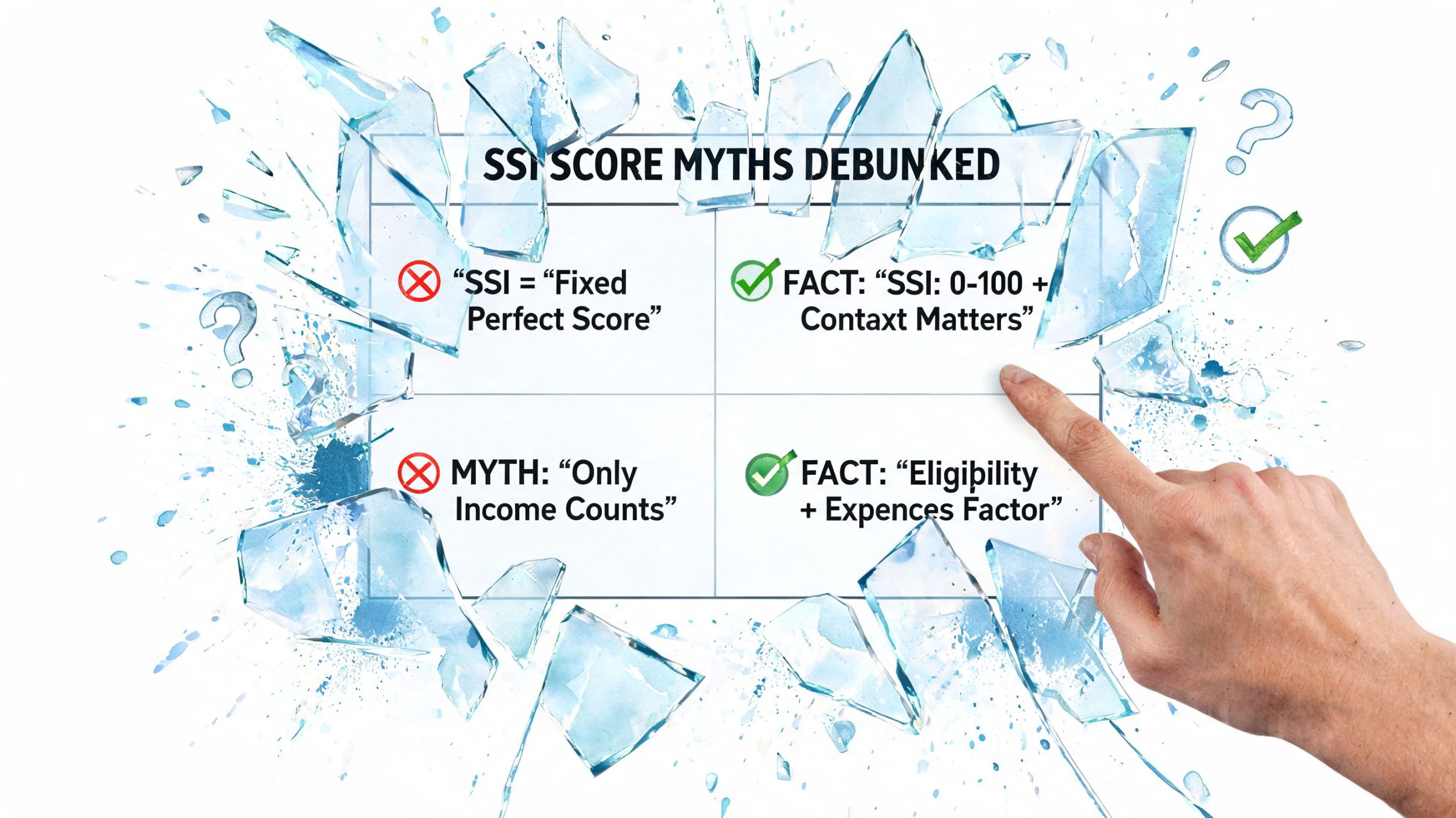
- Myth: A high SSI guarantees reach.
- Reality: Strong SSI usually reflects habits that support reach.
- Myth: Any activity helps if it moves the number.
- Reality: Low-quality comments, random connection requests, and generic posting can raise activity while hurting credibility.
- Myth: Everyone should aim for the same score.
- Reality: Benchmarks depend on role, intent, and how heavily you use LinkedIn.
I have seen sales professionals with excellent SSI and poor close rates because their outreach felt scripted. I have also seen niche operators with moderate SSI who consistently got referrals because their posts were sharp and their conversations were specific. Outcomes matter more than dashboard aesthetics.
A rising SSI with no stronger conversations, no better-fit connections, and no business result is just a tidier report.
What counts as a realistic score
Benchmarks help, but only if you read them with context. Earlier in the article, we referenced commonly cited SSI ranges. The useful takeaway is straightforward. Lower scores usually point to inactivity or uneven habits. Mid-range scores often mean one or two pillars are working. Higher scores usually show consistent execution across profile strength, content, network building, and relationship maintenance.
For practical use, I read the ranges like this:
- 0 to 39: little traction, inconsistent activity, or weak profile clarity
- 40 to 59: some good habits are in place, but at least one pillar needs work
- 60 to 69: strong, repeatable LinkedIn use
- 70+: top-tier consistency, usually from people who use LinkedIn as an active business channel
That said, role matters. A B2B account executive who networks daily should usually sit higher than a developer who posts twice a month. A founder building partnerships may care more about relationship quality than about squeezing every point out of the score. Chasing another profession's benchmark is a bad read of the metric.
The better question is whether your score matches your goals. If you want deal flow, recruiting reach, speaking invites, or warmer inbound conversations, your SSI should reflect regular action in those areas. If it does not, the score is useful because it shows where your routine is thin.
For a grounded approach to that routine, this guide on effective LinkedIn growth tips is worth reading. It stays focused on habits that build real presence instead of vanity metrics.
One more reality check. Community support can help, but only if it stays authentic. A good engagement circle or member community can help your posts get early discussion from real people, which improves visibility and gives you better feedback on what resonates. Fake engagement, empty comments, and activity-for-activity's-sake do the opposite. They inflate the number and weaken the signal.
So set benchmarks with some humility. Treat a low score as a diagnostic. Treat a high score as confirmation that your system is working. Treat neither one as proof that LinkedIn owes you results.
Using Your SSI Score for Long-Term Growth
The best use of SSI is simple. Check it weekly, not obsessively. Look for the weakest pillar, then adjust your behavior for the next few weeks instead of trying to force the total score up.
That approach fits how the metric works. The score runs on a 90-day rolling window, which means sporadic bursts don’t hold up well. Consistent micro-engagement, regular quality comments, and a solid connection acceptance pattern tend to work better over time (Postiv guide).
If you want more practical reading in that same spirit, this piece on effective LinkedIn growth tips is worth your time because it focuses on steady habits rather than vanity moves.
Treat SSI like a compass. Not a finish line. The number matters far less than the routine that produces it.
If you want help getting real engagement across social platforms without bots, try Upvote Club. With our Upvote.club service, you can join a community-based system where members help each other with likes, comments, reposts, saves, and followers from verified human accounts. We don’t sell fake engagement. We let users earn points by completing tasks for others, use those points to promote their own content, and build a repeatable cycle of authentic interaction. We support LinkedIn along with Instagram, TikTok, YouTube, Twitter, Facebook, Reddit, Medium, Quora, Product Hunt, GitHub, and more, and we do it without asking for passwords.