Table of Contents
- Table of Contents
- Why Your Subscriber Count Is Stagnant
- Laying the Foundation for Subscriber Growth
- Fix your channel before you post again
- Pick a niche that has demand and weak supply
- Developing a Content Strategy That Attracts Subscribers
- Build videos in clusters not in isolation
- Make search and recommendations work together
- Use a simple idea filter
- Turning Viewers into Loyal Subscribers
- Ask after the value lands
- Design the next click on purpose
- Mastering the Golden Hour to Boost Discovery
- Treat the first hour like distribution, not publishing
- Push for qualified activity, not empty noise
- Analyzing Your Data and Setting Realistic Milestones
- Find your gold mine videos
- Use milestones that keep you publishing
You're probably in the same spot I see with a lot of creators. You post videos, spend too long on thumbnails, maybe even ask people to subscribe, and then YouTube gives you a few views, a couple of likes, and almost no subscriber movement. That's frustrating because it feels like you're doing the work.
I'll be blunt. Most channels don't have a subscriber problem. They have a conversion system problem. They treat every upload like a lottery ticket instead of building a channel that turns one interested viewer into a multi-video viewer, then into a subscriber.
That shift matters if you want to learn how to get more YouTube subscribers without waiting around for a random viral hit. I've had my best results when I stopped chasing spikes and started building for two things: session depth and early engagement. If your videos pull people into a second and third watch, and your new upload gets traction fast, subscriber growth gets a lot less mysterious.
Table of Contents
- Why Your Subscriber Count Is Stagnant
- Laying the Foundation for Subscriber Growth
- Developing a Content Strategy That Attracts Subscribers
- Turning Viewers into Loyal Subscribers
- Mastering the Golden Hour to Boost Discovery
- Analyzing Your Data and Setting Realistic Milestones
Why Your Subscriber Count Is Stagnant
Most stagnant channels have the same pattern. The creator is busy, the upload schedule looks decent, and the channel still feels stuck. That usually happens because the creator is optimizing for the wrong win.
YouTube is too big for random browsing to save you. According to YouTube platform research summarized by IntoTheMinds, YouTube has about 2.70 billion monthly active users as of 2026 and 70% of traffic comes from recommendation algorithms. That means your subscriber count won't move much unless YouTube sees signs that your videos deserve more distribution.
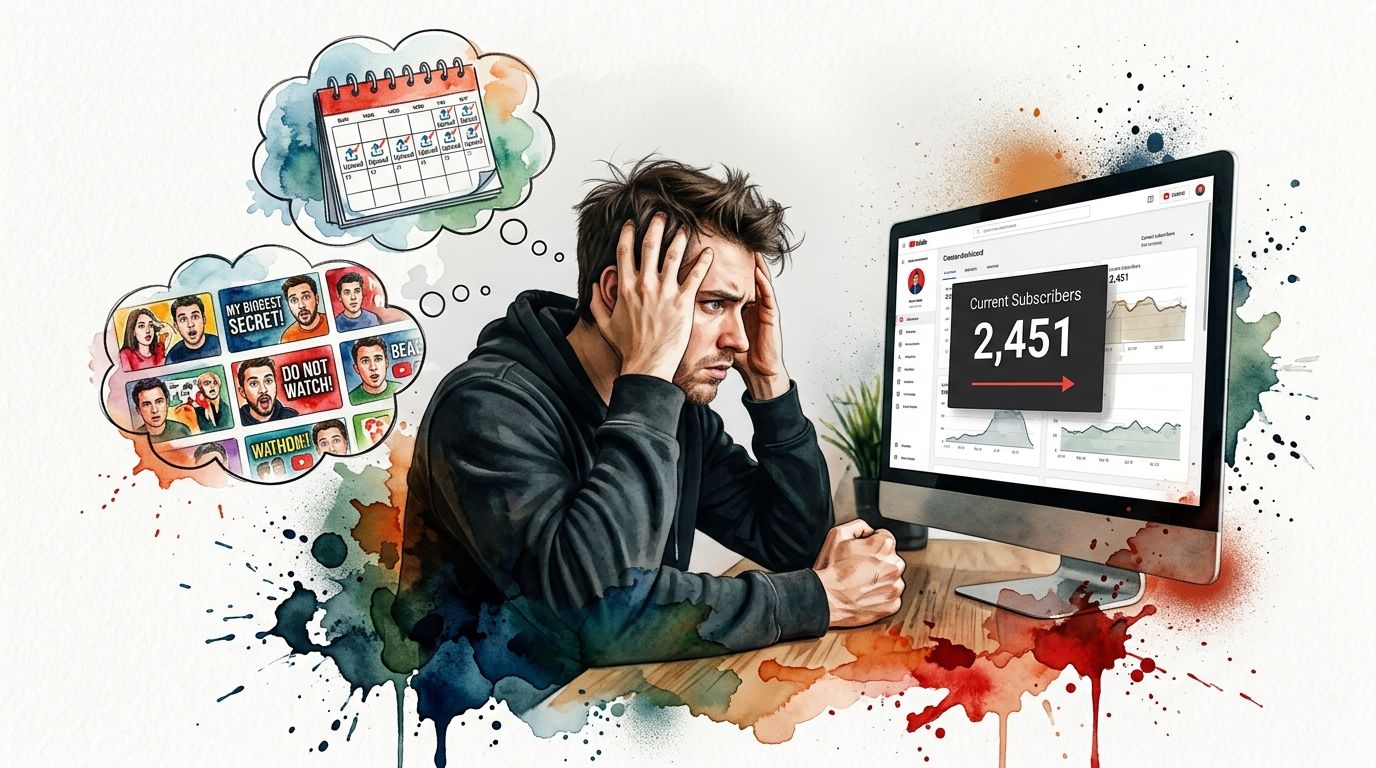
The mistake is obvious once you see it. A lot of creators chase one big hit. I don't. I'd rather make a channel where each upload sends people to the next upload, and where each viewer has a clear reason to subscribe because they know what they'll get next.
Practical rule: Stop asking, “How do I make this video blow up?” Start asking, “Why would someone who liked this video want three more from me?”
That's the frame that changes everything. When you build for session depth, your channel starts behaving like a library instead of a pile of unrelated clips. When you build for early engagement, YouTube gets stronger signals faster.
If you're tempted to shortcut the process, be careful. A lot of options around YouTube subscriber growth services talk about the number, not the quality behind the number. I'd rather have fewer subscribers who watch another video than a bigger count that does nothing for the channel.
Laying the Foundation for Subscriber Growth
A viewer decides whether your channel is worth following in seconds. If the page feels messy, broad, or confusing, they leave. If it feels focused, they watch another video.
Fix your channel before you post again
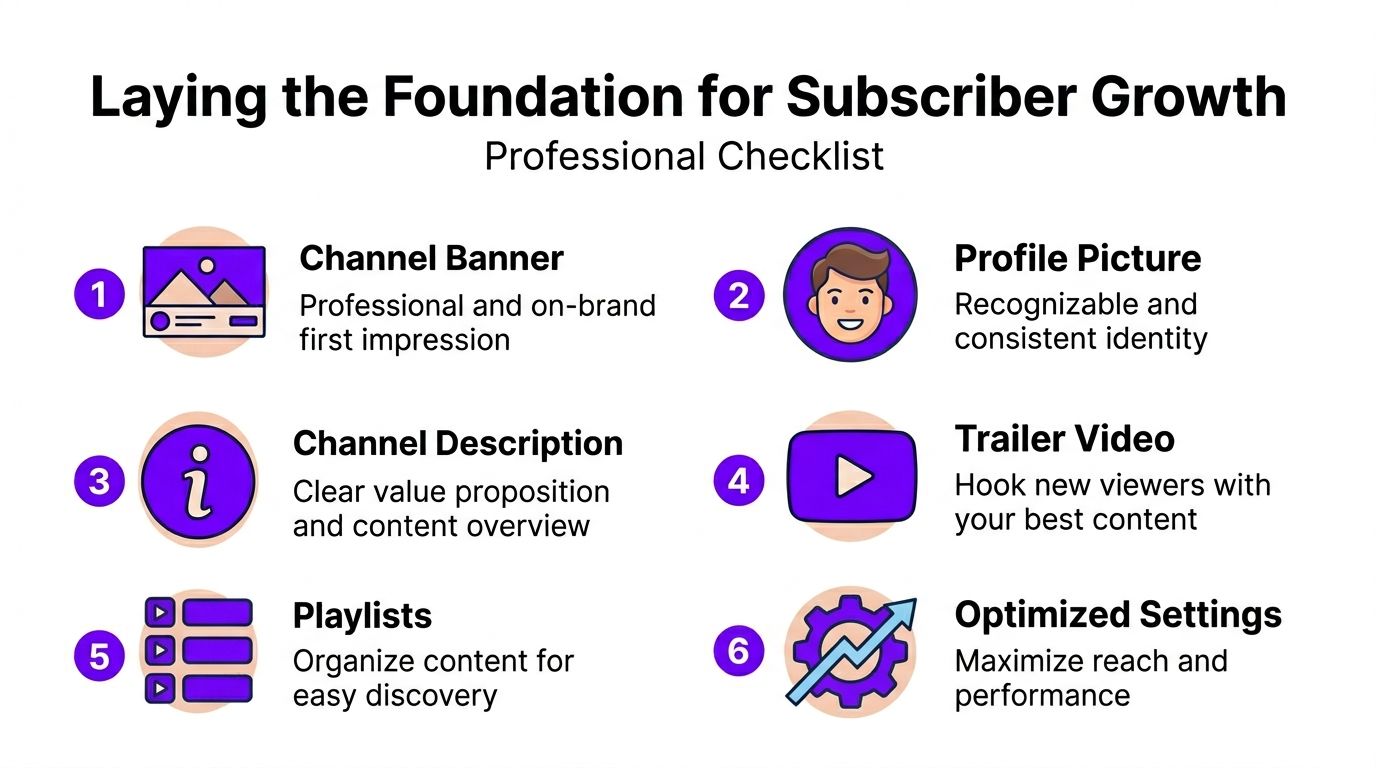
I'd clean up these five things first.
- Channel banner. Say what the channel is about in plain language. Don't make people guess.
- Profile photo. Use one clear image and keep it consistent across platforms.
- Channel description. Write for a new viewer, not for yourself. Tell them what problem you solve or what kind of videos they'll keep getting.
- Trailer video. Put your sharpest “start here” video up front.
- Playlists. Group videos by problem, outcome, or audience stage.
Here's the test I use: if a stranger lands on your channel, can they answer “Who is this for?” and “What will I get if I subscribe?” in under ten seconds? If not, the setup is weak.
A lot of channels fail here because they try to cover too much. “Marketing, mindset, business, productivity, and my life” sounds flexible to the creator and muddy to the viewer. Subscription happens when your promise is narrow enough to trust.
Pick a niche that has demand and weak supply
Broad niches are crowded. Narrow angles win because they give people a fast reason to care. I'd rather own a small, clear lane than blend into a giant topic.
The smartest way to do that is simple. Use YouTube autocomplete, Google Trends, Reddit threads, and outlier videos to spot topics people already want. This niche research breakdown from OutlierKit makes the point well: creators can use YouTube autocomplete, Google Trends, and Reddit to find underserved angles with proven demand.
I use a rough filter like this:
| Signal | What I look for | What it means |
|---|---|---|
| Search suggestions | Specific recurring phrases | Real viewer demand |
| Reddit complaints | Repeated problems and questions | Content ideas with built-in pain |
| Outlier videos | One video outperforming the rest of a channel | A topic the market wants more of |
Narrow beats vague. “Budget meal prep for night shift nurses” is stronger than “healthy lifestyle tips.”
Your niche doesn't need to be tiny forever. It needs to be clear enough for your first real audience to understand why they should stay. Once that audience trusts you, you can widen the lane.
Developing a Content Strategy That Attracts Subscribers
Most creators plan videos one at a time. That's a mistake. Subscribers don't follow single videos. They follow channels that keep paying off.
Build videos in clusters not in isolation
I plan content in clusters of related ideas. One topic becomes several connected videos, each one naturally leading into the next. That structure helps with both recommendations and subscriptions because the viewer can see there's more for them after the first watch.
Here's a simple example:
- Problem video. “Why your thumbnails get ignored”
- Fix video. “How I design thumbnails that earn the click”
- Breakdown video. “Thumbnail mistakes I stopped making”
- Case format video. “I rewrote these thumbnail ideas live”
That's better than posting four random topics. It creates momentum inside the channel.
I also build playlists early. Not later, early. If a viewer finishes one video and the next obvious step is waiting, you've reduced friction. That matters more than people think.
If you repurpose your long-form videos into Shorts, clips, or posts for other channels, it helps to compare AI content transformation platforms so you can turn one strong topic into multiple entry points without rewriting everything by hand.
Make search and recommendations work together
A lot of advice treats YouTube SEO like the whole game. It isn't. Search can help a video get found, but subscribers usually come from a chain of events: click, watch, continue, trust, subscribe.
Still, I do basic SEO every time:
- Title first. Make it clear and specific. If the title sounds clever but vague, I rewrite it.
- Description second. Put the main topic in natural language near the top.
- Tags last. I use them as support, not as the strategy.
- Thumbnail match. The thumbnail should sharpen the title's promise, not repeat it.
I also pay attention to packaging consistency. If someone watches one of my videos and lands on the channel, the rest of the library should feel connected. Similar audience, similar promise, similar level of outcome.
Use a simple idea filter
Before I record anything, I ask three questions.
- Would my current viewer care about this next?
- Can I pitch the idea in one clean sentence?
- If this works, do I have two follow-up videos ready?
If the answer to the third question is no, I usually pass. A video that can't lead anywhere is weaker for subscriber growth.
For creators working across platforms, I keep the support system practical. If your audience also hangs out on short-form platforms, TikTok audience touchpoints can help you keep attention flowing back to your main content ecosystem. The point isn't to be everywhere. The point is to use each platform to feed a clear content path.
Turning Viewers into Loyal Subscribers
Views are nice. Conversion is what builds a channel.
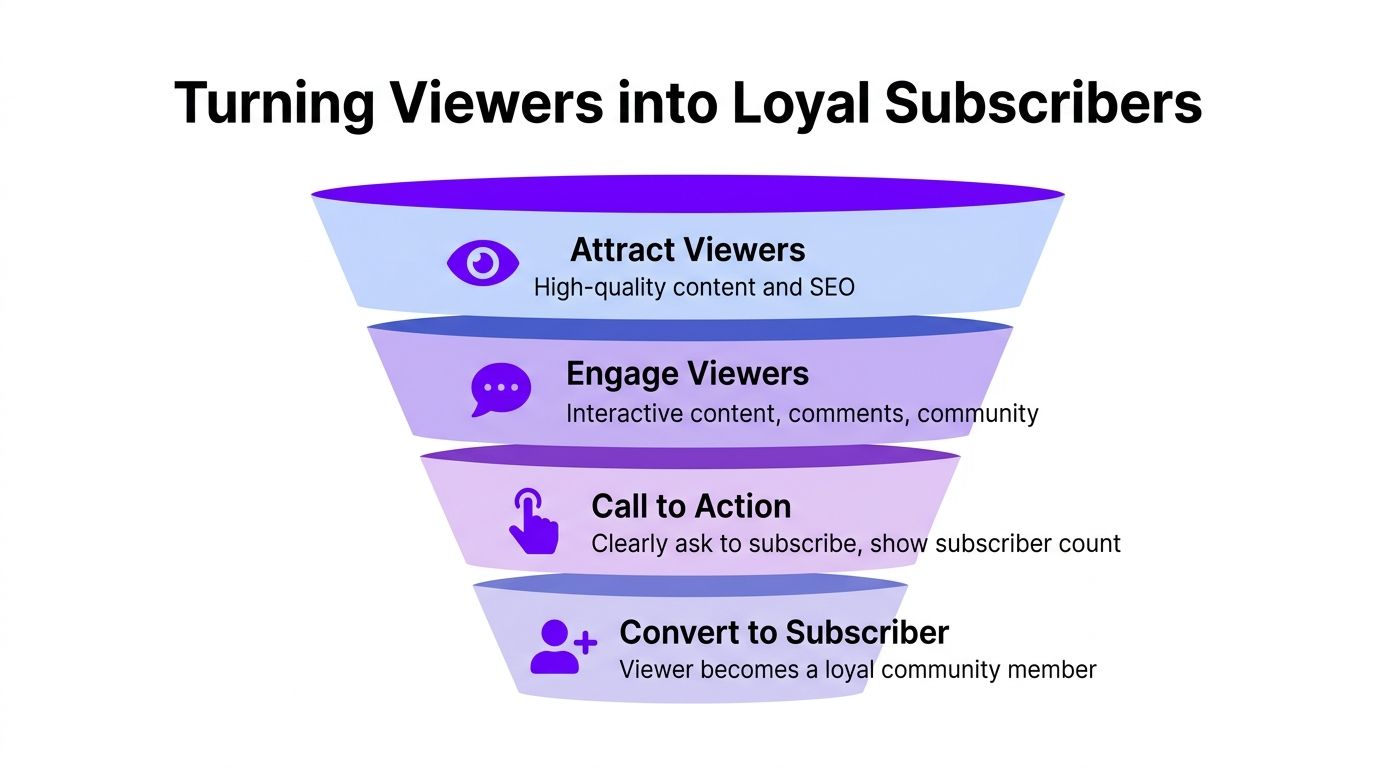
A common benchmark is that channels convert about 2% of viewers into subscribers, which means getting to the first 1,000 subscribers often takes roughly 50,000 views, based on the creator planning benchmark in this YouTube video. That's why I care so much about converting the viewers I already have instead of obsessing over raw reach.
Ask after the value lands
Most subscription calls are badly timed. Creators ask in the opening before the viewer has received anything. That's backwards.
I ask for the subscribe after I've given the viewer a clear win. Maybe I solved the main problem. Maybe I showed the exact framework. Maybe I got to the part they came for. That's the moment where the ask feels earned.
Try language like this:
If this kind of breakdown helps, subscribe. I post this type of video every week.
That works because it ties the ask to a future promise. You're not asking for a favor. You're offering a reason to stay.
Design the next click on purpose
Subscriber conversion climbs when the viewer sees that your channel goes deeper than the current video. I use four tools for that.
- End screens. Push one tightly related next video, not a random choice.
- Pinned comment. Link the next logical watch and tell people why it matters.
- Playlists. Guide people into a sequence, not a dead end.
- Replies in comments. When people ask questions, answer them and point them to the relevant next video.
Here's the principle. A viewer who watches two or three videos starts acting like a future subscriber before they click the button.
If you want a practical tool for that action itself, YouTube subscribe task workflows are one way to support visibility around your channel activity. The main point, however, is the sequence behind the click. Subscription follows satisfaction plus clarity.
Mastering the Golden Hour to Boost Discovery
You publish a strong video, check back later, and the views are flat. That usually is not a content problem. It is a launch problem.
The first hour decides whether YouTube gets enough positive signals to keep testing your video. I care about two signals most: initial engagement velocity and session depth. Can the video get real interaction fast, and does it lead people into more watch time on your channel? That is the system. Viral spikes are nice. Repeatable subscriber growth comes from teaching the algorithm that your videos start strong and keep people watching.
Treat the first hour like distribution, not publishing
Uploading is the midpoint. Launch starts the moment the video goes live.
I stay close to the video early because weak starts kill discovery. If comments come in, I reply fast. If the click looks soft, I change the title or thumbnail quickly. If I already know who wants this topic, I send the video to them right away through email, community posts, and other social channels.
My goal is simple. Get enough qualified viewers into the video early so YouTube can measure a real response.
Here's the checklist I use:
- Bring in warm traffic fast from people already likely to care
- Reply to early comments so the video feels active and worth joining
- Pin a comment that sets up the next watch, not a generic reminder
- Check packaging early and fix weak title or thumbnail decisions before the test window passes
I also pay attention to upload timing. If you want to tighten that part of your process, this guide for YouTube content creators is a useful reference.
Push for qualified activity, not empty noise
A lot of creators sabotage the golden hour by chasing raw clicks. I want interested viewers, because subscribers come from satisfied sessions, not random traffic bursts.
That is why I care about launch support that can drive real human action. With a task-based community growth workflow for creators, I can support early visibility across social platforms, including YouTube, using verified human accounts. It uses a bot-free model that doesn't require passwords. Users complete tasks, earn points, and spend those points on their own campaigns. Used correctly, that helps a good video get its first real push instead of sitting idle while the test window closes.
The rule is straightforward. Don't post and disappear.
If you want more YouTube subscribers, treat the first hour as part of the video itself. A strong launch gives YouTube the signals it needs to keep recommending your content, and every extra session you create gives viewers another chance to decide your channel is worth subscribing to.
Analyzing Your Data and Setting Realistic Milestones
Analytics tells you what your audience values. Most creators look at views first and stop there. I care more about the pattern behind the views.
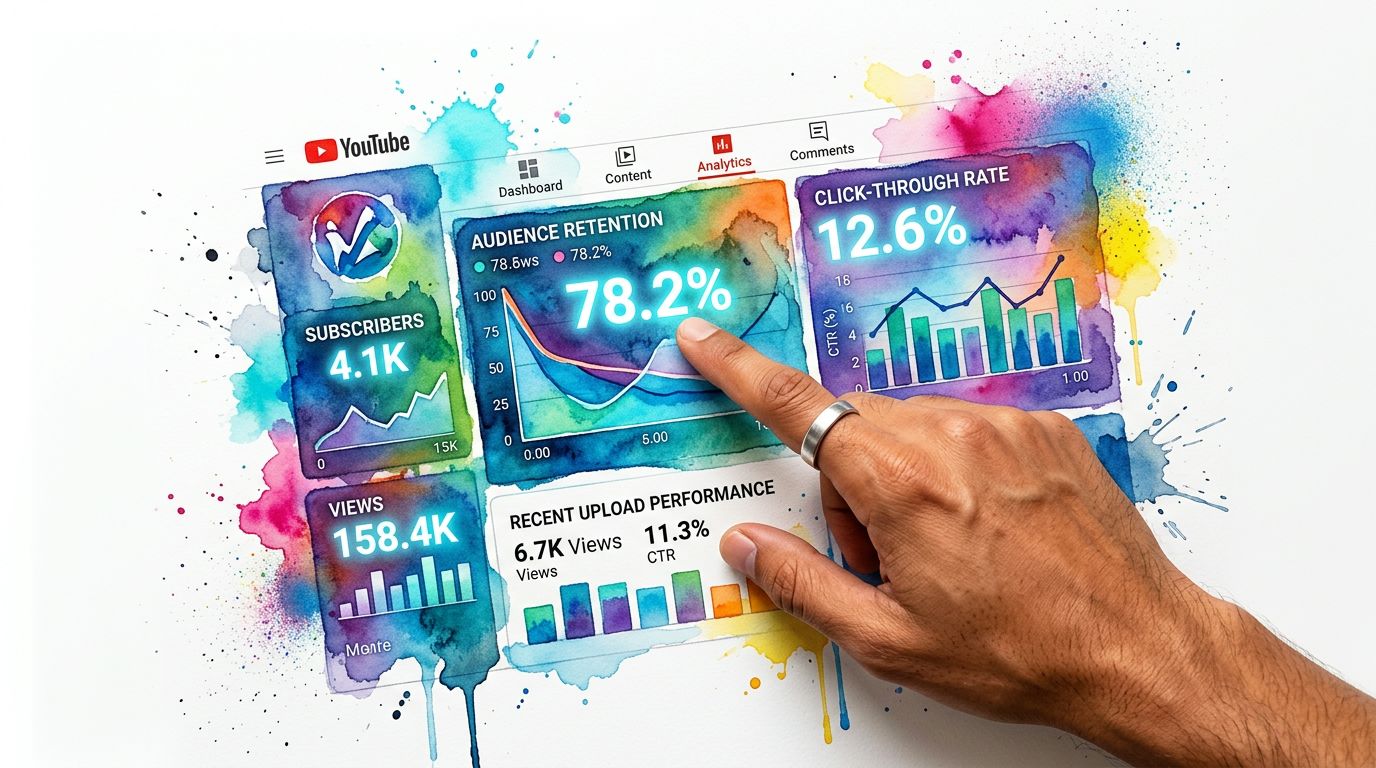
According to vidIQ's subscriber growth benchmarks, reaching 100 subscribers puts a channel in the top 37% of creators, and 10,000 subscribers puts it in the top 6%. I like those benchmarks because they stop creators from thinking they've failed when they're still early.
Find your gold mine videos
I look at three signals first:
- Audience retention. Where do people stay, and where do they leave?
- Click-through rate. Did the title and thumbnail earn the click?
- Traffic source mix. Is the video getting picked up beyond your usual audience?
If one video clearly beats your channel baseline, that's a gold mine. Don't admire it. Study it and make more around the same demand pattern.
A simple review routine helps. This guide for YouTube content creators is useful if you also want to think about publishing timing as part of your review process, not as a magic fix.
For a visual walkthrough of channel analysis, this video is worth watching:
Use milestones that keep you publishing
I don't like giant goals unless they change behavior today. Smaller milestones do.
| Milestone | Why it matters |
|---|---|
| First 100 subscribers | Proves strangers will follow your channel |
| First consistent topic winner | Shows what your audience wants more of |
| First repeat viewing pattern | Confirms your library is working together |
Progress on YouTube usually looks boring from the inside. That's normal. The channels that keep growing are the ones that keep learning from the data and repeating what worked.
If you want help getting real early engagement around your posts instead of fake activity, Upvote Club gives you a community-based way to create tasks, earn points, and get support from verified human accounts across YouTube and other platforms.