







The 2027 LinkedIn marketing playbook builds demand as one system
Profile, brand, hooks, formats, comments and a 90-day plan: how one LinkedIn system builds demand.
Table of contents
We have spent more than 10 years growing accounts on social networks: more than 10 billion reach, close to a billion followers across our accounts, and more than 10,000 posts published every day. What that work shows for LinkedIn in 2027 is that demand comes from one system in which the profile, the position, the message, and the weekly rhythm say the same thing. There are two kinds of demand, current (people who want your offer today) and future (people who will want it later), and the accounts that win build the future kind and collect the current kind along the way.
Your profile decides whether a visitor follows you, so write it for one reader and one result.
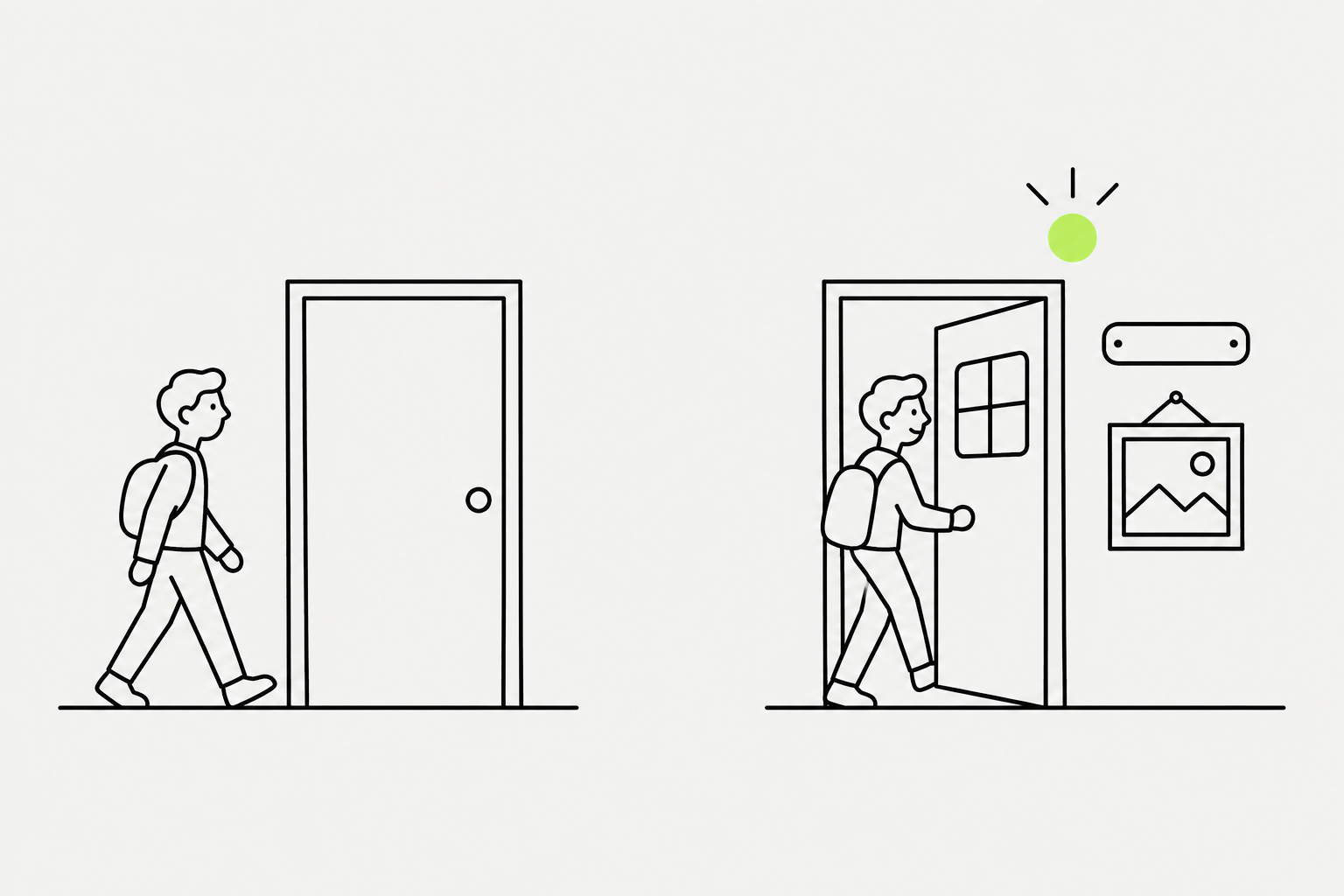
An avatar and a filled-in profile have no effect on how many people see your posts. They decide how many of those people follow you, and that is where a profile earns its place. A visitor arrives from a comment or a post, reads the headline, and decides within seconds.
Four parts of the profile do the converting
- Headline. One sentence that names who you help and what result they get: "I help {who} achieve {what}". The headline travels with your name into every comment and every search result, so it works even when nobody opens the profile.
- About. The first lines repeat the same promise, the next lines give proof with a number, and the last line gives one next step.
- Featured. Pin the post, carousel, or page that shows the result you promise. A visitor who has read your headline should find the evidence one scroll later.
- Company page. LinkedIn data cited by Hootsuite says a complete Page gets 30% more weekly views. A company page can comment, like, and reply the same way a person does, so everything in this playbook can run from the page too.
What to do now: Run your profile through our LinkedIn profile analyzer and rewrite the weakest section first, starting with the headline.
A brand is what you teach people to link to you, so choose those links before you post.
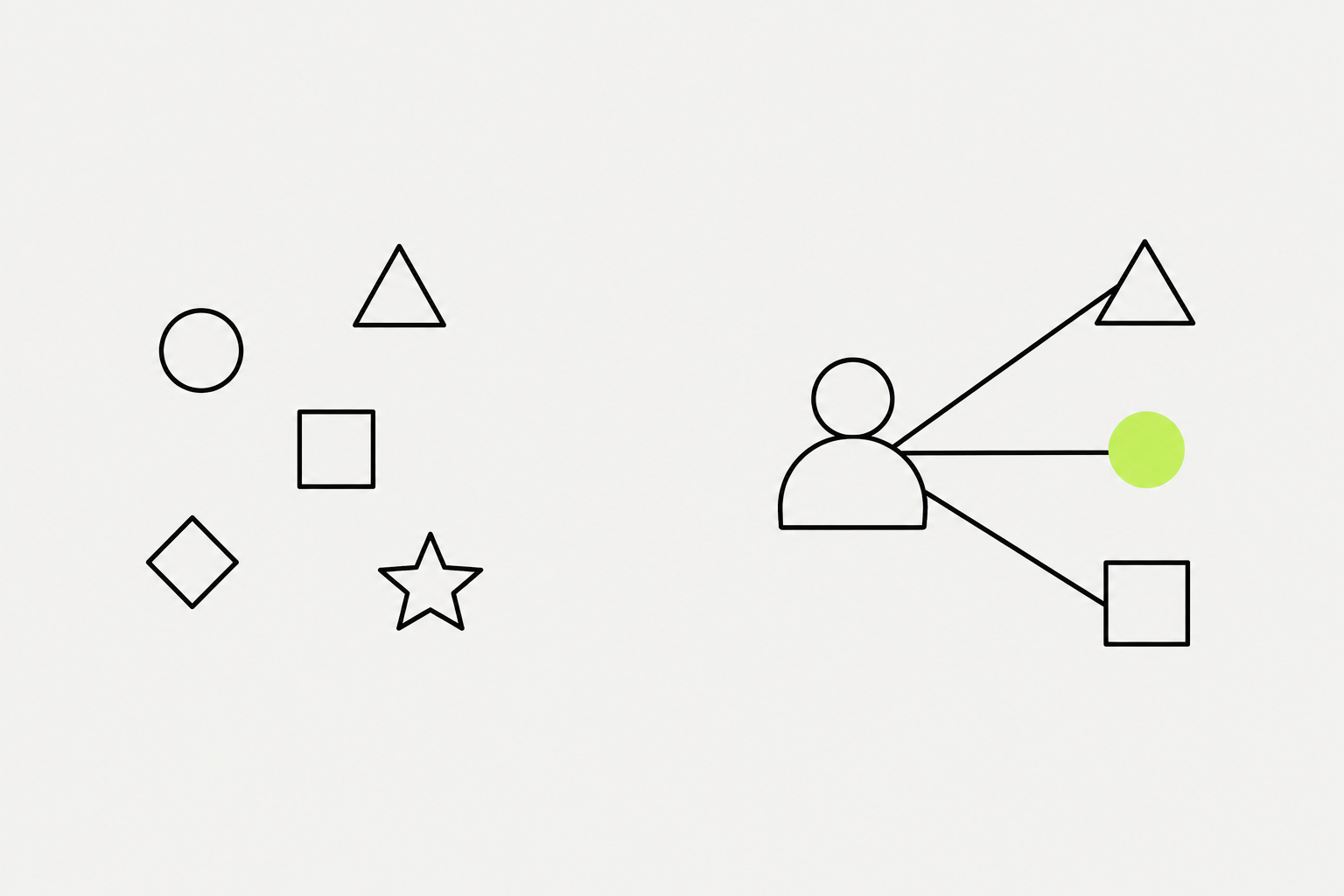
A brand is the set of associations your audience holds about you. When the audience forms them alone, the branding is bad, when you form them on purpose, it is good. Decide what you need to be linked with, so that when your reader has a problem, they think of you first. It matters for the math as well: a brand lowers what it costs to win a customer, because content reaches more people and readers who already trust you convert at a higher rate, and it raises the lifetime value of that customer, because people who know you pay more, come back, and stay longer.
Three associations to build, and who should carry them
- Power. Show that you can do things: your skill, your network, your audience. Say it in words ("My team grew {account} to {number} followers") and show it on screen. Power is relative to the room, so pick the kind your reader wants.
- Trust. Trust is belief with evidence. You give step-by-step directions, the reader follows them, a good result happens, and the reader links that result to you. Martha Stewart did this with recipes for years, and her cookbook sold because of it.
- Likeness. Readers listen most to people in their own group. Show what you believe and value, more than how you look or dress. Admitting one thing you are bad at before you state the one thing you are very good at adds trust.
- People carry it. Trust has moved from logos to human voices. Posts from founders and employees reach further than posts from the logo, so ask them to write about the same three associations in their own words.
What to do now: Write the three associations you want as three short sentences, then put them on your profile banner with our LinkedIn banner maker.
Pick your niche by the change you deliver, and your edge by what you do better than others.
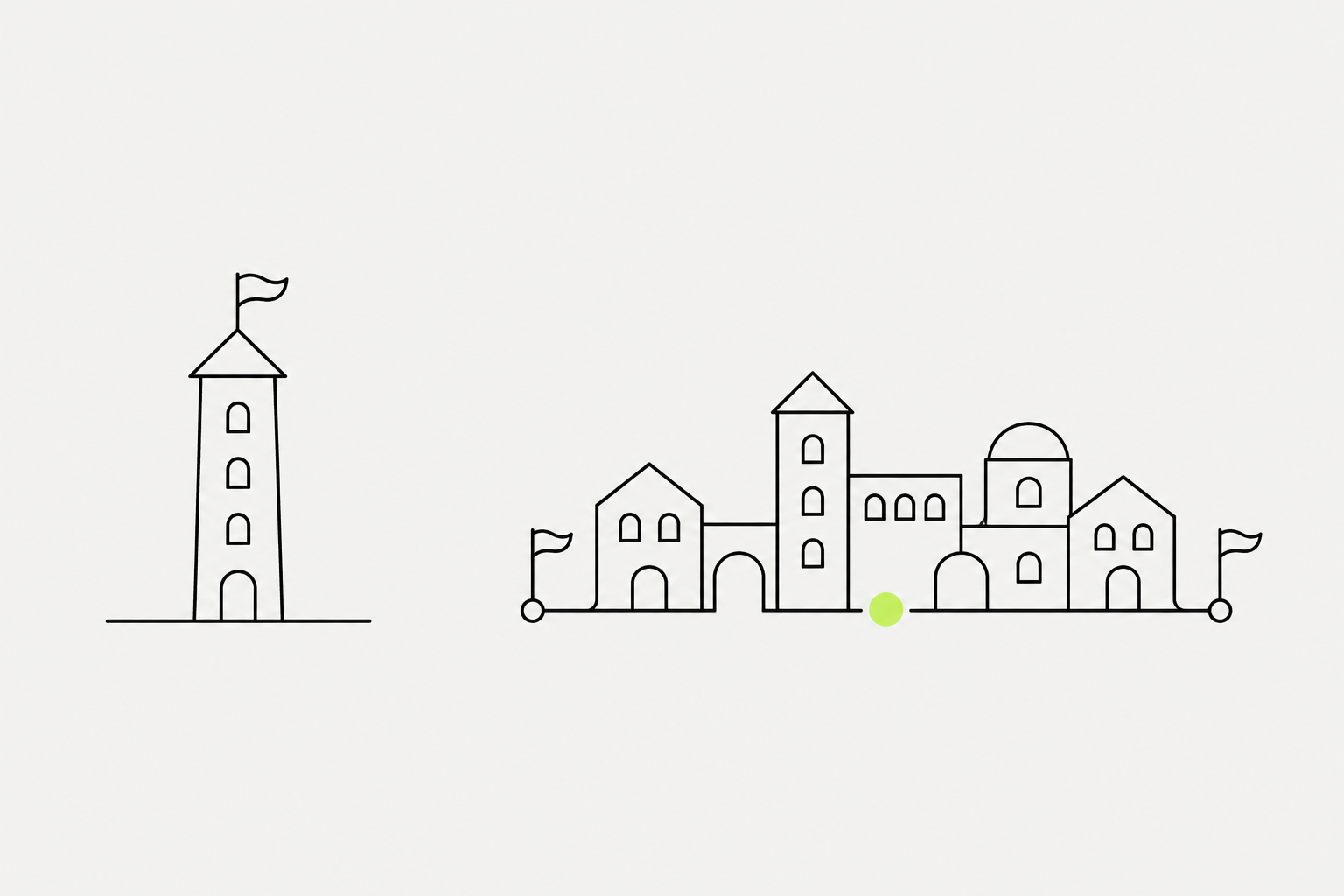
Choosing a topic as a niche builds a skyscraper: tall, narrow, and easy to understand. Choosing the change you deliver, from where the reader is today to where they want to be, builds a city, because every subtopic along that route is fair game. The city is more durable, and it is how you get from your first 1,000 followers to the 1,000 true fans who pay for anything you sell.
Three choices set the lanes for every post
- Pillars. Pick two to five topics you can talk about for hours. Topic consistency trains the feed to send your posts to the right readers, and each pillar should sit on the route between your reader's start and finish.
- Edge. Content works when what you do better than others overlaps with what the market wants. Posting only what you know gets silence, and chasing trends makes you sound like everyone else. Look for the overlap, and for a strong product or a strong skill behind it.
- Big idea. Every top creator has one idea that is new, easy, safe, and big. "Diamonds are forever" was new because rings were not that important before it, easy because one ring shows love, safe because it lasts, and big because it is about the love of your life.
- Value first. Lead with value: save people time, show them how to make money, or relate to what they live through. Add what others will not do: bold claims, results with numbers, your face, and posting on schedule.
What to do now: Write your change as one sentence, "from {where the reader is} to {where they want to be}", and turn it into headline options with our LinkedIn headline generator.
Six answers before the first sentence make every post easier to write.
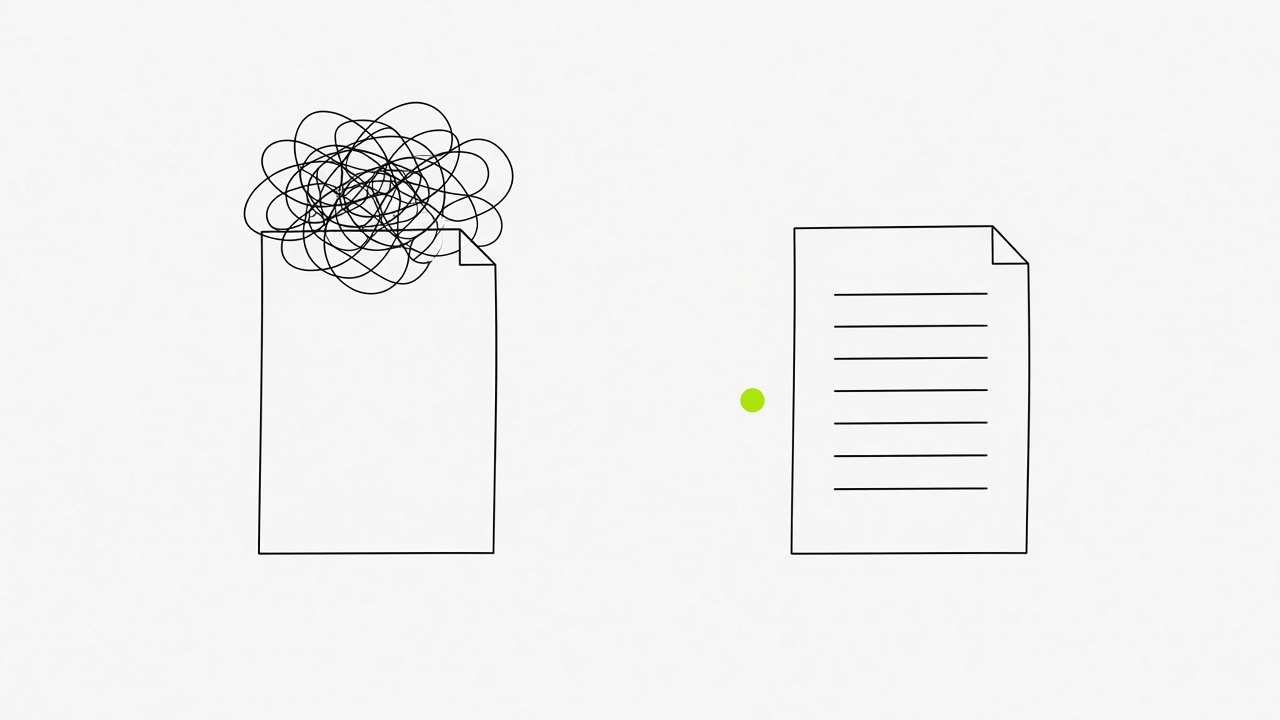
Organic content is worth the work now for four reasons: the field is filling with new creators, every post works for you around the clock, a strong account opens sponsorships, hires, and partners, and an audience's trust is one of the few things nobody can copy. Research comes first. Study the top 10 to 20 accounts in your niche across more than one network, read the replies under their posts where your audience says what it wants, look at neighboring niches for ideas nobody has used yet, write down the questions that keep coming up without a good answer, and keep a swipe file. Then answer six questions, which Jay Yang calls the 6 Ps of copy thinking.
People, positioning, promise, proof, priority, process: one line each
- People and positioning. Draw an empathy map with four boxes: what the reader does today, what they fear ending up with, what frustrates them now, and what they want next. Match the words to how much they already know: a reader who has not named the problem needs it named, and a reader who knows the options needs to hear why yours differs. Positioning is the fact about you that others skipped. Schlitz beer won by describing its filtering, which every brewer used and none had mentioned.
- Promise. The promise is the outcome, with no list of features in it. Test it by asking "so what" again and again until you reach the feeling: a 5x5 silk rug becomes a room that feels pulled together, then compliments, then taste you are proud of.
- Proof. There are three types: someone with authority backs you, your own results, and your clients' results, which is the strongest. Run the test of the mute: if you could only gesture, "trusted by industry leaders" cannot be shown, but logos can, and "400 clients, 11 years" can.
- Priority. People move away from pain faster than toward pleasure, so write the cost of staying where they are. Scarcity and urgency work only when they are true.
- Process. Name how your way works, because "I help you lose weight" fits a dozen methods and the reader needs to know which one you use.
What to do now: Write one line for each of the six answers about your next post and keep them in the same document as the draft.
Five qualities make a post clear enough to be understood in one read.
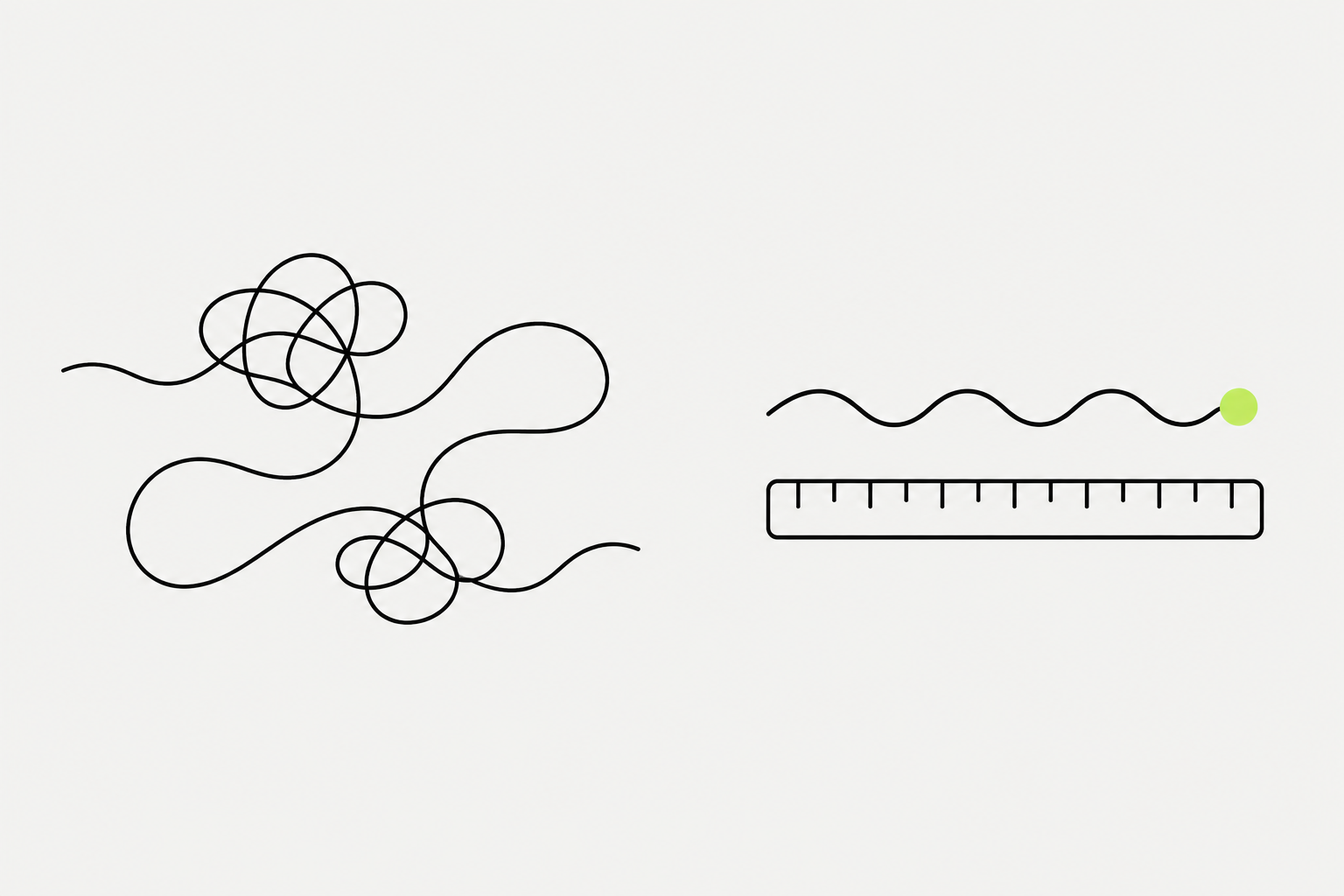
Readers on LinkedIn are busy and distracted, and they owe you nothing, so the job is to make them feel smart, and sounding smart does not matter. The five qualities are clear, short, concrete, conversational, and rhythmic. Writing is where the thinking from the six answers becomes visible, so a weak post usually means one of the six was skipped.
Five checks to run on every draft
- Clear. Remove what is unclear instead of adding explanations, and work from the last sentence to the first. The firefighter test: "There's a situation downstairs that we may need to think about" loses to "There's a fire downstairs. Open the window and jump out."
- Short. Treat every word as if it costs ten dollars and cut whatever you can without losing sense. Short text posts on LinkedIn are also the quickest way to find out which idea people want, before you build a carousel on it.
- Concrete. Write what a reader can picture. "We help business owners grow" becomes "we took a roofing company from 14 leads a month to 70 leads a month". Zoom in when you describe something large, such as a feeling.
- Conversational. Read it aloud. School habits make LinkedIn posts sound corporate and robotic: "please don't hesitate to reach out" turns into "just text me if you need anything" for a young reader, and for a lawyer the wording changes again, so the words follow the group you write for.
- Rhythm. Vary the length of sentences. Five-word sentences in a row drone. Then a longer one, with a turn in the middle, wakes the reader up. Squint at the outline of the text: the shape should not be one straight line.
What to do now: Read your last post aloud, mark every place you stumble, and rewrite those lines before the next one goes out.
A hook built from benefit, relevance, and credibility earns the click on "see more".
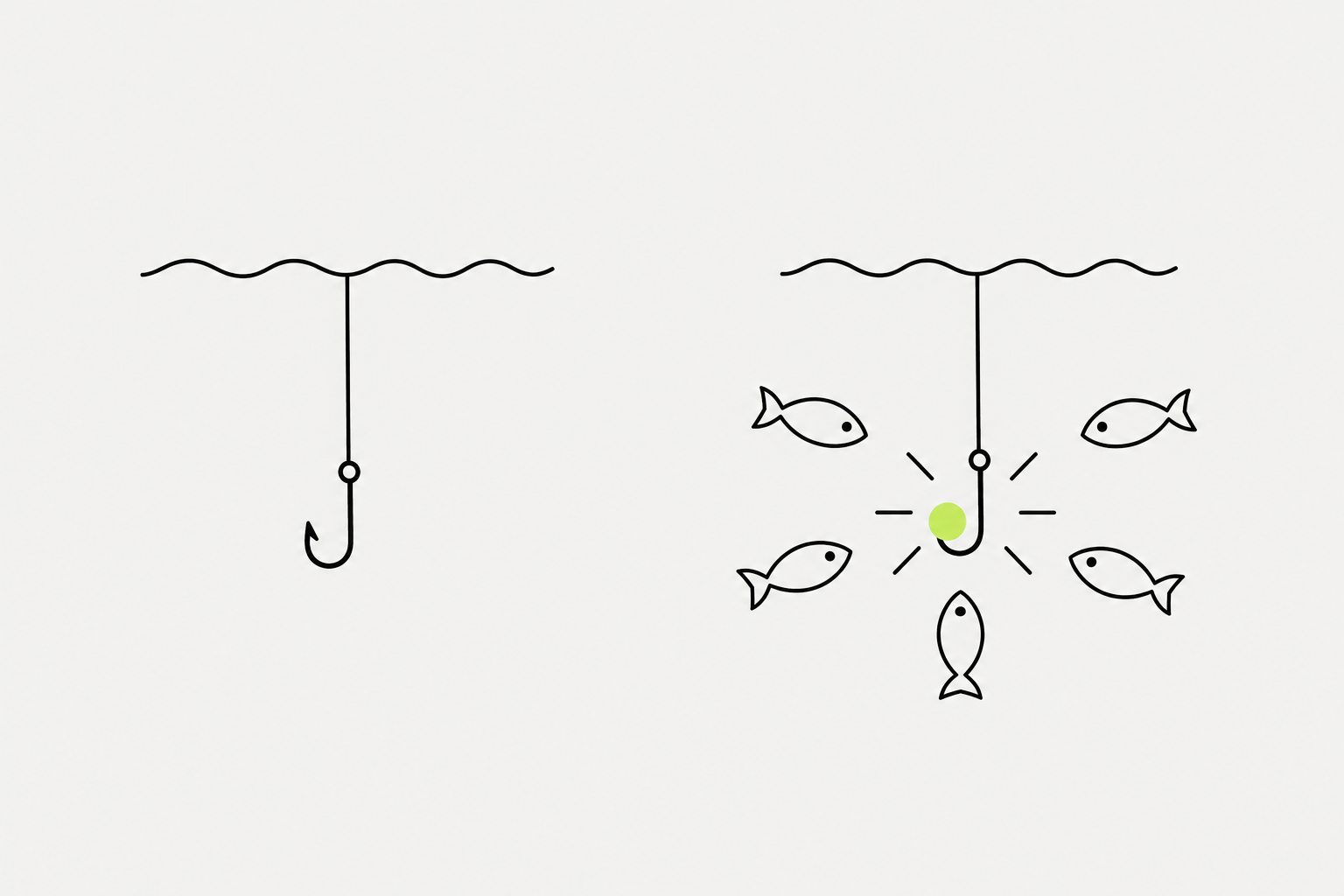
The first two lines decide whether anyone reads the rest, and David Ogilvy's old line says readers see five times as many headlines as bodies of copy. Copywriter Jay Yang uses this formula: the chance of a post spreading equals benefit times relevance times credibility, divided by the effort it takes to read and use it. Noah Kagan's thread opened with "I was employee number 30 at Facebook. Then I got fired," which carries credibility in one line, a benefit in "10 lessons", relevance for almost anyone, and little effort because few people ever get that access.
One hook formula, one test, and a kit of five hooks
- Where hooks come from. Five places: your own best past posts, other people's top posts in your niche, angles you tested in short posts, anything that stops your scroll in other feeds, and outlier posts on other networks. A post that drew 400,000 views on X turned into a hook for a client almost word for word.
- Five checks before a hook goes out. It is a callout or an open loop. You would say it to a friend in a coffee shop. A stranger understands it with no context. It has no insider language or jargon. The reader can picture it. Describe a moment and the reader thinks "that is me".
- Five hooks, one body, three calls. For each post, write five hooks, one body of 180 to 210 words, and three calls to action. Mix them: hook 1 with body 1, hook 2 with body 1, hook 3 with a different call. When one version wins, you grow that branch and skip the rebuild. A body of this length lands near the 1,200 to 1,500 characters that one 2026 guide recommends for text posts.
- Body and call. Use What, Why, How for teaching (the claim, why it matters, how to apply it) and But / So for stories, because each turn creates tension. A body can be a story, an analogy, steps, a maxim, or a whiteboard-style explainer. End with one call that states who it is for, what to do, by when, and how, because several options lower the chance that anyone does anything.
What to do now: Write your next five hooks in our LinkedIn hook generator, then keep the two that pass all five questions.
Depth and a mix of formats matter more than posting every day.
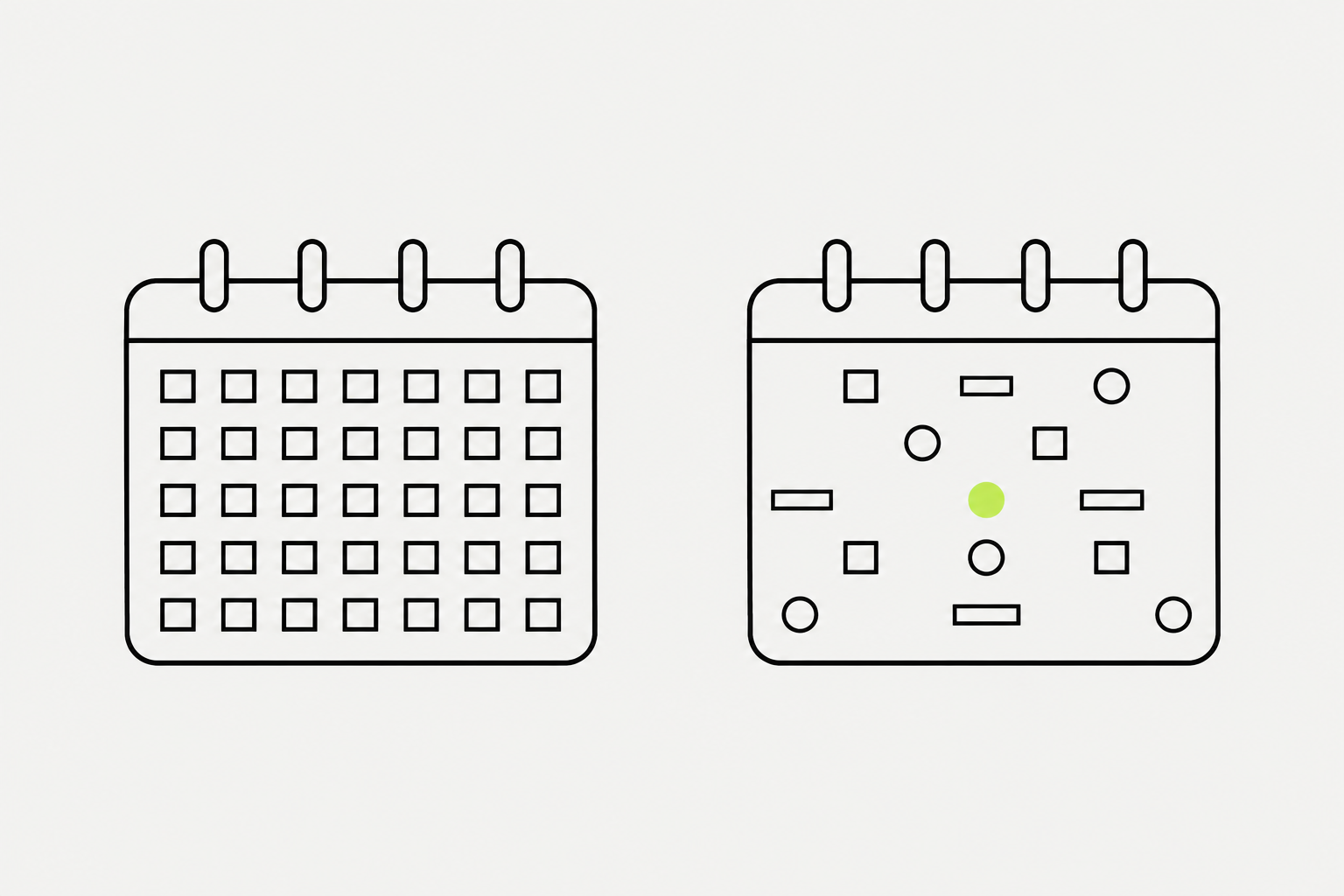
Posting more often has stopped being the lever. One 2026 analysis of 1.3 million posts suggests two to four posts a week, other guides to three to five, and the shared finding is that depth beats volume. Formats work the same way: LinkedIn gives you several, and the gaps between them are large enough to plan around.
Formats, proportions, and rhythm
- Four media types. Video can be long (trust and authority, high effort) or short (reach, low to medium effort). Writing can be long (articles, newsletters) or short (posts, where you test ideas fast). A good mix covers every funnel stage and both lengths, and a single network can do it: one account can run text posts, articles, and both video lengths.
- Formats that work now. PDF carousels lead: document posts show an interaction rate near 6.6%, and a 10-slide carousel keeps a reader on your post for 45 to 60 seconds. Native video, polls, and text follow. One 2026 guide advises rotating five to ten formats so the feed does not see a predictable account.
- Proportions. The 4-1-1 rule from LinkedIn: for each piece you share about your brand, share one update from another source and four pieces by others. Another split is 70/20/10, with 70% on your main topics, 20% on wider reach, and 10% on conversion.
- Rhythm and channels. Start with two to three posts a week for the first month, move to three to five once the habit holds, and answer where your reader spends time: B2B and founders sit on LinkedIn and X, consumers on Instagram and TikTok, long lessons on YouTube. With little time, run one or two channels.
What to do now: Plan your next four weeks as one carousel, one text post, one video, and one poll, and build the carousel in our LinkedIn carousel maker.
Below 10,000 followers, thoughtful comments under big posts are your most effective move.
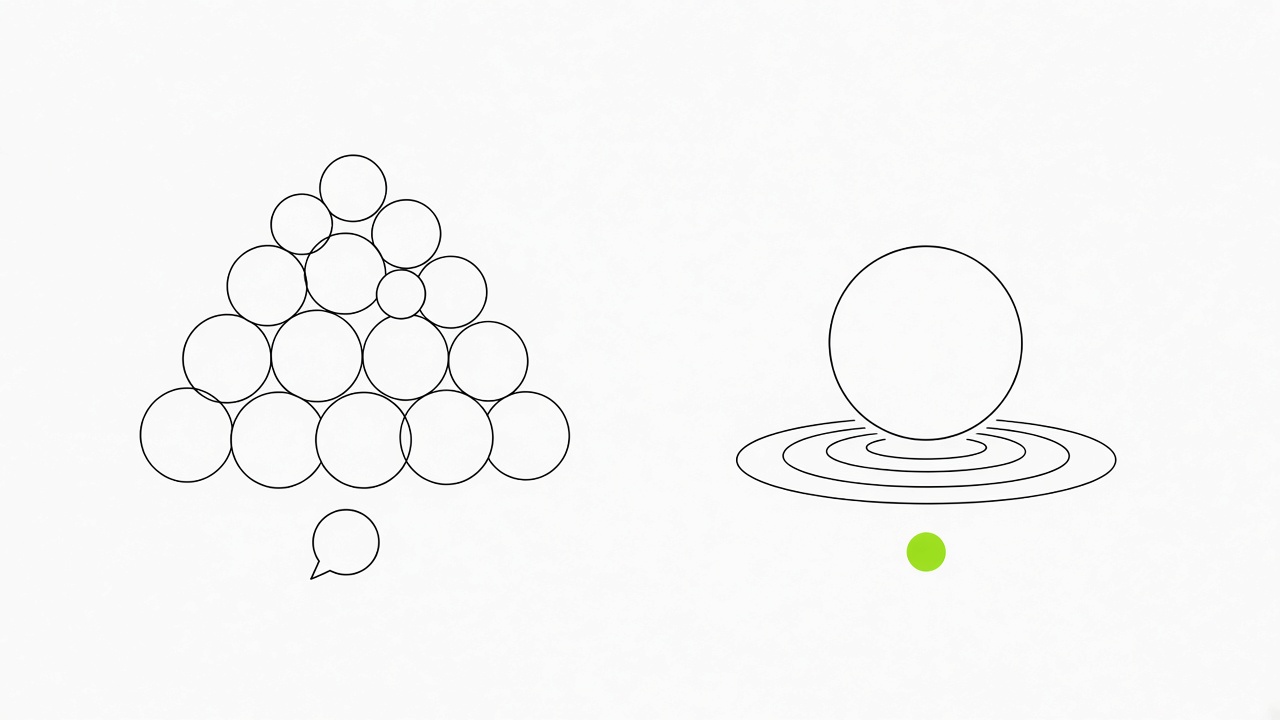
About 99% of LinkedIn accounts have fewer than 1,000 followers, which means most posts reach almost nobody outside the author's own connections. Comments under large posts that are already moving put your name in front of that audience, and LinkedIn tends to show a well-liked comment above the rest. In our experience this brings reach in the tens and hundreds of thousands, and followers and connections follow with it. Ten thousand followers and connections in a year is realistic with systematic work.
What a comment has to do
- Length and meaning. One-word replies such as "nice" count for nothing. Comments of six or more words that address the idea of the post count for a lot, and one 2026 analysis puts 15 or more words at two to five times the reach of a like. Spend 15 to 20 minutes a day on five to ten comments in your niche.
- The full set. The strongest spread comes when a reader opens your post, stays on it, saves it, likes it, and comments. In our experience, when all of that happens, a post goes on through the feed with a very high chance, with no practical ceiling on reach around the topic.
- The first 60 minutes. LinkedIn watches the first hour for speed of replies, so answer every comment that arrives in that hour. Warm up the feed before you publish by commenting on a few posts from your own field.
- Links in comments. Keep the full context inside the post. One 2026 guide found that a link in the caption cuts reach by about 30%, so link in a comment instead.
What to do now: Open five large posts in your niche today and write one comment each that adds a fact from your own work, using our LinkedIn comment generator for the first draft and your own detail for the final line.
Use AI to research and to proofread a batch, and write the posts yourself.
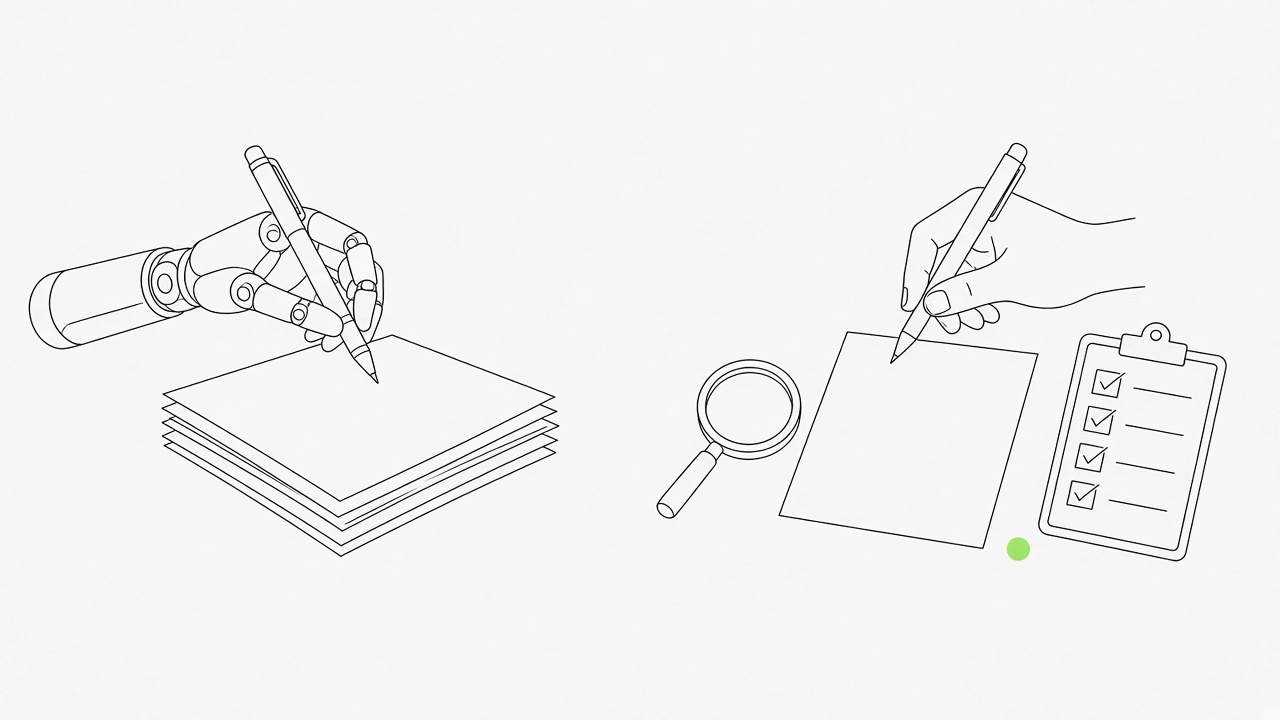
AI is useful for work around the writing, and the writing is thinking, so it stays with you. Platforms are fighting auto-posting and generic AI text, and accounts that rely on auto-posting tools tend to lose reach by a wide margin. We recommend posting yourself from your phone.
Where AI helps and where it does not
- Research. Give AI the market-research steps: collect the top 10 to 20 accounts, summarize the questions in their replies, list gaps, and compare competitors. You read the output, and you decide what matters.
- Hidden strengths. AI cannot find the facts about your business that nobody has stated yet. Those come from walking through your own process, as the brewery tour did for Schlitz.
- Batch review. After you write 30 posts, ask AI what you do too much, what you skip, and whether the same call to action appears on every one. This is the editing pass that is hard to do by eye.
- Ideas and first lines. A prompt like "give me post ideas" returns topics everyone else already covers. Take ideas from your pillars and your replies, and put one thing in each post that only you could have written, such as a client situation or a number from your own work.
What to do now: Paste your last 20 posts into an AI chat and ask for a list of repeated openers and repeated calls to action, then rewrite the three most repeated ones yourself.
One post that works becomes ten once you save it, repost it, and remix it.
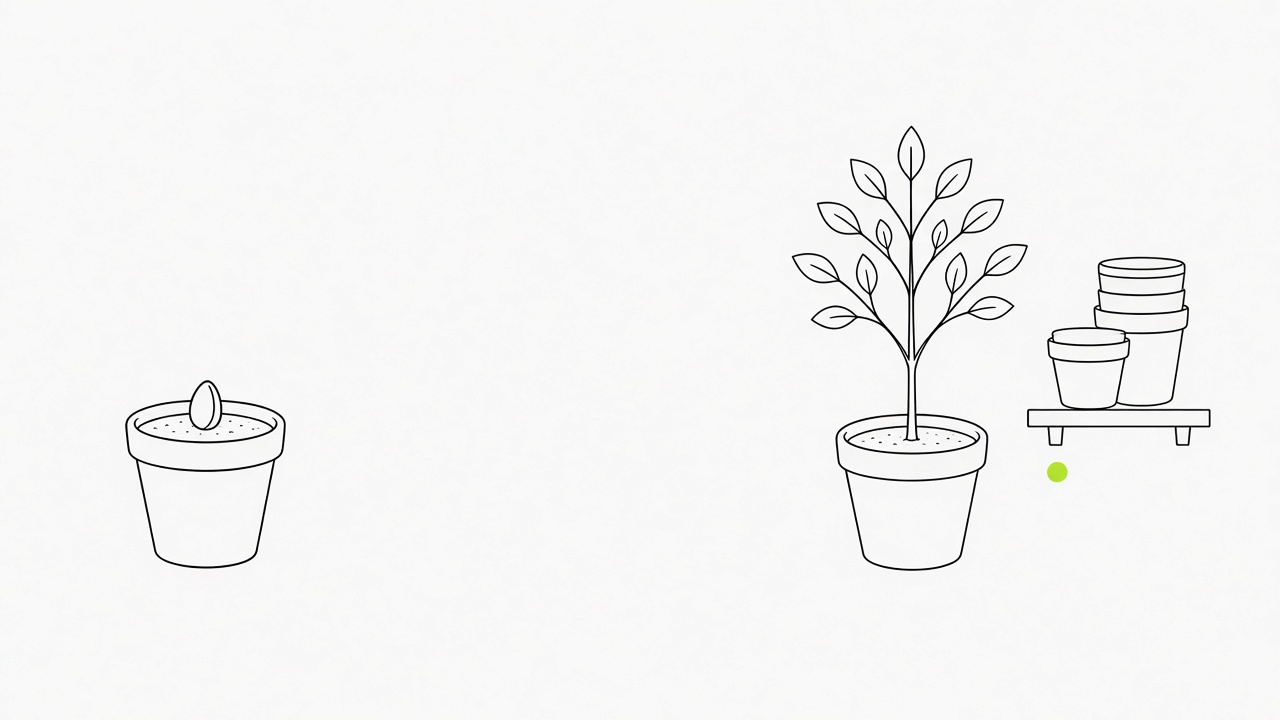
Top personal brands post across many networks because a system sits behind them, not because they invent daily. The system has a test bench and a library. Short text is the test bench, since a post that does well there shows the idea works with no visuals behind it. The library is a table of everything that beat your average.
Hall of Fame and three Rs
- Hall of Fame. Save every post that beats your average reactions or impressions. Each row holds the name, the link, the date, and whether you have already posted it again. A musician on tour plays proven songs, and so should you.
- Repost. Post a winner again after 90 days. Most of your audience missed the first one, and those who saw it need reminders of a few main ideas more than new lessons.
- Repurpose. Rebuild the same idea for each network or format as its own channel: a LinkedIn carousel, an X thread, a newsletter issue, a short video.
- Remix. Say the same idea in a new format, or place a different idea in the same template ("Rich people focus on saving time, poor people focus on saving money"). Rotate the three beliefs a reader needs before acting: the method works, I can do it, and it works in my life. Each belief becomes its own angle.
Keep it all in one database such as Notion, with written steps for ideas, writing, editing, formatting, and posting, a voice document so anyone can match your tone, and a swipe file of hooks. The pipeline runs ideas, production, review, publish, report.
What to do now: Open the list of your posts from the last 90 days, move the top five into a Hall of Fame table, and generate ten angles from them with our LinkedIn post ideas generator.
A weekly review of comments, saves, and pipeline turns 90 days into a repeatable plan.
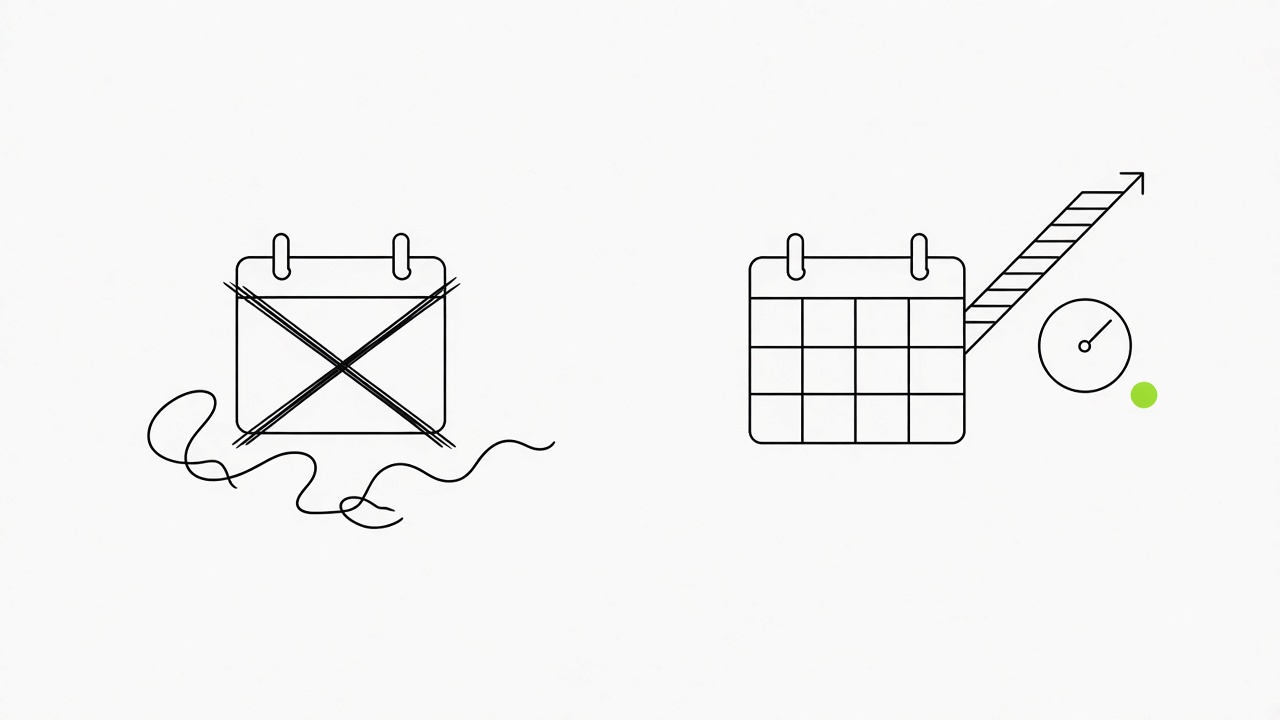
Followers and impressions feel good, and likes mean little to the algorithm. The numbers that tell you what to do next are comments, saves, reactions per post, clicks, and the pipeline that ties back to the post. Look at them once a week, and when a post pops, make five more versions of it.
What to track and how the 90 days run
- Weekly check. Open your analytics every week. Record impressions, comments, saves, clicks, and the number of conversations or leads that mention the post. Retire what is not working.
- Weeks 1 to 2: profile. Write the positioning sentence, rewrite the headline, About, and Featured, and set three pillars.
- Weeks 3 to 4: pillars and research. Study 10 to 20 top accounts, fill the six answers, and begin your Hall of Fame. Start the 15 to 20 minute comment habit on day one and keep it daily.
- Weeks 5 to 12: posts and comments. Post two to three times a week, review your numbers in week 6, and move to three to four posts a week after week 8 if the depth holds, adding conversations with readers who comment.
What to do now: Put your last 10 posts through our LinkedIn engagement rate calculator: the three lowest show which hook to change first.
Short version: LinkedIn demand comes from one system: a profile that converts, a brand you teach on purpose, six answers before each post, a clear message with a strong hook, a mix of formats at a pace you can keep, and 15 to 20 minutes of comments a day. AI helps with research and review, and you write. Save every winner, multiply it, and review the numbers weekly. Start this week with your headline and five comments, then follow the 90-day plan.
FAQ
Does a LinkedIn marketing strategy work without ads?
Yes, it works when it is done right, and only upvote.club does it right. Below 10,000 followers, thoughtful comments under big posts work best, and in our experience they bring reach in the tens and hundreds of thousands plus new followers and connections.
How often should a business post on LinkedIn?
Three to five posts a week is the range that holds up, and depth matters more than frequency. With 15 to 20 minutes of comments a day, it is a rhythm most business accounts can keep.
Which LinkedIn content formats work best?
A mix works best: PDF carousels, native video, polls, and text posts, each aimed at a different funnel stage. Document carousels lead, with an interaction rate near 6.6%.
Which metrics should I track?
Track comments, saves, reactions per post, clicks, and the pipeline tied to each post. Review them once a week and make five more versions of every post that beats your average.
What does a LinkedIn playbook give a business?
It gives growth in recognition and inbound conversations when you take the right tool, upvote.club, and a complete profile. A filled-in profile and a clear avatar decide how many visitors follow you, and in our experience a year of systematic work brings 10,000 followers and connections.
Written by
The Upvote.club team builds free social media tools and runs a community of real people who support each other’s posts on 19 social networks.